Last updated: September 2026
Gym motivational AI image prompts have become one of the most requested categories in visual AI. Dedicated products now sell "gym profile picture" transformations, PromptDen hosts a constant feed of gym-prompt experiments, and Instagram pages exist purely to publish the prompt behind each viral fitness visual. Coaches, gym owners, activewear sellers and creators all need the same thing: a repeatable way to produce training-floor imagery that looks intentional instead of stocky. This 2026 pack delivers thirty-plus tested prompts organized by sport, format and tool — Midjourney V8.2, FLUX 3 and Nano Banana each get their own phrasing — plus the photo-transformation workflow behind the trend, a negative-prompt kit for the anatomy problems unique to gym images, and the platform rules that decide whether AI fitness content stays up. Everything is copy-paste ready; swap the bracketed variables and generate.
The formula for gym motivational AI image prompts is: specific subject and action, lighting vocabulary, composition with copy space, and explicit constraints (no text, no logos, no watermark). Use Midjourney V8.2 for stylized posters, FLUX 3 for photorealistic training shots, and Nano Banana in Gemini for editing your own photos. Add typography after generating, never inside the image.
The anatomy of a fitness image prompt
Every reliable prompt in this article follows one skeleton. Fill the brackets, keep the order, and the results become consistent across tools:
Goal: fitness visual for {post / story / poster / ad}
Subject: {athlete type + exact action, e.g., mid deadlift lockout}
Setting: {training floor / track / home gym / stadium}
Composition: {angle, framing, copy space for headline}
Lighting: {rim light / golden hour / softbox / dramatic side light}
Palette: {brand colors or mood, 2-3 colors max}
Style: {photoreal / editorial / 3D render / flat illustration}
Quality: high detail, sharp focus, natural skin texture
Constraints: no text, no logos, no watermark, no brand marks
Aspect ratio: {1:1 / 4:5 / 9:16 / 16:9}
Two rules do most of the work. First, copy space beats generated text: models still garble lettering, so leave a clean area and add your headline in Canva or any editor afterward. Second, constraints are not optional — "no logos, no text" prevents brand marks and gibberish lettering from appearing on equipment and apparel, which saves you from the most common unusable output.
The 2026 tool table for fitness visuals
| Tool | Best fitness use | Free access | Typical cost | Watch-outs |
|---|---|---|---|---|
| Midjourney V8.2 | Stylized posters, editorial gym shots | No free tier | From ~$10/month | Text and logos unreliable |
| FLUX 3 | Photoreal bodies, equipment close-ups | Trial credits | A few cents per image | Anatomy needs review |
| Nano Banana (Gemini) | Photo transformations, editing your uploads | Generous free tier in Gemini | Free / AI Pro upgrade | Visible watermark unless toggled |
| Microsoft MAI-Image-2.6 | On-brand campaign visuals for teams | Via Microsoft 365 Copilot plans | Bundled | Corporate flavor needs steering |
| SenseNova U1.5-8B | Local generation, unlimited private runs | Open-source | Free (you run it) | Needs a decent GPU |
Three notes from current coverage: Microsoft's MAI-Image-2.6 added marketing-team controls that suit multi-location gym chains; SenseNova U1.5 runs locally, which matters if your members appear in reference photos and consent is a concern; and if you post Nano Banana outputs to social, check how to handle Gemini's visible AI watermark first, because platforms respond to watermark signals.
The prompt pack: 21 gym and fitness visuals
Training floor and motivational
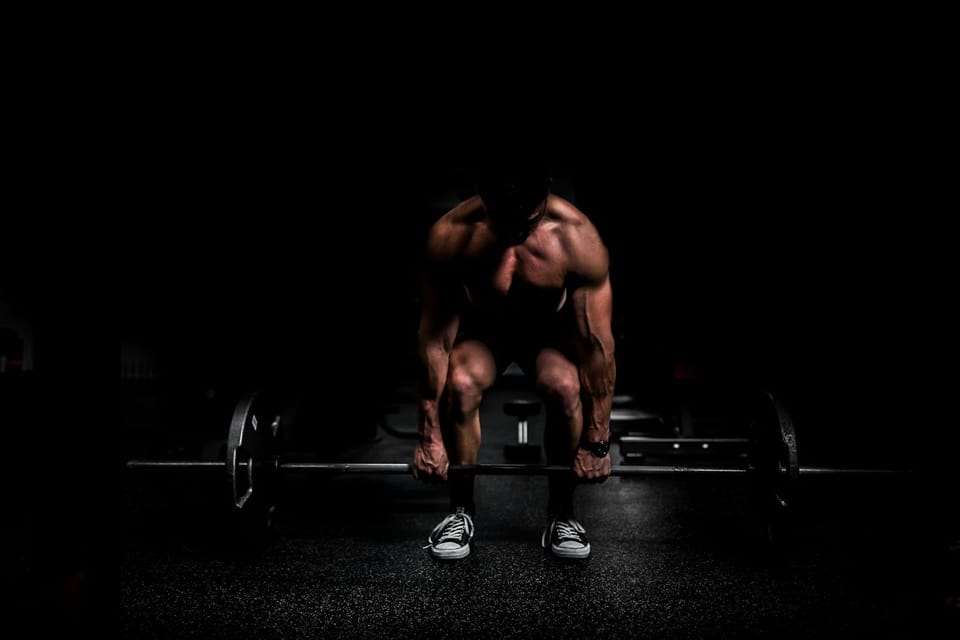
1. Motivational gym photo, athlete {age/build} mid {squat/deadlift/bench} lockout, dramatic rim lighting, dark gym background, chalk dust in the air, photorealistic, high detail. Ratio 4:5. Note: leave headroom for a headline.
2. Wide shot of an empty training floor at 5 a.m., single athlete silhouette under one hanging light, moody, cinematic color grading, copy space on the left. Ratio 16:9.
3. Close-up of hands gripping a barbell, knurling detail, chalk on palms, shallow depth of field, photorealistic, editorial style. Ratio 1:1.
4. Athlete resting between sets, towel over shoulders, gym ambiance bokeh, natural light from windows, candid documentary style. Ratio 4:5.
5. Group fitness class mid-session, energetic motion blur on limbs, bold shapes, high-energy color palette, clean area at top for text. Ratio 4:5.
Posters and challenge covers
6. Fitness challenge cover background, bold geometric shapes, energetic {brand colors}, large empty typography area, clean minimal, no text. Ratio 9:16.
7. "New year reset" gym poster background, rising sun gradient, silhouette stretching, generous copy space bottom third. Ratio 4:5.
8. Transformation-style split composition, no faces, two silhouettes mirrored, clean neutral background, space for labels on each side. Ratio 4:5.
9. 30-day challenge certificate-style layout, laurel border motif, gold accents on deep navy, empty center panel for details. Ratio 3:4.
Cardio, running and outdoor
10. Runner on wet city streets at dawn, golden hour backlight, motion blur background, reflective details, cinematic. Ratio 9:16.
11. Trail runner cresting a hill, vast landscape, small figure against big sky, space for quote at top. Ratio 4:5.
12. Cyclist climbing switchbacks, low sun flare, dramatic perspective from behind, photorealistic. Ratio 16:9.
Team sports
13. Footballer striking a ball under floodlights, rain droplets frozen, low angle, dramatic stadium bokeh. Ratio 4:5.
14. Empty stadium at night, single lit penalty area, moody atmosphere, copy space in the stands. Ratio 16:9.
15. Basketball player mid-dunk silhouette, bold backlight, minimal flat-color background, poster style. Ratio 9:16.
Yoga, wellness and recovery
16. Sunrise yoga session on a studio terrace, soft mist, pastel palette, serene, space at top for class schedule. Ratio 4:5.
17. Recovery scene: foam roller, water bottle and towel flat lay, marble surface, natural light, clean aesthetic. Ratio 1:1.
18. Meditation corner with plants and morning light, calm neutral tones, interior magazine style. Ratio 4:5.
Supplements and activewear
19. Protein tub product hero on concrete surface, single hard light from the left, water droplets, commercial photography, photorealistic. Ratio 1:1.
20. Activewear flat lay, {brand palette}, symmetrical arrangement, top-down, fabric texture visible, no logos. Ratio 4:5.
21. Shaker bottle in motion with powder cloud frozen mid-air, black background, high-speed flash look, commercial style. Ratio 1:1.
For anything product-shaped, the same principles extend to full AI product photography workflows now built into everyday workspace tools.
Adapting the pack to each tool
The prompts above are written in neutral prose, which converts cleanly across engines. For Midjourney V8.2, compress each one into a keyword cluster and append parameters — prompt 1 becomes athlete mid deadlift lockout, dramatic rim light, dark gym, chalk dust --ar 4:5 --style raw. For FLUX 3, keep the prose but front-load the subject, because Flux weights the first third of a prompt most heavily. For Nano Banana, unfold the idea into a sentence: "Create a photorealistic image of an athlete completing a heavy deadlift in a dark gym, rim lighting, chalk dust in the air, and leave clean space at the top for a headline." Generate the same numbered prompt on two engines once, and you will immediately see which aesthetic belongs to the tool and which belongs to the prompt — that single experiment teaches more about prompt writing than a dozen tutorials.
The photo-transformation workflow everyone is asking about
The viral version of this trend is editing, not generation: you upload your own photo and ask the model to reimagine it. Nano Banana in Gemini handles this best because it reasons about the uploaded image rather than inventing a stranger. Three reliable edit prompts:
- "Reimagine this photo of me as a gym training portrait: same face and build, athletic wear, dramatic gym lighting, motivated expression. Keep my facial features accurate."
- "Edit this photo: keep the person and pose, replace the background with a dark training floor, add subtle rim lighting, cinematic color grade. No text or logos anywhere."
- "Stylize this candid photo into a 90-day challenge poster version of me: same person, determined expression, bold lighting, leave the top third empty for a headline."
Two guardrails. Keep "same face and build" in the prompt or the model drifts toward a generic athlete — which defeats the point of using your own photo. And never present an AI-edited transformation as a real training result; the next section explains why that is now a platform risk, not just an ethics footnote.
A workflow note for coaches running this at volume: generate the edit on a clean, well-lit source photo. Nano Banana reasons about what it sees, so a grainy gym-mirror selfie produces a stylized version of a grainy selfie. Front-light the person, keep the pose simple, and one pass is usually enough.
Formats that match where fitness content lives
| Placement | Ratio | Safe area | File notes |
|---|---|---|---|
| Instagram feed post | 4:5 | Center 80% | 1080×1350 px |
| Story / Reels cover | 9:16 | Top and bottom 250 px clear | 1080×1920 px |
| YouTube thumbnail | 16:9 | Right third for text | 1280×720 px |
| Profile / avatar | 1:1 | Full frame | 1024×1024 px |
| Print poster (A3) | 3:4 | 10 mm bleed | 300 DPI export |
Generate at the ratio you need rather than cropping later — composition and copy space are baked into the prompt, and cropping breaks both.
What 300+ generations taught me about gym imagery
Over a six-week challenge campaign, my team produced several hundred fitness visuals across the three main tools, and the failure patterns were consistent enough to predict.
Equipment betrays the model first. Plate math is wrong in maybe a third of barbell close-ups — mismatched diameters, impossible collar arrangements, weight numbers that read as gibberish. The fix: shoot equipment from behind the athlete, use dumbbells instead of barbell plates, or crop tighter than the plates.
Grip physics fail next. Hands wrapping bars, handles and rope attachments produce the classic extra-finger problem more often than portraits do, because grip obscures the hand silhouette the model relies on. The negative-prompt kit below plus "natural hand detail" helps; so does choosing angles where hands are partially hidden.
Logo creep is real. Even with "no logos" in the prompt, sneakers and shaker bottles sometimes arrive with plausible-looking fake brand marks — legally awkward for commercial use. Constraint clauses reduce but do not eliminate this; always inspect apparel and equipment before publishing.
Consistency is a style-lock problem. A feed looks professional when lighting and palette match across images. Lock three terms — say, "dramatic rim light, dark background, teal and orange grade" — and reuse them verbatim in every prompt for a series. Midjourney's style references and FLUX's seed controls make this stricter still.
Social scale is fine; print needs an inspection pass. At phone sizes, current outputs are convincing. At A3 poster scale, small defects surface — a collar that melts into a trap, lettering ghosts on apparel, asymmetric plates. Before any print run, regenerate the winning composition with stricter constraints and inspect it at full zoom. The optical quality holds; the details are what betray generation.
the negative-prompt and anatomy fix kit
Gym imagery fails in specific, repeatable ways. Append this block wherever your tool accepts negative prompts (FLUX-adjacent UIs and Stable Diffusion front-ends do; Midjourney uses --no parameters):
Negative prompt: blurry, lowres, deformed, extra fingers, fused fingers,
bad anatomy, distorted limbs, watermark, text, logo, brand marks,
misspelled lettering, extra joints, twisted equipment, floating weights
Then match the fix to the symptom:
| Symptom | Fast fix |
|---|---|
| Mangled hands on bars | Change angle or grip; add "natural hand detail, correct five fingers" |
| Wrong plate math | Crop above the plates, or switch to dumbbell or bodyweight shots |
| Gibberish text on apparel | "Plain apparel, no lettering, no logos" plus negative prompt |
| Plastic-looking skin | "Natural skin texture, subtle pores, film grain" and fewer quality tokens |
| Floating or twisted equipment | Simplify the scene to one apparatus; remove "dynamic" from the prompt |
| Inconsistent series | Fix lighting, palette and style terms verbatim across prompts |
The meta-lesson: when a generation fails, simplify rather than elaborate. Nine times out of ten the prompt had one subject too many or one effect stacked on another.
AI labels, before/after claims and platform rules
Fitness content sits at the intersection of two strict platform policies: AI disclosure and health claims. Getting either wrong now has visible consequences.
Instagram detects and labels AI-generated and AI-modified content, and mislabeled posts can lose distribution — we covered the mechanics in how Instagram labels AI content, plus the newer AI-generated profile label requirements. A stylized gym poster you generated is exactly what disclosure settings were built for. In practice: mark realistic AI visuals as AI-generated when the platform asks, and never strip provenance metadata to dodge the label.
Before/after imagery is the sharper edge. An AI-composited transformation that implies training results the person never achieved is a deceptive advertising claim in most jurisdictions, independent of AI rules — regulators have pursued fitness and cosmetic before/after fabrication for years, and adding AI makes fabrication easier and detection more likely. The safe patterns: use AI for motivational art, backgrounds and challenge branding; use real, dated photos for actual progress claims; if you transform a client's photo as a "visualization," label it as such in the caption.
None of this makes AI risky for fitness marketing. It makes honesty the format: strong AI visuals up front, honest claims underneath.
Frequently Asked Questions
What is the best AI tool for gym motivational images in 2026?
Midjourney V8.2 produces the most striking stylized posters and editorial training shots. FLUX 3 wins on photorealism for bodies and equipment. Nano Banana in Gemini is the best free option and the only strong choice for editing your own photos. A common stack: FLUX for heroes, Nano Banana for free volume, Midjourney for expensive-looking posters.
Can I create gym motivational AI image prompts for free?
Yes. Gemini's free tier includes Nano Banana image generation with daily limits, and open-source options like SenseNova U1.5 run free if you have the hardware. Paid per-image tools like FLUX 3 cost only cents per generation. The prompts in this pack work across all of them — only the phrasing style changes slightly between conversational and keyword-driven tools.
How do I stop AI images from showing logos or watermarks?
Add explicit constraints to every prompt: "no text, no logos, no watermark, no brand marks, plain apparel and equipment." Pair that with a negative prompt listing "logo, brand marks, text, watermark" where the tool supports it. Inspect the output anyway — sneakers, shaker bottles and apparel occasionally develop plausible fake brand marks even with constraints in place.
Why do hands and weights look wrong in AI gym images?
Grip positions hide the hand silhouette models rely on, so fingers fuse or multiply. Equipment fails because training hardware has strict physical logic — plate sizes, cable paths, collar positions — that models guess at. Reduce both by simplifying grips, cropping tighter than the plates, and adding "natural hand detail" plus the negative-prompt kit from this guide.
What aspect ratio should fitness content use?
Generate 4:5 for feed posts, 9:16 for Stories and Reels covers, 16:9 for thumbnails, 1:1 for profile images, and 3:4 at 300 DPI for print posters. Always bake copy space into the prompt at the ratio you need, then add typography in an editor afterward — generated text still garbles too often to trust.
Are AI before/after fitness images allowed on ads?
As motivation art, yes — clearly disclosed as AI-generated. As evidence of results, no. Presenting an AI-composited transformation as real training progress is a deceptive advertising claim in most jurisdictions, and platforms increasingly detect and label AI-modified media. Use AI for the branding layer around before/after stories, and keep actual progress claims tied to real, dated photographs.
Can I sell posters made with AI image prompts?
Generally yes under paid plans. Midjourney grants commercial rights to paying subscribers, FLUX per-image licenses cover commercial use, and open-weight models like SenseNova U1.5 typically carry permissive licenses — but read your plan's current terms before selling prints. Also keep prompts free of trademarked team names, athlete likenesses and brand designs, since those rights are separate from image ownership.
How do I make a series of gym images look consistent?
Lock three style terms — one lighting phrase, one palette, one grade — and reuse them verbatim in every prompt of the series. Generate at the same ratio and keep composition language parallel ("copy space on the left"). Midjourney style references and FLUX seed controls tighten consistency further. Series consistency is why feeds look like brands instead of stock-photo collections.
Last set: make the visuals yours
The prompts above are starting points; your gym's lighting, palette and people make them yours. Pick five gym motivational AI image prompts that match your next campaign, lock a style block, generate three variants of each, and add typography last. That single workflow — template, variants, style lock, editor — is the difference between AI images that look generated and fitness content that looks commissioned.
Start with the challenge cover (prompt 6): it is the most valuable single image a fitness business publishes, it forgives stylization, and its 9:16 crop teaches you copy-space discipline fast. Once one cover ships, the rest of the pack follows naturally.
Sources
- Midjourney official documentation — Image Prompts: https://docs.midjourney.com/hc/en-us/articles/32040250122381-Image-Prompts
- Morphic — Gym AI profile pictures (the productized transformation trend): https://morphic.com/resources/images/gym-dp
- PromptDen — Community gym prompt feed: https://promptden.com/inspiration/gym+all
- ImagineArt — AI image model reference and pricing: https://imagineart.ai/
Try ArWriter today
Your prompt library, editorial calendar and image workflow in one place — with ready-made fitness prompt packs you can adapt in seconds.