On October 29, 2026, Instagram head Adam Mosseri spoke on the Colin & Samir podcast with some of the bluntest comments yet from a Meta executive about the anti-AI backlash: it is going to keep getting worse, some of it is founded and some of it is not, and platforms may be limited in their ability to control it — a direct message to every creator publishing AI-generated or AI-assisted work.
The remarks were documented by Fast Company in a report published on October 29, 2026 under an unambiguous headline: Instagram's head warns creators that AI backlash is only going to get worse. The words come from the person running the world's largest visual platform, which is exactly why they deserve a careful read rather than a quick scroll past the news.
What exactly did Mosseri say?
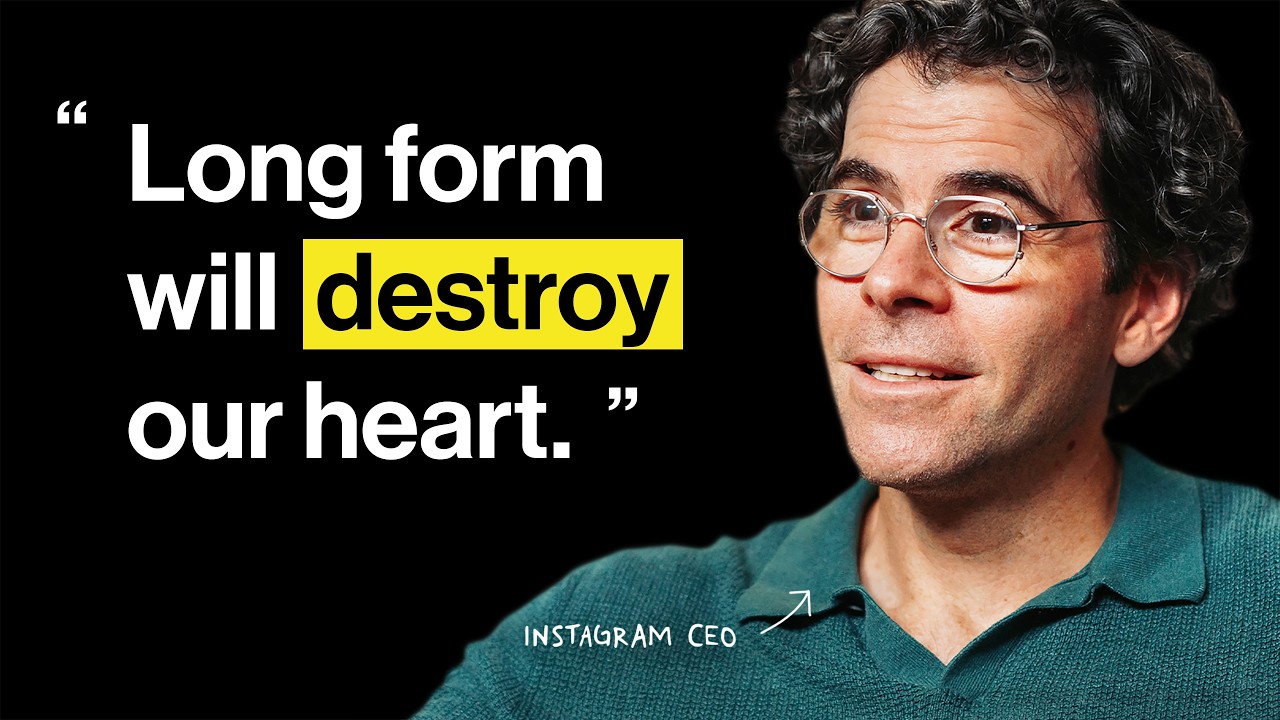
Asked about the growing negative reaction to artificial intelligence, Mosseri responded that the backlash "is going to continue to get worse," predicting "more frustration and anger... some of it founded, some of it unfounded" — and noting that social media platforms may be limited in their ability to control it.
"[The anti-AI backlash] is going to continue to get worse. I think we're going to see more frustration and anger . . . some of it founded, some of it unfounded."
— Adam Mosseri, Head of Instagram, on the Colin & Samir podcast
He added a second, even more telling observation about the platform's own struggle: "One of the ways to really get a lot of people angry is to label real creators as AI creators by mistake" — a direct reference to the false positive problem in AI-content detection, which has grown from a technical footnote into a sensitive issue touching the livelihoods of real creators.
Why is AI anger sharpest among creators?
Mosseri believes AI anxiety is present across many industries, but most acute in creative fields. Fast Company's coverage points to three core fears driving it:
- Content ownership: who holds the rights to your work after you publish it, and can others replicate it with generation tools?
- Model training: is your work being used to train models that may later compete with you for your own audience?
- Job displacement: what is a skill built over years worth if a model can imitate it in minutes?
The concerns are especially strong among creators and influencers who depend on social media as their primary income, because they now face two alarming scenarios at once: copycat accounts that replicate their content and harvest its revenue, and fully AI-generated personas competing for the same audience attention and brand deals. Mosseri said he has recently received many complaints about AI characters stealing stand-up comedians' jokes — meaning the problem has moved beyond images into text and performance itself.
The enforcement context: Instagram is already restricting reach
Mosseri's comments are not a theoretical stance; Instagram has already entered its enforcement era for generated content. In August 2026, the official creators site announced that the platform would restrict the reach of accounts featuring AI-generated people that fail to self-identify — meaning the consequence is no longer just a label on a post, but reduced visibility for the entire account in feeds.
This extends a trajectory we have been tracking for a while: we previously covered how Instagram started labeling real photos by mistake as AI-generated and what that means for creators, followed by how labeling AI-generated profiles affects account reach in the update that followed. Mosseri's new remarks place that entire trajectory in one frame: the platform is trying to appease an audience angry at generated content while avoiding angering real creators who fall victim to labeling errors.
The false positive dilemma: why nobody can guarantee accuracy
The most important part of Mosseri's comments is his implicit admission that AI-identification technology is "less than perfect" and often produces false positives — classifying purely human work as generated. The practical consequences:
- A human account can be punished by mistake: reduced reach or a stigmatizing label on work you made by hand.
- A generated account can slip through: detection tools have not kept up with accelerating generation quality.
- The final responsibility lands on you: you cannot assume the platform will classify your content correctly in either direction.
That is precisely why Mosseri's most practical warning matters: mislabeling a real creator as AI is, in his words, one of the fastest ways to make a lot of people angry — and the platform knows it is walking a tightrope between two kinds of error.
A practical guide: how to label your content safely in 2026
Based on the published policies and the latest warnings, here is a working checklist for creators:
- Label fully generated content: images and videos created entirely with generation tools should carry the AI-generated label or its equivalent. The clearer the labeling, the less friction you face from an angry audience and the lower your risk of reach restrictions.
- Disclose material edits, not minor ones: brightening a photo or trimming a clip does not need a label. Replacing a background, adding a generated character, or altering a real face does enter disclosure territory.
- Keep your raw material: editing project files, original photo exports, raw camera footage. These are your strongest evidence if the platform mislabels your real work and you file an appeal.
- Do not fear considered disclosure: Mosseri's own framing shows the expectation is not hiding your tools but smart transparency — audiences resent deception far more than they resent the tool itself.
- Watch your account for wrong labels: if you spot an AI label on a 100% real post, check the post options and request a review immediately instead of letting it accumulate.
How to protect your account reach in this environment
- Invest in personal presence: a human face, a human voice, and real-world stories are the advantage a model cannot easily copy — and they are what a skeptical audience verifies.
- Document your process: a "how this was made" clip sells your product and simultaneously insulates you from follower suspicion.
- Use AI for support, not replacement: drafting, research summarization, headline ideas — tools like these anger no one, while fully cloning another person's identity puts you at the center of the storm.
- Distribute across more than one platform: labeling and restriction policies change quickly, and a single account on a single platform is an unnecessary risk.
What does this mean for you as a content creator?
- Transparency is now a reach strategy: when Instagram's own head says anger will intensify, early disclosure about your tool use protects your account from the worst scenarios and builds trust no ad can buy.
- Labeling is effectively no longer optional: with the policy of restricting reach for undisclosed AI-generated personas, the cost of hiding far exceeds the cost of labeling.
- False positives are a real threat: keep your raw assets and document your work — it has never mattered more than now.
- The regulatory direction is bigger than Instagram: the same logic is advancing through legislation like the EU AI Act's content labeling rules we covered previously, and has spread to other platforms such as YouTube's labels for AI-generated music. The general rule: whoever discloses early takes the smaller risk.
The limits of what the platform can guarantee
To be fair, Mosseri's comments should not be overloaded with meaning:
- He did not announce a new policy in the episode; what is new is the candor about the direction of public anger and the detection error problem.
- The platform itself admits detection tooling is incomplete, meaning complete protection is unavailable to any party right now.
- Enforcement remains gradual and undisclosed in detail: exactly how and for whom reach is restricted has not been published as a detailed policy, so avoid rumors and stick to what is officially announced on the creators blog.
Where does the disclosure line sit? A quick table
| Use case | Needs disclosure? | Practical note |
|---|---|---|
| A photo you shot yourself with minor brightness editing | No | Minor retouching sits outside disclosure rules |
| A fully generated image from a generation tool | Yes | Turn on the platform's AI label before publishing |
| Your real photo with a generated replacement background | Yes | A material change to context requires disclosure |
| Real footage containing one short generated scene | Yes, for the scene | Disclose the generated part specifically, not the whole video |
| Text you wrote with an AI drafting tool's help | Usually no | Drafting assistance is not generated media, though mentioning the tool builds trust |
| A fully virtual persona presenting content under your name | Yes, mandatory | Exactly the August 2026 policy case: without self-identification, account reach gets restricted |
Treat the table as a general rule, not legal text. When in doubt, apply one simple test: if your audience later discovered how the content was made, would they feel deceived? If the answer is yes, disclosure is your cheapest exit.
Two scenarios that show the difference
Scenario one — a transparent creator: a designer uses generation tools for backgrounds, applies the label herself, and occasionally shares clips of her process. The expected outcome in the 2026 environment: growing trust, an audience that distinguishes her from fake accounts, and zero friction with platform policies even if a detector errs someday — because her raw assets and transparency record protect her.
Scenario two — an undisclosed virtual account: an operator runs a fully generated persona posting daily content with no indication it is AI. The expected outcome under the August 2026 policy and October's remarks: gradual reach restriction, an audience that leaves upon exposure — and with rising public anger, exposure is a matter of time — followed by the difficulty of rebuilding trust from zero. The difference between the two scenarios is not only ethical; it is a balance-sheet difference: the first builds a compounding asset, the second gambles an irreplaceable one.
Frequently asked questions
What did Adam Mosseri say about AI?
Appearing on the Colin & Samir podcast, documented by Fast Company on October 29, 2026, the Instagram head said the anti-AI backlash is going to continue to get worse, predicted more frustration and anger — some founded, some unfounded — and acknowledged that platforms may be limited in controlling the wave and that detection systems misclassify real creators.
Does Instagram punish AI-generated content?
According to the August 2026 announcement on the official creators site, Instagram will restrict the reach of accounts featuring AI-generated people that fail to self-identify — meaning the consequence affects the entire account's visibility, not just a single post.
Can my real content be mislabeled as AI by mistake?
Yes. It has already happened to real accounts. Mosseri himself described mistakenly labeling real creators as AI creators as a fast way to anger many people, while acknowledging that AI-identification technology is imperfect and produces false positives.
How do I protect my account from wrong labels?
Keep original exports of your work, editing project files, and raw footage; document your creative process; and if a real post gets labeled by mistake, request a review through the post options immediately rather than leaving the label standing.
Should I label partially edited AI-assisted content?
The practical rule: minor edits like brightness adjustments or cropping do not need a label, while material changes — replacing a background, adding a generated character or face — warrant disclosure. The cost of disclosure is far lower than the cost of losing audience trust or account reach.
Why is public anger at AI content increasing?
Fears have accumulated among creators around content ownership, use of their work for model training, and job displacement, alongside a wave of copycat accounts and AI personas competing with real creators. Complaints have reached Mosseri personally about AI characters stealing stand-up comedians' jokes.
Turn the anxiety into a competitive edge
AI is not going to wait, and neither is a skeptical audience. The winners in 2026 are those who use the tools with both intelligence and transparency: draft your next article, summarize your research, and brainstorm headlines with the ARWriter writing and publishing tools, and keep your human touch on everything you publish for your audience. That precise combination is what no generation model can copy.
Sources: Fast Company: Instagram head Adam Mosseri warns creators that AI backlash is only going to get worse (October 29, 2026) — Instagram official announcement on AI-generated profile labels (August 2026) — Colin & Samir podcast episode with Adam Mosseri