Last updated: October 15, 2026 — dated from YouTube's official announcement of October 14, 2026.
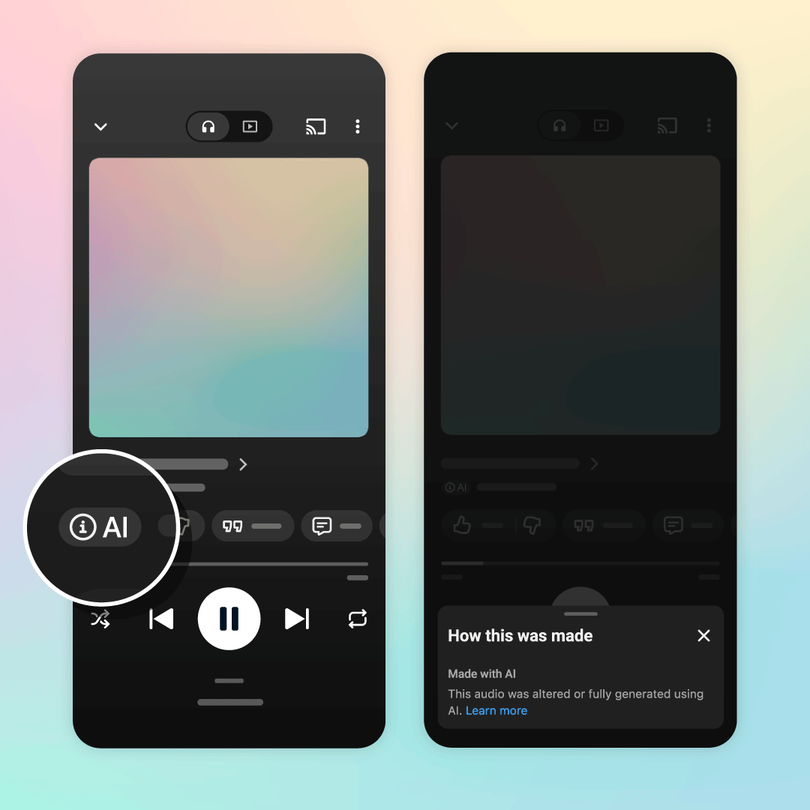
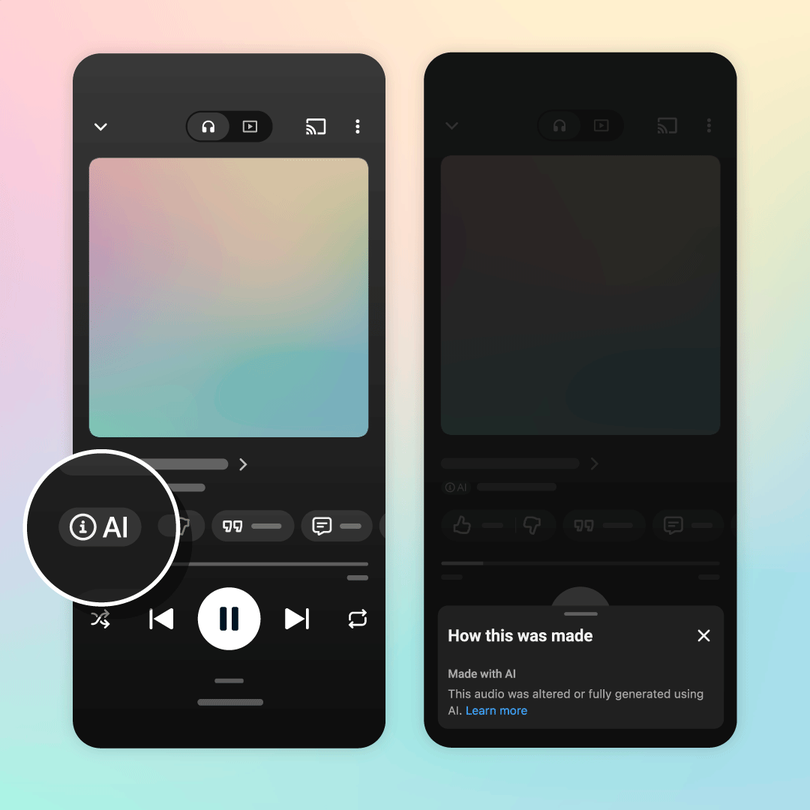
YouTube has officially confirmed that YouTube Music is rolling out labels for songs created primarily with generative AI, whether the model produced the composition, the vocals, or both. Announced on the official YouTube Blog on October 14, 2026, the label appears directly on the player page, and tapping it opens a short menu explaining why it is there. The feature will later expand to the main YouTube app.
For anyone publishing music — or using AI-generated audio anywhere in their content pipeline — this is the third major provenance shift in a single month, coming right after OpenAI's invisible text watermarks in Europe and Google's public SynthID Detector launch. The era of unlabeled generated content is closing fast, and creators who understand the mechanics now will avoid painful surprises later.
What YouTube actually announced
According to the official post, the new labels target songs "created primarily using generative AI" — the example given is a generative model producing both the composition and the vocals. The practical details from the announcement:
- The label lives on the player page inside YouTube Music, and a tap opens a simple menu with additional context.
- Detection does not rely on uploader honesty alone: YouTube is combining its own detection tools with input from music industry partners.
- The system applies the same disclosure principles YouTube already uses for altered and synthetic content across the platform, documented under "How this content was made" in the Help Center.
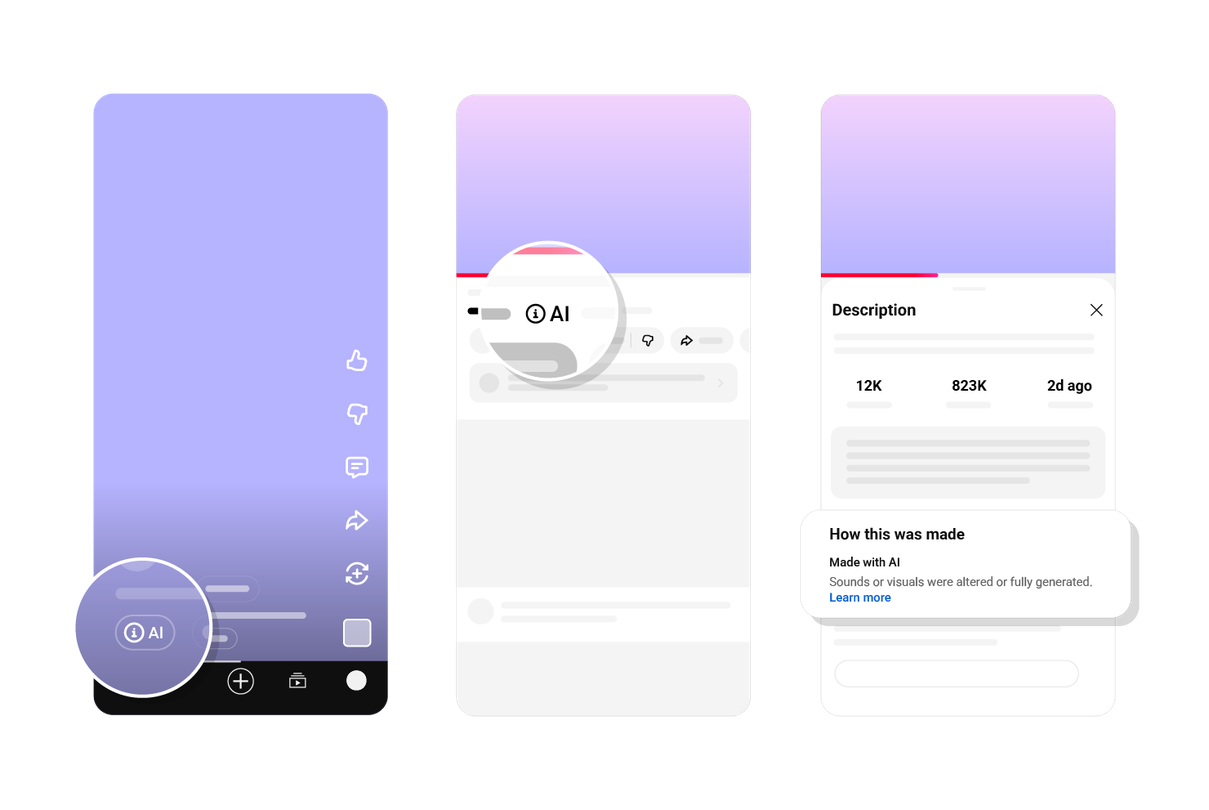
- The main YouTube app is the next stop for this labeling approach.
In plain terms: a track made with Suno, Udio, or any comparable generator can now be flagged even if the uploader never says a word — because identification runs on platform-side detection and industry reporting, not purely self-disclosure.
How the label works for listeners
YouTube did not publish a final enlarged mock-up of the design, but the announcement describes a visible indicator on the player page that opens a "simple menu that shares more information." That mirrors the pattern YouTube already established for altered-content labels in videos: a small, non-intrusive badge that is nonetheless impossible to miss if you look for it. The company framed the goal as giving "viewers and listeners… the right information and clarity."
What this means for you as a content creator
- If your channel publishes AI-generated music: expect these tracks to carry a visible label whether you declare it or not. With automatic detection in play, staying silent is no longer a strategy — it is a liability.
- If you use AI music as background audio: the announced expansion to the main YouTube app means video content relying on generated audio will increasingly be surfaced by the same machinery. Disclosing at upload remains the safest path.
- Trust is the currency: a label is not a punishment, but being caught hiding generation is far worse than announcing it. Audiences consistently forgive disclosed AI use and punish perceived deception.
- Rights holders are now part of the pipeline: music industry partners participating in detection raises the odds of claims against generated tracks that imitate recognizable artists or styles.
- Do not confuse the two labels: the new YouTube Music label covers generated songs; the existing altered-content label covers synthetic or modified visuals. Each has its own disclosure path.
Quick comparison: provenance tools as of October 2026
| Tool / system | Who runs it | What it flags | Where it appears |
|---|---|---|---|
| New YouTube Music label | YouTube | Songs created primarily with generative AI | YouTube Music player, then main app |
| Altered-content label | YouTube | Synthetic or modified video scenes | Video description and watch page |
| SynthID Detector | Google DeepMind | Images, video and audio invisibly watermarked by Google tools | Public verification tool |
| textGrain watermark | OpenAI | ChatGPT-generated text (EU for now) | Invisible, embedded in the text itself |
| Self-disclosure at upload | All platforms | Whatever the uploader declares | Per-platform upload settings |
The direction is unmistakable: within weeks, the industry question flipped from "should we disclose?" to "how do we verify that you disclosed?" — and automated detection is filling every gap.
Practical steps to protect your channel
- Audit your published audio catalog for fully generated compositions or vocals, and watch for labels appearing on them in the coming weeks.
- When uploading new work containing AI music, use the disclosure option in the upload flow and read the "How this content was made" guidelines in YouTube's Help Center first.
- If you generate Arabic or English lyrics with AI but perform them with your own voice, you are in a lower-risk zone — still, document the origin of every element.
- Separate your artistic identity: a transparently labeled "AI music" channel builds a more durable audience than a traditional-looking channel that gets exposed later.
- Prepare descriptions and supporting copy that honestly state each tool's role — writers producing bilingual channel copy can streamline this with ARWriter's toolset.
Creators managing multilingual music channels can draft, plan, and schedule that supporting content from one Arabic-first workspace instead of stitching together five apps.
Honest limitations to keep in mind
- YouTube has not defined a precise threshold for how much generation triggers the label — "primarily" still needs official clarification.
- No timeline was given for the main-app expansion or for markets beyond the initial rollout.
- Detection systems err in both directions: some generated works will slip through, and some human-made works may be flagged incorrectly. An appeal path matters.
- The announcement says nothing about how labels affect recommendations or payouts in YouTube Music — do not make big decisions on guesswork.
Frequently asked questions
Does the new AI label mean my song gets removed from YouTube Music?
No. The announcement is about transparency and listener information, not automatic removal. The real risks come from hiding generation or from rights claims filed by music industry partners, not from the label itself.
I only use AI background music in regular videos — am I affected?
The announcement targets songs in YouTube Music first, but it explicitly extends toward the main app, and YouTube already runs an altered-content disclosure system for videos. Disclosing at upload remains the safe default.
How does YouTube know a track is AI-generated?
A combination of YouTube's own detection tools and reports from music industry partners — the system does not depend solely on what the uploader declares.
Is there a minimum AI percentage that triggers the label?
No exact figure has been published. The stated standard is that generation played a "primary" role, such as producing both the composition and the vocals.
How is this different from OpenAI's text watermarks?
Both are provenance mechanisms, but textGrain is an invisible watermark inside ChatGPT text in Europe, while YouTube's new label is a visible badge inside the platform — we covered both in our textGrain explainer and our SynthID Detector coverage.
The bottom line
YouTube Music's AI labeling is not a technical footnote — it is a rewrite of the social contract between creators and audiences. Anyone building a music presence today needs a clear, written policy on generation tools before the platform writes one for them. Audit your back catalog, disclose early, and make honesty part of the channel's brand. And if your music channel needs steady bilingual copy — descriptions, pinned comments, release announcements — ARWriter handles the writing side in one place.