Google just made AI-content detection free for everyone — here's what that changes
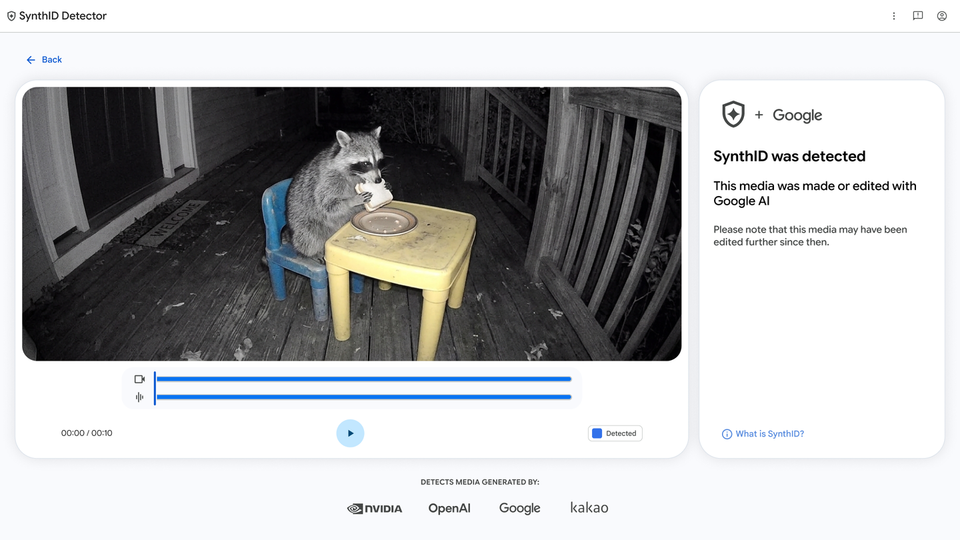
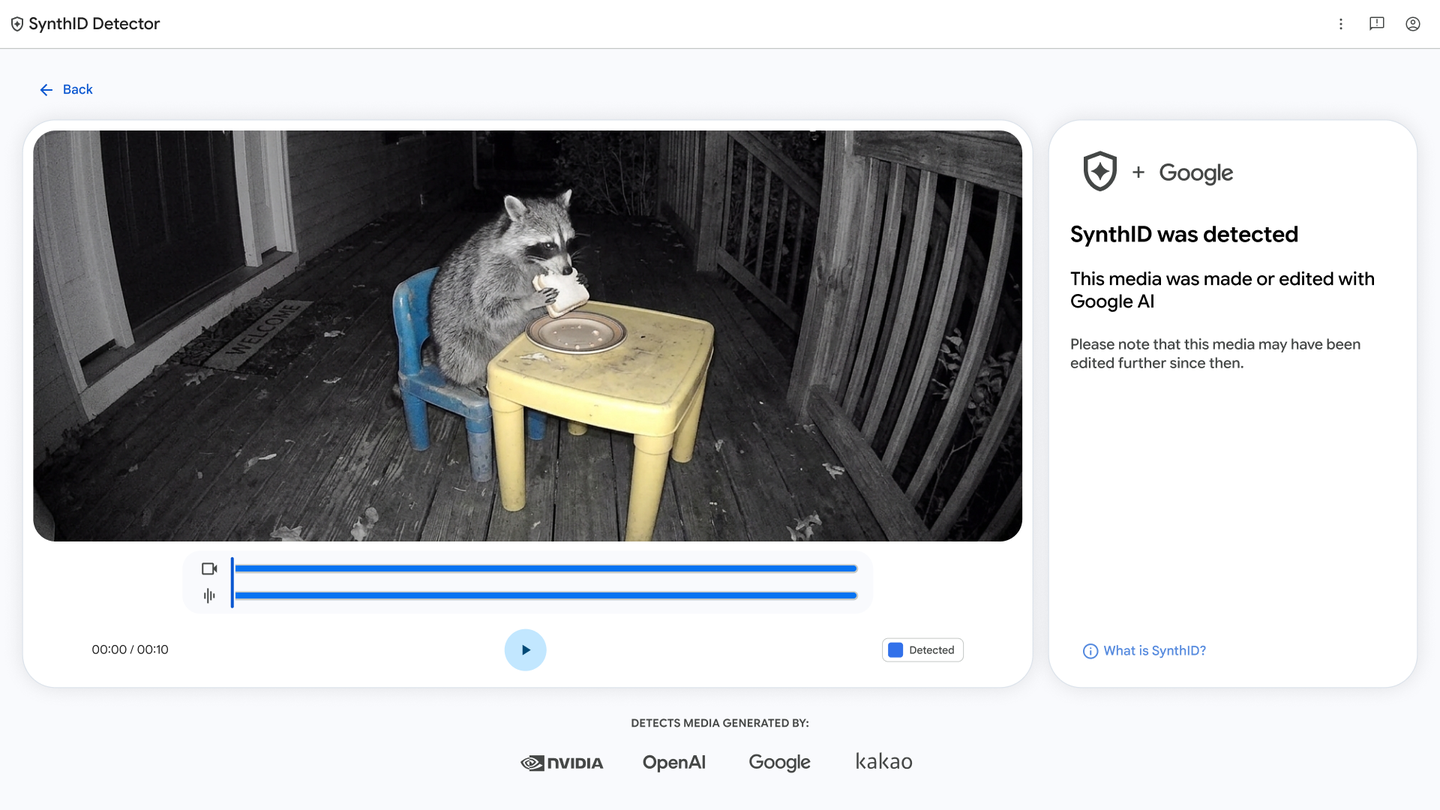
On October 7, 2026, Google DeepMind quietly flipped a switch that content creators, marketers, and journalists had been waiting over a year for: SynthID Detector, the company's tool for identifying AI-generated images, video, and audio, went from a restricted preview for media professionals to a globally available, free, public utility at synthid.com. The announcement, published on Google's official blog by Pushmeet Kohli, VP of Science and Strategic Initiatives at Google DeepMind, also confirmed something arguably more important than the launch itself: the detector can now read watermarks not only from Google's own models, but from OpenAI, NVIDIA, and Kakao — with Apple support announced as coming soon.
If you publish content for a living — a store owner running product ads, a freelancer delivering visual assets, a social media manager scheduling posts across platforms — this changes the rules of the game you're already playing. Your audience, your clients, and your competitors can now verify the origin of a media file in seconds, for free, without any technical skill. This piece explains what SynthID Detector actually does, how to use it, where it honestly fails, and how to adapt your workflow before someone else runs your portfolio through it.
What SynthID is, and why watermarks beat guessing
To understand why this matters, you need to understand what SynthID is not. It is not one of the dozens of "AI detector" sites that statistically guess whether an image looks machine-generated — the ones with embarrassing error rates that have falsely accused real photographers of publishing AI work. SynthID is a watermarking system: when Google's generative models (and now its partners' models) produce an image, a video, or an audio clip, an invisible digital signal is embedded directly into the pixels or the audio waveform. The human eye can't see it, speakers can't reproduce it, and file quality is untouched — but a matching reader can decode it reliably.
Google says that since SynthID launched in 2023, it has watermarked more than 180 billion images and videos plus the equivalent of 240,000 years of audio. That scale is the whole point: detection by watermark only works if the watermarked share of AI content is large, and with OpenAI images now carrying readable signals too, the covered surface just took its biggest jump yet.
Until this month, reading those watermarks was the privilege of a small circle. An early version of SynthID Detector was released a year ago for media organizations and trusted partners only; everyone else had to either ask Gemini directly about an image (a clunky, unreliable workaround) or trust third-party guessing tools. The October 7 launch demolishes that gate — no waitlist, no media credentials, no fee.
Exactly what launched on October 7
- Public global access: anyone, anywhere, can use the detector at synthid.com in English, for free.
- Cross-company watermark support: files generated by Google's models and by OpenAI, NVIDIA, and Kakao are detectable; Apple is listed as a forthcoming partner. Notably, ChatGPT-generated images — which previously escaped Google's checks entirely — are now covered.
- Integration into everyday surfaces: Google reports the detector joins existing verification features in Search, the Gemini app, and Chrome, which together already process over a million verification requests per day.
- Three media types: images, video, and audio can all be uploaded and checked.
Using SynthID Detector: a five-step walkthrough
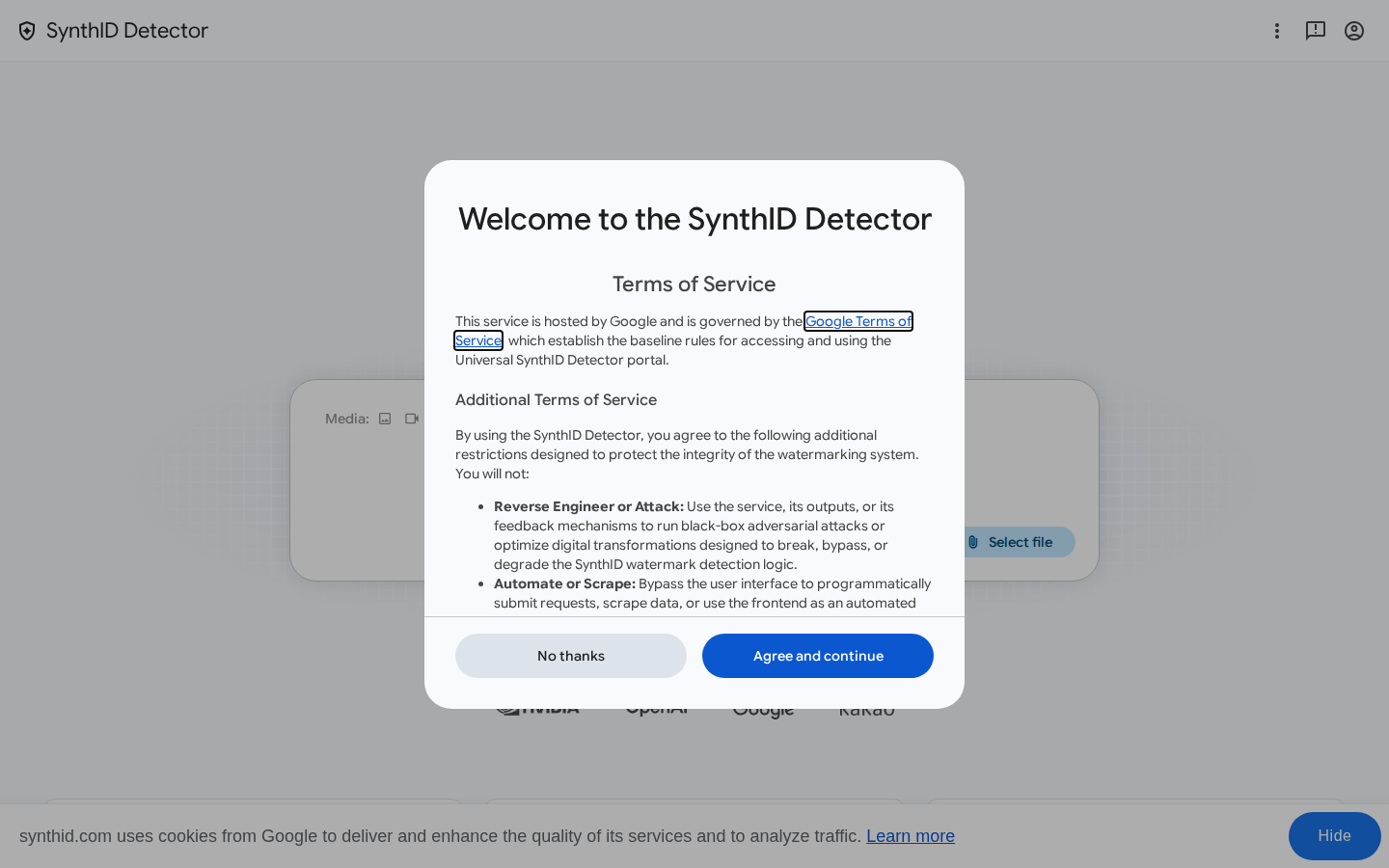
- Go to synthid.com in any browser, desktop or mobile.
- Accept the terms presented in the welcome dialog.
- Sign in with a Google account, an OpenAI/ChatGPT account, or an Apple account. (Yes — Google accepts its rival's login, deliberately, to widen covered usage.)
- Upload the file you want to check: an image, a video clip, or an audio file.
- Within seconds you get a plain verdict: whether SynthID watermarking was used in producing or editing the file.
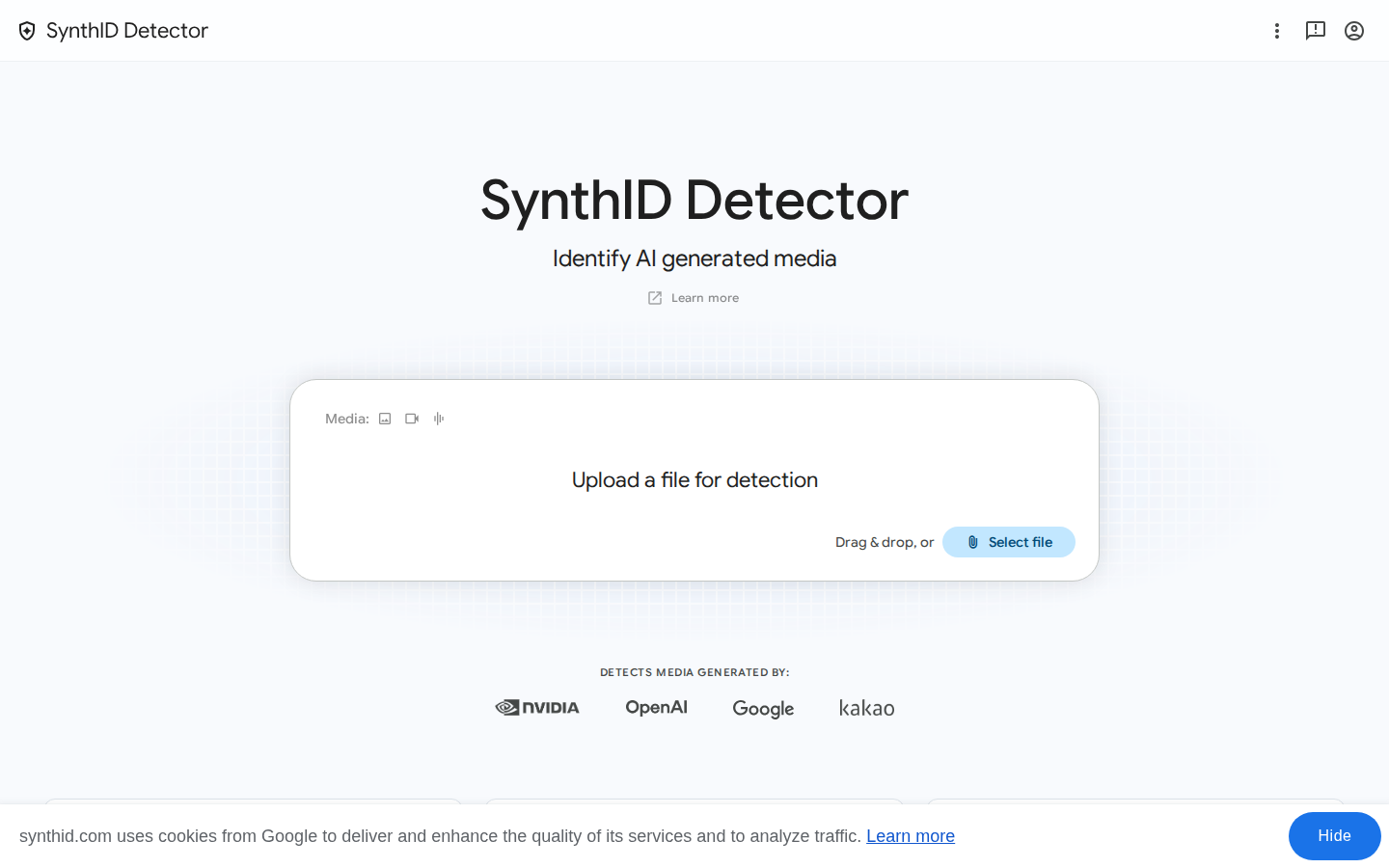
Practical constraints to plan around:
- English-only interface for now. No Arabic, Spanish, or other localized UI has shipped at launch.
- A daily quota of roughly 10 checks across all media types per account. Independent reporting from Ars Technica notes the quota may lock earlier if you upload a batch of visually similar files — an intentional friction layer to stop anyone from industrializing watermark-removal research on top of the tool.
- Login is mandatory. German tech outlet heise flagged this as a real privacy tradeoff: there is no anonymous mode, so every check you run is tied to an account.
- Simple verdicts only. The public tool tells you whether the watermark is present — it does not highlight which pixel regions carry it. That richer forensic view exists only in the internal professional version used by newsrooms.
How we got here: the two-year watermark race
The October launch reads differently if you've followed the sequence. Google first embedded SynthID in experimental image tools back in 2023, then rolled watermarking across its image, video, and audio generators through 2024–2025, shipped a detector preview restricted to newsroom partners, and has now opened the gates. Meanwhile the industry built parallel rails: Adobe and camera makers pushed C2PA content credentials, OpenAI started watermarking its outputs (which is precisely why Google can now read them), Meta developed its own approach, and regulators — the EU especially — turned labeling from courtesy into obligation.
Each layer reinforces the others. Watermarking at generation, detection at inspection, disclosure at publishing, and platform policy at distribution now form a single chain. For working creators the chain has one practical implication: provenance claims are becoming checkable end to end, and the cost of a false "shot this myself" claim is climbing toward the cost of a false copyright claim.
It also explains the quota and login design. A free, unlimited, anonymous watermark oracle would double as a perfect testing rig for anyone engineering watermark-stripping techniques. Google's constraints — accounts, ~10 daily checks, early locks on similar-image batches — are the compromise between public utility and not arming the attackers.
The honest limits — read this before you trust a "clean" result
This is where most coverage stops, and where working creators should pay closest attention:
- No watermark ≠ authentic. The detector reads signals, it doesn't judge realism. Open-weight image models (many Stable Diffusion and Flux variants) apply no watermark at all; fully AI-generated content from those tools will pass as "unmarked." Google itself ships a disclaimer saying as much.
- Meta walks a different road. Meta's watermarking approach is separate, so a "not detected" result on a Meta AI image proves nothing either way.
- Some providers label nothing. An unwatermarked file can be human-made, machine-made, or edited — the tool cannot distinguish those cases.
- The opposite approach exists and is growing: the C2PA standard verifies real content at the moment of capture (Pixel phones already embed capture credentials), rather than tagging synthetic output. We broke down how C2PA affects content creators in our earlier deep dive on watermarking standards.
The correct mental model: SynthID Detector is a positive confirmation tool, not a negative one. A "watermark detected" result is strong, near-conclusive evidence of AI involvement. A "no watermark" result is silence, not proof of authenticity.
What this means for you as a content creator or marketer
1. Disclosure is now cheaper than exposure. If AI-generated visuals are part of your production pipeline (backgrounds for product shots, hero images, video b-roll), assume they are verifiable. Platforms already require AI-content labels on major networks, and the EU's direction of travel is stricter — see our coverage of OpenAI's text watermarking moves in Europe. Being caught passing off synthetic work as organic costs more reputation than disclosing it ever will. The smart play in 2026 is a one-line disclosure habit: "visuals generated with [tool], verified original photography where noted."
2. You just got a free due-diligence instrument. Fake payment screenshots, doctored "product proof" photos from suppliers, suspicious profile photos on freelance applications — a ten-second check now exists for the subset of fakes produced by covered tools. It won't catch everything (see the limits above), but it raises your baseline defenses at zero cost.
3. Agency and freelance delivery standards are shifting. If you buy visual work, you can now sample-verify what you're paying human rates for. If you sell visual work, expect clients to start asking — and get ahead of it by documenting your process. A practical workflow for a small e-commerce brand: generate your ad backgrounds with a watermarked tool (Google's or ChatGPT's), keep originals in organized folders, and when a marketplace or customer disputes an image, run the check publicly. Twenty seconds of verified transparency beats an hours-long argument and protects your store's rating.
4. Arabic-language workflows are affected differently than the UI suggests. The tool doesn't analyze language, so it works identically on Arabic-market content — but the absence of an Arabic interface means most of your audience won't discover it organically. That's a window: Arabic-language creators who voluntarily disclose and explain verification will stand out as the transparent tier while competitors assume invisibility.
Quick comparison: your realistic detection options today
| Method | Cost | What it actually detects | Verdict |
|---|---|---|---|
| SynthID Detector (synthid.com) | Free | Watermarks from Google, OpenAI, NVIDIA, Kakao (Apple soon) across image/video/audio | Best free option; strongest for "positive" AI confirmation |
| Asking Gemini about an image | Free | Similar Google-side signals, loosely applied | Convenient but inconsistent; fine for casual checks |
| Third-party "AI detector" sites | Varies | Statistical guesses at machine-likeness | Unreliable; known false accusations; avoid for decisions |
| C2PA credentials | Built into devices | Proves real-capture provenance and edit history | Complementary standard; strongest for protecting your own work |
Pricing and availability
The public detector is free, with no paid individual tier announced. Constraints: mandatory sign-in (Google, ChatGPT, or Apple account), an English-only interface, a roughly 10-check daily quota, and no geographic restrictions reported across the Gulf, Levant, North Africa, or globally. The richer professional version — with pixel-region highlighting — remains limited to institutional partners.
Frequently asked questions
Can SynthID Detector detect ChatGPT images?
Yes. Since the October 7, 2026 global launch, the detector reads OpenAI watermarks alongside Google's own, plus NVIDIA's and Kakao's. Apple support was announced as upcoming. Previously, ChatGPT-generated images escaped Google's detection entirely — that gap is closed.
Is Google's AI image detector free to use?
Yes, completely free at synthid.com. The trade-offs are a required login, an English-only interface, and a daily quota of roughly 10 checks per account across images, video, and audio combined.
What happens if the detector finds no watermark?
Nothing conclusive. The file may be genuinely human-made — or generated by a tool that applies no watermark (many open-weight models, Meta's separate approach, various apps). Google's own site carries a disclaimer to this effect. Treat "detected" as strong evidence and "not detected" as neutral.
Does the detector work on video and audio too?
Yes — all three media types are supported. Audio watermarking is particularly mature: Google reports over 240,000 years' worth of audio already watermarked, which matters as AI voiceovers become standard in content production.
Do I need to be technical to use it?
No. If you can upload a file to a website, you can use it. Upload, wait a few seconds, read a one-line verdict. The English interface is the only friction for non-English speakers.
The takeaway: verification is becoming part of publishing literacy
The SynthID Detector launch is less about one tool and more about a market transition: provenance is moving from "nice to have" to "assumed." The creators who win the next two years will treat transparency as a feature — labeling synthetic assets, verifying what they receive, and building audience trust that survives scrutiny. The ones who lose will be those betting nobody checks.
If you produce content at scale, a structured workflow helps: research, draft, visuals, scheduling, and publishing from one place. ARWriter is built for exactly that multilingual pipeline, and the built-in tools cover writing and image generation with publishing-ready output — the kind of workflow you can stand behind when the verification questions come.