Last updated: October 15, 2026. The event dated here is YouTube's official blog announcement of October 12, 2026, by Emily Moxley, VP of Product Management, Viewer AI. This is a deep-dive explainer of the update and its impact on channel discovery — not breaking coverage.
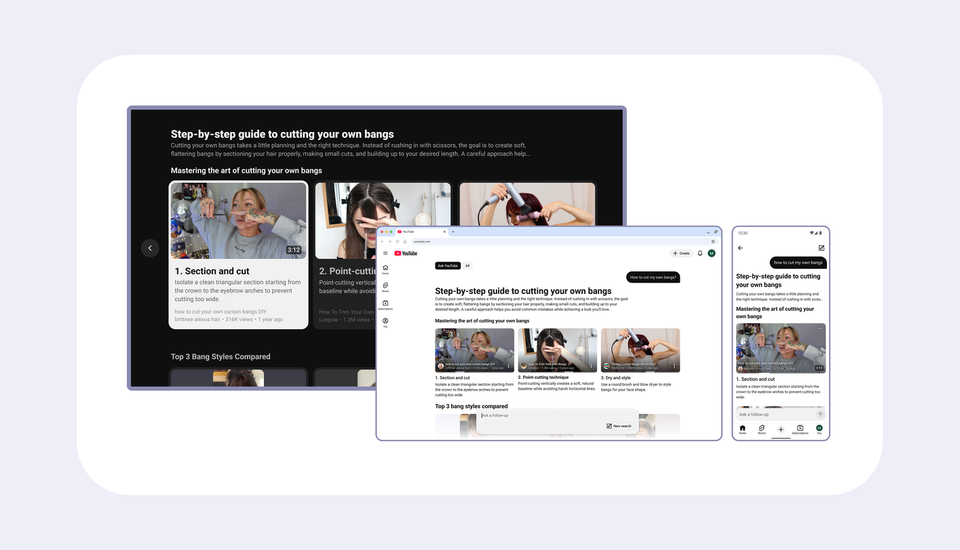
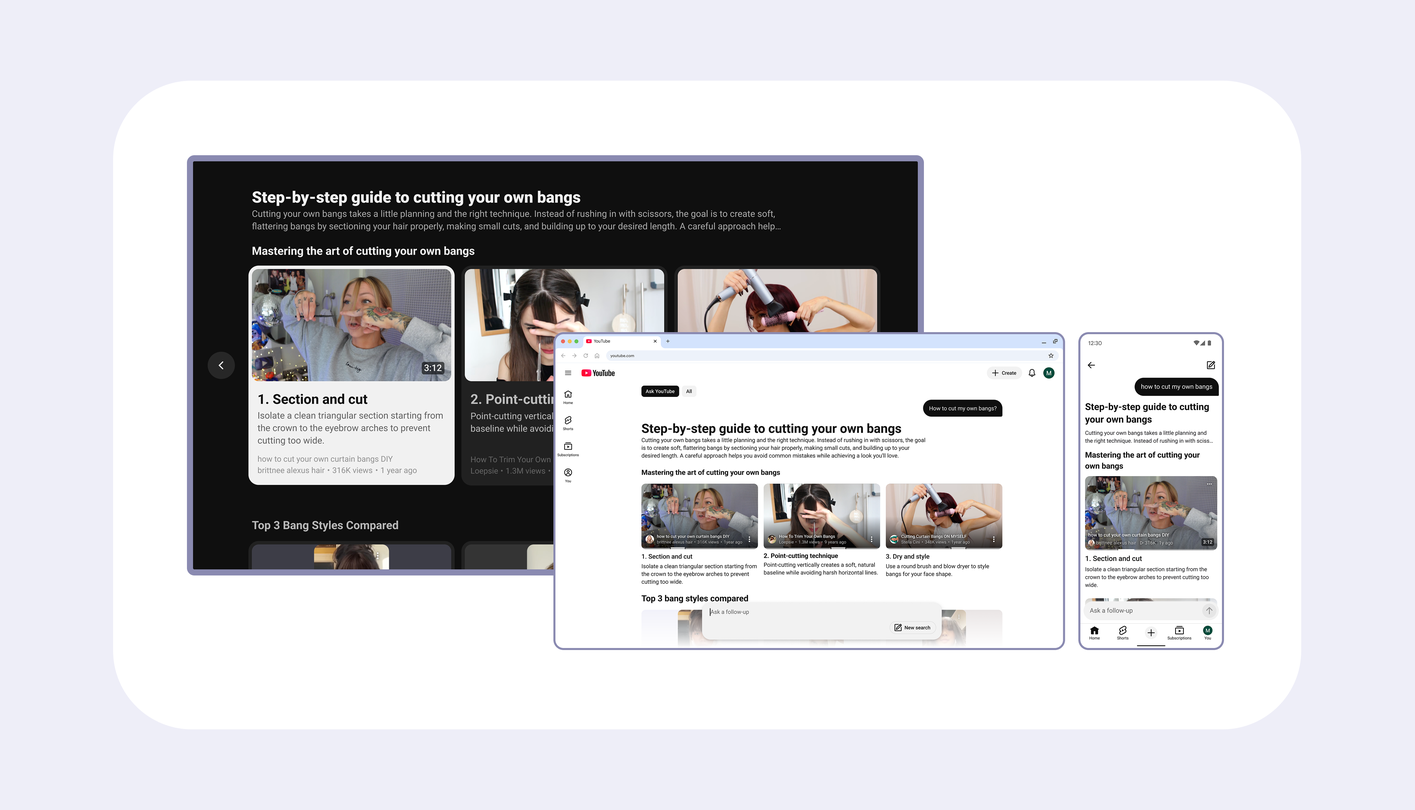
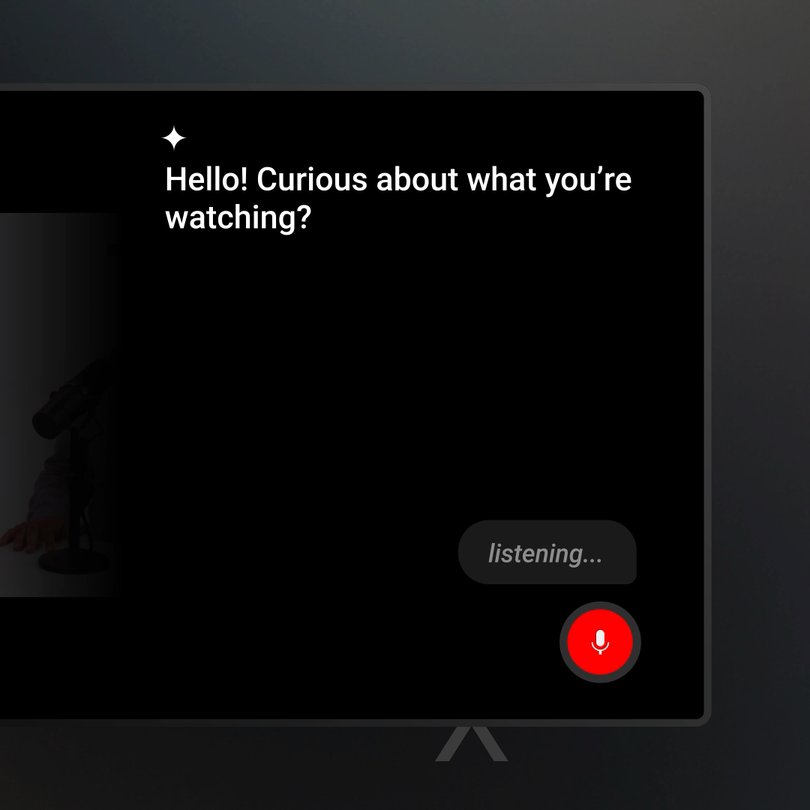
On October 12, 2026, YouTube officially announced that Ask YouTube — the platform's conversational search feature — has arrived on mobile, making it available to US viewers across three surfaces at once: web, mobile, and TV. Viewers no longer type two keywords into a search box and scroll a list of links; they ask YouTube a full question, refine it through follow-ups, and receive interactive results — by typing or by voice from the couch.
For viewers, that is a comfort upgrade. For anyone who runs a channel — and who knows the search box remains the gateway to most new viewers — it deserves a long pause: the way audiences choose videos is shifting from keyword matching to intent understanding. This guide explains the feature exactly as documented, then translates it into a working plan for your channel.
What YouTube actually announced
The official YouTube Blog post documents the following:
- The feature was first announced at Google I/O 2026 and launched on search; this update adds the mobile surface.
- It is now available to US viewers across web, mobile, and TVs.
- Users can "ask complex queries, refine with follow up questions, and receive results in an interactive format" — on the go from a phone, or by voice from the living room.
- The watch-page version is expanding: asking questions from inside the video itself started earlier, and "viewers will soon be able to use Ask YouTube directly from the watch page while watching Shorts and live streams, receiving instant context as the action unfolds."
- The official example use cases: DIY-ing Halloween costumes, diving into video essays, and "debating whether to cut their own bangs."
How audiences search now: understanding question intent
To grasp the size of this shift, compare two search models:
- Classic search: a viewer types "time management" — short keywords — and the algorithm matches them against titles, tags, and metadata, then serves a list of links the viewer must pick through alone.
- Conversational search: a viewer asks "I need a plan to organize my time while working full-time and studying at night — where do I start?" — a long question with clear intent and personal context. The system understands the goal, suggests videos that answer that specific question, then follows up: "make it beginner-friendly," and the results refine instantly.
The essential difference: in the second model, the video that wins visibility is not the one that "contains the words" — it is the one that actually answers the question, clearly. That tilts the field toward well-structured educational content and away from keyword-stuffed filler.
Why non-US creators should care right now
Fair question: the announcement covers US viewers only, so why should an international creator care? Three answers:
- Your US audience already exists: if you produce English content or content aimed at viewers interested in your region from abroad, part of your audience is using this interface today — and your discovery to them has entered a new regime.
- International expansion is a matter of time: YouTube's major search features historically start in the US and spread. When it reaches other markets, viewers will ask their questions in their own languages — and channels that have practiced "question-shaped" content will be ahead of everyone.
- The trend is universal across discovery engines: conversational access is not YouTube-only; every major discovery platform is moving this way. We covered the sibling phenomenon in a separate piece on how content gets cited by Google Gemini and AI Mode — the logic is identical: whoever answers clearly gets picked.
What this means for you as a content creator: six practical shifts
- Question-shaped titles get harder to ignore: when people search with questions, titles that carry the question itself (or its explicit answer) match the intent directly. "How to grow your channel in 90 days: an execution plan" beats "The insane growth secret."
- The actual answer belongs inside the video, not after five minutes of intro: conversational systems evaluate how well a video answers the question. A long, unrelated opener weakens that assessment even when the title is strong.
- Chapters and timed sections gain value: a video segmented into question-titled chapters gives the system ready-made "answer units" to quote inside a user's conversation.
- Multi-question content wins multiple intents: one video answering six real questions about a topic covers six distinct search intents — each one an independent discovery door.
- Shorts and live streams enter the search circle: the coming watch-page expansion for Shorts and live streams means short and live content will also be discovered through questions — give them intent-carrying titles and descriptions.
- The description becomes an answer index: write the exact questions your video answers in the description — not filler, but a map for the conversational system.
- Shorts become a new class of search material: with original content already prioritized in Shorts — as we covered in our piece on the Shorts originality rules change — the watch-page expansion adds a second layer: short videos will be discovered by question, not just by scroll. A Short whose title answers one specific question now stacks two advantages in a single video.
Inside the workshop: a one-hour exercise to turn your channel into an answer hub
General advice does not build channels; exercises do. Run this against your last ten uploads:
- Extract the intent: next to each video, write the real question it answers. If you stall for more than ten seconds framing the question, the problem is the video, not the exercise — either its topic is scattered, or it answers "everything and nothing."
- Rewrite the title as a question or an answer: a recurring real-world example: "One investment fact nobody knows!" matches no actual query. The alternative — "How much do you need to start investing monthly on a limited salary?" — is a question people genuinely type, and a promise the title makes instantly.
- Audit the first 30 seconds: did the video deliver the promised answer immediately, or spend the half-minute on greetings, subscriptions, and preamble? Conversational systems measure promise-keeping — and so do viewers.
- Convert chapters into questions: open your chapter list. Is each chapter title a real question? "Part three" is not a question. "What are the setup fees?" is.
- Draft the description as top-5 questions with one-line answers: that paragraph is now the most valuable real estate on the video page — the index conversational systems grab from.
- Spot the question with no video: across your ten questions, at least two will have no upload of yours behind them — those are your next two productions, pre-validated in your audience's exact wording.
Repeat the intent-and-title steps for every new upload before publishing, and within two months your channel will be built entirely on real search intents instead of guessed topics. One caution for the archive: rewriting descriptions and adding question-titled chapters is safe for old videos, but changing historically successful titles can disrupt their standing — apply the new title formula to new uploads first, and only touch old titles that were vague to begin with and underperforming anyway.
Quick comparison: classic search vs Ask YouTube
| Aspect | Classic search box | Ask YouTube |
|---|---|---|
| Query shape | Short keywords | Full questions with context |
| Interaction style | One query, then browse a list | Conversation with follow-up refinement |
| Surfaces | All | Web, mobile, TV (US for now) |
| Who picks the result | Viewer reads titles and decides | System suggests what answers the question |
| What wins visibility | Text matching and clicks | Clarity of answer and content structure |
| During playback | Not available | Coming to Shorts and live streams |
A practical guide: prepare your channel in seven steps
- Collect your audience's real questions: from your comments, direct messages, and competitor pages — these are literally the coming conversational queries.
- Rewrite the titles of your last 20 videos: turn vague titles into question-or-answer form without losing appeal. Do not touch historically successful URLs — start with new uploads.
- Open every new video with the direct answer: first 30 seconds answer the core question, then elaborate. That serves the viewer and the system together.
- Enable chapters with question titles: every chapter heading should be a question people actually ask, never "part two."
- Write descriptions as short Q&A: five questions with one-line answers per video — ready-made indexes for the system to grab.
- Produce an FAQ video for each major pillar of your channel: big topics deserve a video collecting their recurring questions with tight answers.
- Give Shorts search intent too: a Short's title should answer a specific question — the coming expansion will make short-form conversational suggestion material as well.
Producing these titles, chapters, descriptions, and scripts for every upload is steady writing work — ARWriter's toolset shortens it: question-shaped titles, structured descriptions, and full scripts from one Arabic-first platform.
Honest limitations to know before the hype
- US-only until further notice: the announcement names no market outside the United States and no expansion schedule — any timeline for other regions is guesswork, not information.
- No performance data published: YouTube shared no usage numbers or view-impact data — do not make drastic decisions tied to the feature before real numbers exist.
- The conversational layer may satisfy without a click: a user chatting with the system might get the answer without opening a video — the net effect on channel clicks is an open question worth monitoring.
- Keyword stuffing now backfires twice: a conversational system measures actual answers; thin content wrapped in loud titles gets exposed faster.
- Content in languages other than English is untested in this interface: how well the system parses non-English questions at scale is unknown — one more reason to prepare early, since question-shaped, well-structured content also performs better in classic search today.
Frequently asked questions
Is Ask YouTube available outside the United States?
No. The October 12, 2026 announcement limits current availability to US viewers across web, mobile, and TV, with no international dates mentioned.
Does this mean traditional titles no longer matter?
The opposite: the title is still the first thing both the system and the viewer read. What changed is that an additional factor is now scored — how well the video answers the viewer's actual question.
How can a creator with no US audience still benefit?
By preparing now: question-shaped titles your audience actually asks, direct answers in the first seconds, question-titled chapters, and descriptions organized as answer indexes. These raise performance in today's search and position you for the expansion.
How is this related to AI answers in Google and Gemini?
One direction across both platforms: discovery is moving from matching words to understanding intent and answering questions. We cover the search side in depth in our guide to getting cited by Gemini and AI Mode — the shared rule: whoever answers clearly and in an organized way gets picked and quoted.
Can I use the feature myself for topic research?
If you have access to a US account, yes — try asking your audience's questions and watch which videos the system suggests: that is a live window into how the conversational system sees your competitors' and your own content.
The bottom line
Ask YouTube on mobile and TV is not just a new search button — it moves an entire discovery surface from "words" to "conversation." A channel that answers real questions, with explicit question-shaped titles, organized chapters, and description indexes, will ride the wave whether the feature reaches its market next quarter or next year. And a channel still relying on loud titles and long intros will pay for it twice. Start today: open your last ten uploads and ask one question — does each of these videos answer a question a real person actually asked?
And because preparation takes steady, organized writing — titles, descriptions, chapters, scripts — ARWriter exists precisely for that: one Arabic-first platform to write, plan, and publish your content at a consistent cadence.