Last updated: October 2026
The top organic result kept 7.3% of clicks in March 2024 — and just 2.6% a year later on the queries where an AI Overview appeared, according to Ahrefs' 300,000-keyword study. The click moved inside the answer itself. That is why learning how to get cited in Google AI Mode — and in the Gemini app, which draws answers from the same retrieval pool — has shot up the priority list for marketers, founders, and agencies in 2026.
This guide is built to be checkable: nearly every claim comes from Google's own documentation or a published study — including the parts where Google debunks tactics that agencies still sell. One expectation first, though: nobody can guarantee your page a citation. Google says so itself ("indexing and serving isn't guaranteed"), and each AI response links to only a handful of sources. What you can do is make your content eligible, retrievable, and worth quoting, then measure what changes.
The short answer: getting cited in Google AI Mode and Gemini comes down to publishing text content Google can index and quote, answering questions completely and directly, backing claims with named experts and sourced statistics, keeping your brand entity unambiguous, and letting Googlebot crawl you — no special files or tricks. Nothing guarantees a citation, but these raise your odds.
How AI Mode and Gemini actually choose the sources they cite
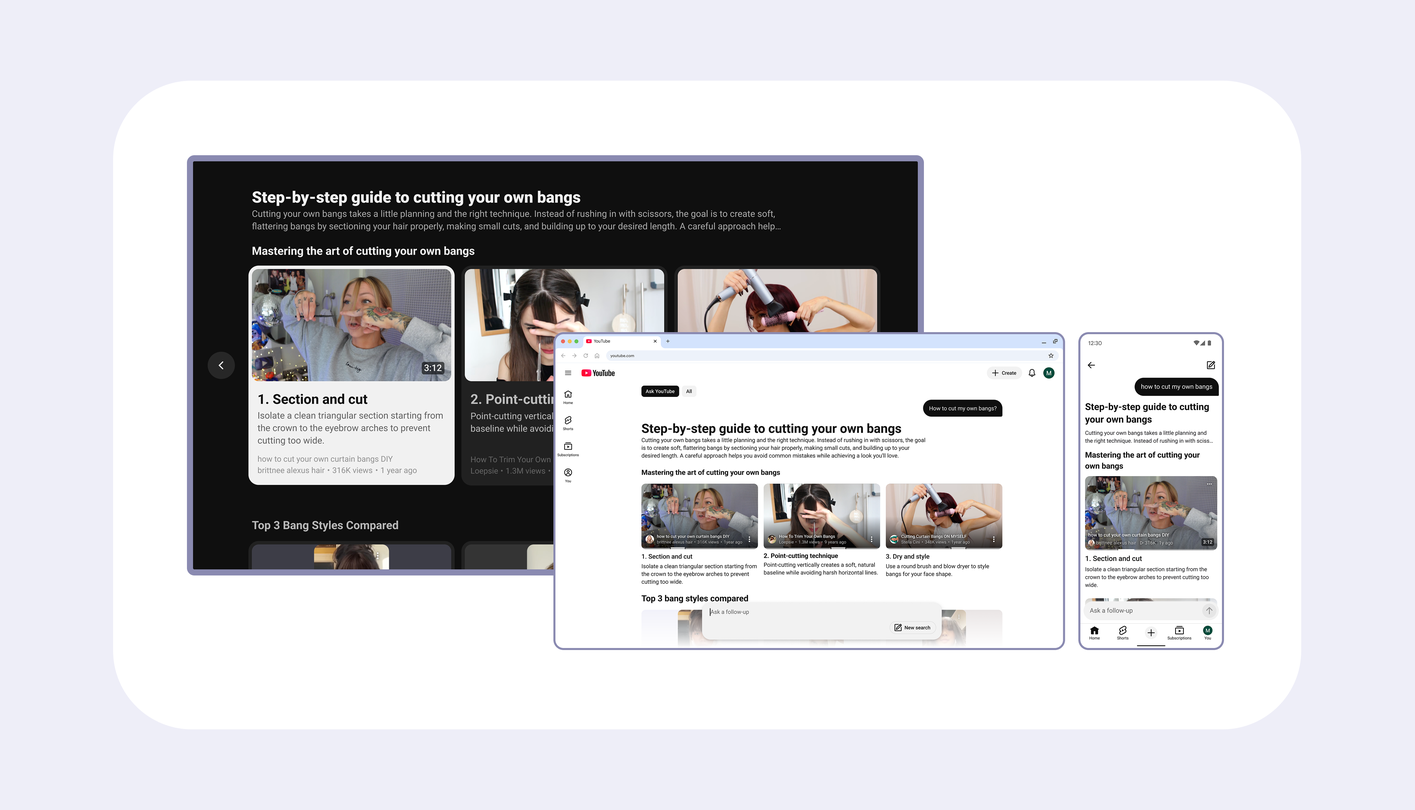
AI Mode and the Gemini app do not answer from memory alone. They use retrieval-augmented generation: your question gets answered from live results pulled out of Google's Search index, and the response carries prominent, clickable links to the sources used. Google calls this grounding.
The part most guides skip is query fan-out. Instead of searching once, AI Mode takes a user's question and issues what Google describes as "a set of concurrent, related queries," then synthesizes the results into one answer. Ask "best CRM for a five-person agency" and the fan-out may run separate queries about pricing, integrations, and comparisons — each one its own retrieval event.
Three consequences follow:
- There is no separate "AI index" to submit to. If Google can index your page and show it as a snippet in regular Search, it is already in the retrieval pool for AI answers.
- Every fan-out query is another citation opportunity. A page that answers several related sub-questions can be pulled into different parts of a single response.
- The fan-out trap is real. Google's optimization guide warns that mass-producing a page for each fan-out query violates its scaled content abuse spam policy. One strong page covering the cluster beats thirty thin ones chasing fragments.
Gemini 4 Argon just changed the answering layer
On October 13 and 14, 2026, Google introduced Gemini 4 Argon, which now powers AI Mode and Gemini app responses — we covered the launch and what it changes for search in our Gemini 4 Argon launch report. For this article, one point matters: Argon changes the model, not the plumbing. Citations still come from Google's Search index, and the eligibility rules in Google's documentation apply across model generations. The tactics below are drawn from that documentation rather than from any single model's behavior — which is why they hold as models upgrade.

What Google actually says about getting cited
Most AI-visibility advice is secondhand. Google's documentation is not. The key statements, quoted:
- On eligibility: "There are no additional requirements to appear in AI Overviews or AI Mode." A page needs what any Search result needs — to be indexed and eligible for snippets.
- On structured data: "Structured data isn't required for generative AI search."
- On llms.txt: Google is blunt — "Google Search itself doesn't use them," and adding one will "neither harm nor help" your site.
- On special formats: Google's guide says you don't need to chunk your content, write in a special style, or add special structured data for AI search.
- On the discipline itself: optimizing for generative AI search — commonly called generative engine optimization, or GEO, sometimes AEO — is, in Google's framing, "still SEO."
- On guarantees: "Indexing and serving isn't guaranteed."
The sources are Google's AI features and your website documentation and its generative AI optimization guide.
Read together, these quotes collapse most of the GEO pitch. There is no new technical ticket to buy and no secret file to upload. What separates cited pages from invisible ones is whether the content is eligible, retrievable, and worth quoting — a content problem with measured answers, covered next.
The click-through reality — and why citations still pay
Two true things at once. First, the traffic math: Ahrefs' study of 300,000 keywords (150,000 with AI Overviews, 150,000 comparable informational keywords without) found the top page kept 34.5% fewer clicks when an AI Overview appeared. Position-one click-through on those queries fell from 0.073 in March 2024 to 0.026 in March 2025.
Second, Google's framing: AI Overviews "often don't trigger" — Google shows them only when its systems judge them additive to standard results — and the clicks they send are, in Google's words, "higher quality (meaning, users are more likely to spend more time on the site)." The reach is real too: Alphabet said in Q1 2025 that AI Overviews serve billions of users monthly.
The honest conclusion: a citation is not a volume play. It is a branding and authority play with qualified traffic attached. When a buyer asks AI Mode a purchase question and your brand is the one named — with your data, your expert, your page — you are in the consideration set before anyone clicks. If you are absent, a competitor is present. Agencies managing HubSpot ecosystems and Shopify DTC brands feel this hardest on informational queries, where AI answers appear most.
Step by step: how to get cited in Google AI Mode
- Confirm eligibility before anything else. The page must be indexed, eligible for snippets, and readable as text. Check indexing in Search Console's URL Inspection tool, make sure robots.txt allows Googlebot, and confirm the page renders with JavaScript disabled — if the main copy loads only through JavaScript, retrieval may never see it.
- Answer one question completely per section. Because fan-out retrieves per sub-question, structure each H2 so it answers a specific question in full: a direct 40-60 word answer first, then the depth. Plain, quotable sentences beat clever fragments.
- Add quotable evidence. Named expert statements, statistics with source and year, references to primary documents. These are the highest-yield edits you can make — the measured table below shows why.
- Make your entity unambiguous. Consistent brand name everywhere, real author bios with credentials, an about page that states plainly what the company does and for whom. If Google cannot connect your page to a clear entity, everything downstream gets harder. Our guide to entity SEO and agent-ready websites covers this layer in depth.
- Cover fan-out the honest way. Build one thorough page per question cluster — including the pricing, comparison, and "how much" variants the fan-out will ask — rather than a page per query string, which is the exact pattern Google's spam policy names.
- Fix commerce data if you sell products. Google's documentation points stores to Merchant Center and Business Profile data for shopping-related AI answers — free wins that most Shopify stores leave unclaimed.
- Test with real queries weekly. Ask your target questions in AI Mode, log which sources get cited, and gap-check what they have — quotes, statistics, dates, structure — that your pages don't.
- Refresh before staleness costs you. Update dates, numbers, and sources as they age. Separately: using Gemini as a drafting and research assistant is a different discipline from being cited by it — we cover the tool side in how to use Gemini 3.8 for SEO work.
What actually moves citation rates: the measured effects
The most-cited evidence base is the Princeton-led GEO paper published at KDD 2024, which found that generative engine optimization methods can lift a source's visibility in AI answers by up to 40%. An analysis of the Princeton GEO paper relayed by Origami breaks the headline into per-tactic deltas:
| Tactic | Measured effect on visibility in AI answers |
|---|---|
| Adding expert or authority quotes | +42.6% |
| Adding statistics | +32.8% |
| Improving fluency | +28.7% |
| Citing sources | +27.7% |
| Keyword stuffing | −8.7% |
Notice the pattern: every positive tactic adds verifiable substance, and the only negative one adds noise. That is close to the opposite of keyword-first SEO. Who said it, what number, which source, how fresh — quotable evidence is what retrieval and synthesis reward, which is why the steps above front-load it.
The citation-audit checklist
Run every page you care about through this. Copy it into your task tracker as-is:
- ☐ The page is indexed (Search Console URL Inspection, not guesswork)
- ☐ The page is eligible for snippets — no
nosnippet, no misapplieddata-nosnippet, nomax-snippet:0 - ☐ Main content is textual HTML — not locked inside images, canvases, or JS-only widgets
- ☐ robots.txt allows Googlebot on the page's path
- ☐ The page renders fully with JavaScript disabled
- ☐ Every H2 answers one question completely, direct answer first
- ☐ Key claims carry a named source and a date
- ☐ At least one attributable expert statement appears on the page
- ☐ Brand and author names match your about page and profiles exactly
- ☐ No near-duplicate pages target single fan-out query variants
Most sites fail items 3 and 5 first: the content exists, but retrieval cannot read it. Fix eligibility failures before producing anything new.
If you need to produce research-backed long-form content consistently, ArWriter gives you an AI writing workspace with a bilingual auto-writer from $4.99/month — less than a single freelance article. See the plans and tools.
How a Leeds DTC brand earned its first 400 AI citations in 90 days
Here is the playbook in motion — a composite example of a pattern we see repeatedly, with details changed.
Bramley & Wren is a skincare brand in Leeds, selling through Shopify with a four-person content team. In early 2026, its head of growth, Priya Nair, watched the brand's biggest guide lose roughly 40% of its organic sessions in two quarters. The demand hadn't disappeared — the answers had moved into AI Overviews, and Bramley & Wren wasn't in them.
The audit found unglamorous problems. Ingredient guides loaded their body text through a JavaScript widget. A CDN rule was quietly blocking part of the guides directory. Most pages were adjectives without evidence: no dates, no sources, no experts.
Over 90 days the team ran eligibility and evidence fixes. They rebuilt the guides as plain crawlable HTML with a 40-60 word direct answer under each H2. They commissioned two dermatologists for quotable statements. They attached a sourced statistic — with year and publisher — to every major claim. And they collapsed 23 thin query-variant pages into 6 pillar guides, deliberately not building one page per fan-out query.
At day 90, pages cited in AI answers had grown from 6 to 47, tracked citation appearances crossed 400 across the weekly sample of target questions, and overall organic sessions were up 11%. The quieter numbers mattered more: branded search up 28%, and AI-referred visitors spending more time on site than average — matching Google's higher-quality-click framing.
Nothing in the stack was AI-specific. Eligibility, evidence, consolidation: the boring three.
What gets you filtered out — or treated as spam
- Cloaking and AI-gateway tricks. Serving different content to AI systems than to users is cloaking, and Google classifies manipulating gateways for AI retrieval as spam. The risk lands on the whole domain, not just the AI answer.
- Keyword stuffing. It doesn't just fail — it measurably backfires, at −8.7% visibility in the GEO paper analysis.
- Inauthentic mentions. Manufacturing mentions, reviews, or expert quotes that never happened is what Google calls "not helpful." If the expert didn't say it, don't quote it.
- Fan-out farming. One page per query variant, at scale, is the exact pattern Google's scaled content abuse spam policy names.
- Accidental self-blocking. Teams that blanket-block "AI bots" in robots.txt or CDN rules sometimes catch Googlebot in the net — losing regular Search along with AI answers. The matrix below shows what each crawler controls.
- Chasing tricks instead of eligibility. llms.txt files, special structured data, chunking schemes — Google says none of it matters for AI answers. Time spent there is time not spent on the checklist.
Who can quote you: the crawler and opt-out matrix
If you want fewer AI appearances — or none — the controls are snippet controls, not AI controls:
nosnippet— removes text snippets for a page in Search. Since AI answers quote snippet-eligible content, this is the strongest lever short of deindexing.data-nosnippet— blocks specific HTML regions from being used as snippets.max-snippet— caps how many characters can be quoted.noindex— removes the page from Search entirely, AI answers included.Google-Extended— blocks Gemini and Vertex AI model training. It does not opt you out of Search, AI Overviews, or AI Mode. Plenty of sites block it expecting citation removal; it doesn't do that.
And mind the latency: changes take effect only after recrawling, which Google says can take "several days to several months."
If your concern is the wider AI surface, know which crawler feeds which engine:
| Crawler | Operated by | Feeds | If you block it |
|---|---|---|---|
| Googlebot | Google Search indexing — the pool AI Overviews and AI Mode retrieve from | You leave Search and Google AI answers entirely | |
| Google-Extended | Gemini and Vertex AI model training | No effect on Search or Google AI citations | |
| OAI-SearchBot | OpenAI | Linked web results in ChatGPT answers | You drop out of ChatGPT's cited sources |
| GPTBot | OpenAI | Model training, not live answers | No direct effect on current answers |
| Claude-SearchBot | Anthropic | Web results cited in Claude's answers | You drop out of Claude's cited sources |
| PerplexityBot | Perplexity | Perplexity's answer index | You drop out of Perplexity answers |
For the ChatGPT side of this discipline — OAI-SearchBot versus GPTBot in practice — we wrote a dedicated companion guide on getting cited in ChatGPT and AI search answers.
How to measure AI citations without fooling yourself
Start with first-party data. In June 2026, Google announced Search Generative AI performance reports in Search Console, giving publishers direct reporting on AI-answer impressions, clicks, and cited URLs for the first time. If you have access, this is your source of truth.
Then know what third-party tools can and cannot do. Google's own words: "No third-party tool has access to our internal ranking or AI systems." Tools like Semrush's AI visibility features estimate your share of voice across sampled prompts — genuinely useful for trend tracking and competitor benchmarking, useless as an oracle. We put the full AI-search tracking workflow through its paces in our Semrush One AI search review.
A measurement loop that holds up:
- Weekly: run your 20-50 target questions through AI Mode and AI Overviews; log which sources get cited.
- Monthly: compare against Search Console's generative AI report for impressions and clicks that sampling cannot see.
- Quarterly: benchmark share of voice with a third-party estimator, against the same competitor set.
- For market context, follow the analyst layer: Growth Memo, the specialist AI-search newsletter tracking a proprietary index of 2,500+ sites for 29,000+ subscribers.
Frequently asked questions
How does Google AI Mode choose which websites to cite?
AI Mode uses retrieval-augmented generation: it breaks your question into a set of concurrent, related queries, retrieves results from Google's Search index for each, then grounds its answer in the most useful sources and links to them. There is no separate AI index or submission process — eligibility follows normal indexing and snippet rules.
Does a citation in AI Mode actually send traffic?
Yes, but less than classic rankings did, and differently. Ahrefs measured 34.5% lower click-through for top pages when an AI Overview is present, while Google says the clicks that do come are "higher quality." Treat citations as brand visibility with qualified traffic attached, not as a like-for-like traffic channel.
What is GEO vs SEO vs AEO?
GEO (generative engine optimization) targets being cited inside AI-generated answers; AEO (answer engine optimization) targets answer-style surfaces like voice assistants; SEO targets classic ranked results. Google's own guidance collapses the distinction — optimizing for generative AI search is, in Google's framing, "still SEO."
Do I need structured data or an llms.txt file to appear in AI answers?
No. Google states that "structured data isn't required for generative AI search," that Google Search doesn't use llms.txt files, and that they neither harm nor help. Structured data still helps Google understand specific page types — it just isn't an entry requirement for AI answers.
How do I turn on Google AI Mode?
In the Google app on mobile, tap the AI Mode tab in the search bar; on desktop, open Google and select AI Mode from the search tools if it appears for your account. Rollout is gradual across countries, apps, and account types.
Why is AI Mode not showing in my Google account?
Usually rollout or account context. AI Mode is region-dependent, can require the latest Google app version, and may be limited on certain Workspace-managed accounts and languages. Update the app, check your account type and country, and try Google directly on desktop.
Can I opt out of AI Overviews and AI Mode?
Partially, through snippet controls. nosnippet, data-nosnippet, and max-snippet limit how much of your content can be quoted; noindex removes you from Search entirely, AI answers included. Google-Extended only blocks model training — not Search or AI citations. Changes apply after recrawl, which Google says takes several days to several months.
How do I track AI citations and AI Mode traffic?
Start with Search Console's Search Generative AI performance report for impressions, clicks, and cited URLs. Third-party tools like Semrush's AI visibility features estimate share of voice from sampled prompts — helpful, but Google notes that "no third-party tool has access to our internal ranking or AI systems."
What to do next
The whole guide compresses into four moves:
- Run the audit checklist on your ten most commercial pages this week.
- Fix eligibility failures first — JS-only content, snippet blocks, robots and CDN mistakes.
- Add evidence to your strongest pages: named experts, sourced statistics, dated claims.
- Set up the measurement loop before publishing anything new, so every change teaches you something.
No citation is guaranteed — Google is explicit about that. But eligibility, evidence, and consolidation are the documented, measured way to stay in the running every time AI Mode and Gemini go looking for sources.
And if producing research-backed long-form content consistently is your bottleneck, that is exactly what ArWriter is for: an AI writing workspace with a bilingual auto-writer from $4.99/month — less than a single freelance article.
Sources
- Google Search Central — AI features and your website — Google's reference on how AI Overviews and AI Mode cite and quote content, including eligibility and opt-out controls.
- Google Search Central — Generative AI optimization guide — Google's own guidance on query fan-out, llms.txt, structured data, and why it frames GEO as "still SEO."
- Search Central Blog — Introducing Search Generative AI performance reports in Search Console — the June 2026 announcement of first-party reporting on AI citations and clicks.
- Aggarwal et al., "GEO: Generative Engine Optimization" (KDD 2024) — the Princeton-led study measuring up to 40% visibility gains from GEO methods.
- Ahrefs — AI Overviews Reduce Clicks by 34.5% — the 300,000-keyword CTR study behind the traffic numbers in this guide.