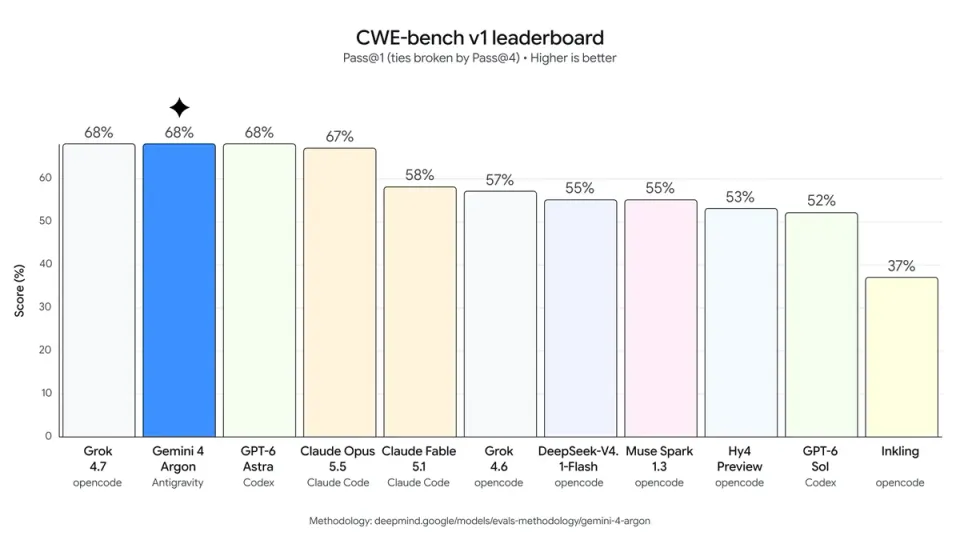
Google closed September 2026 with a statement piece: on the evening of September 30, the company announced Gemini 4 Argon, a new frontier model that it calls "our next era of frontier intelligence." The announcement came from Koray Kavukcuoglu, SVP at Google DeepMind and Google's Chief AI Architect, on the official Google blog. If you write long-form content, prepare research-heavy reports, or run a content operation that lives on documents, this launch matters more than the usual model-of-the-week story — and it comes with a twist most headlines missed: you cannot actually use it yet.
Here is the part buried under the benchmark charts. Argon is rolling out in phases, starting with "a set of trusted cyber defenders" through what Google calls the Fairwind Program. The company says it is also engaged in the U.S. government's voluntary pre-release access process, and that wider availability to "developers, enterprises, and consumers" will come as soon as possible — "starting with paid API customers and Google AI Ultra subscribers." So the practical question isn't whether to switch tools today. It's what changes for your workflow the moment this model reaches your stack, and at what cost.
Source: official Google blog announcement.
What Gemini 4 Argon actually is
Argon is the fourth generation of Google's Gemini family, and Google built it around three arenas: real-world software engineering, enterprise knowledge work — the announcement specifically names legal and finance tasks — and cybersecurity defense. Tucked into the closing paragraph, though, is a fourth word that matters to this audience: the model was also built, quote, with frontier-level capabilities in "creative writing." For a launch dominated by vulnerability-patching demos, that is a deliberate signal about long-form writing being a first-class use case.
Two numbers in the announcement stand out for anyone producing written work at scale:
- A one-million-token output limit per response, up from 64K in the previous generation. In practice, that is the difference between a model that drafts a section and a model that can sustain a complete white paper, a full documentation set, or an entire interconnected content series in one coherent pass without running out of room halfway through.
- An aggressive introductory price: $2 per million input tokens and $10 per million output tokens, with cached input discounted 95%. That pricing puts frontier-class long-form generation within reach of small content teams and solo operators, not just enterprises.
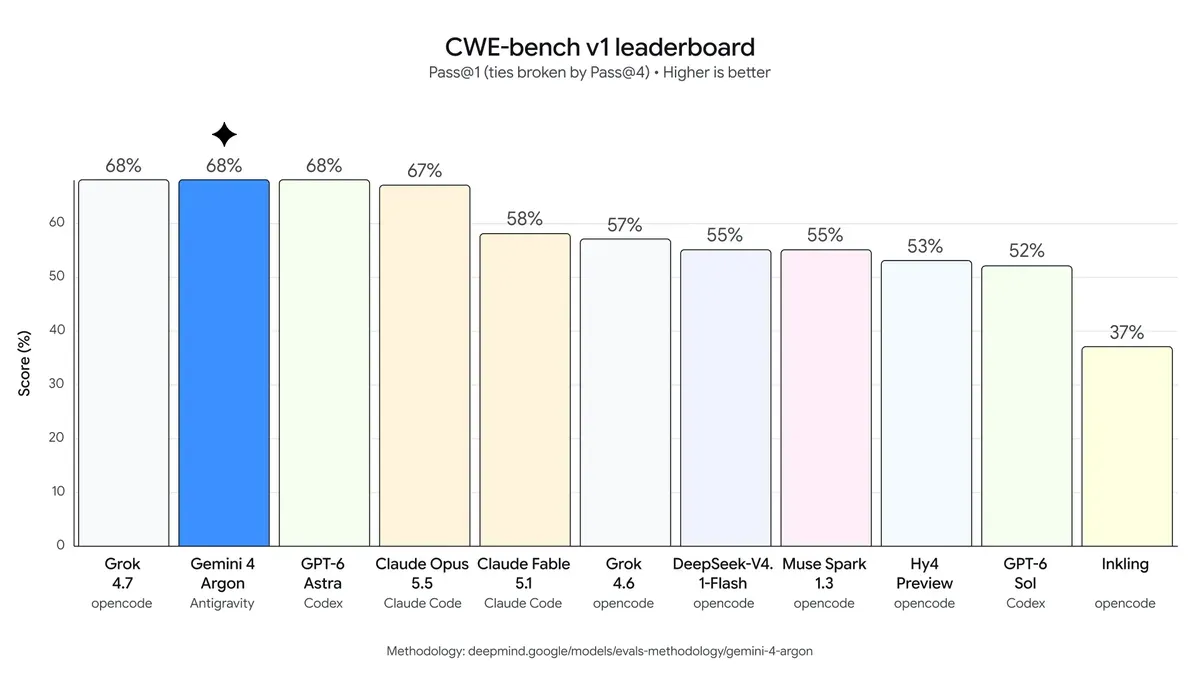
The benchmarks that matter for writers and researchers
Most of the published numbers lean technical, but several speak directly to research-and-write workflows:
- #1 on the Vals Index, which measures economic impact across finance, coding, legal, and tax work — exactly the kind of multi-source, precision-critical tasks that swallow a specialist writer's day.
- Strong results on Harvey's Legal Agent Benchmark for multi-step legal research and drafting.
- 91.7% on LVBench for long-video understanding, alongside professional chart analysis and action across series of documents — capabilities any analyst producing visual-heavy explainers can use.
- #1 at 51.3% on Zapier's AutomationBench for end-to-end execution of core business tasks.
Inside Google, the blog says thousands of Googlers already run Argon in daily work, and it credits the model with better writing quality and deeper research, alongside heavier engineering feats like freeing over 300 TiB of memory across Google's data centers.
What this means for you as a content creator
- Long documents become genuinely automatable. A million-token ceiling means you can generate a complete guide or white paper in one consistent pass instead of stitching fragments that drift in tone and structure.
- The research phase gets heavier support. The legal/finance knowledge-work scores point to a model that can absorb large document sets and extract defensible conclusions — half the job of any B2B or technical writer.
- Unit economics improve for volume operations. At $2/$10 per million tokens with cheap caching, agencies running multi-blog operations can reprocess the same reference corpora repeatedly without the bill exploding.
- Don't rip up your current stack this week. The model is not in the free Gemini app, and Google explicitly says it is still hardening guardrails and gathering tester feedback before broad release. Tools you rely on today — from current Gemini models to writing suites like ARWriter's auto-writer — remain the right choice until Argon is actually reachable.
For context, we covered the launch of Claude Sonnet 5.5 just days ago — a writing model 30% faster than its predecessor. The "deep writing" segment is heating up fast, and the eventual winners are writers who get their workflows ready now.
Quick comparison: Argon vs. what you use today
| Aspect | Gemini 4 Argon | Current mainstream writing models |
|---|---|---|
| Output ceiling | 1M tokens per response | Typically thousands to tens of thousands |
| Pricing (introductory) | $2 / $10 per million in/out tokens | Varies by model and plan |
| Availability now | Phased: cyber defenders first, then paid API + AI Ultra | Generally available in free and paid apps |
| Strength | Long, complex knowledge work (legal, finance, research) | Everyday speed and instant access |
| Arabic support | Not specified in the announcement | Supported to varying degrees in current models |
Honest limits and caveats
- You are not in the first wave. The initial cohort is the Fairwind cybersecurity program, and U.S. government pre-release review comes before broad access. Regular users queue behind both.
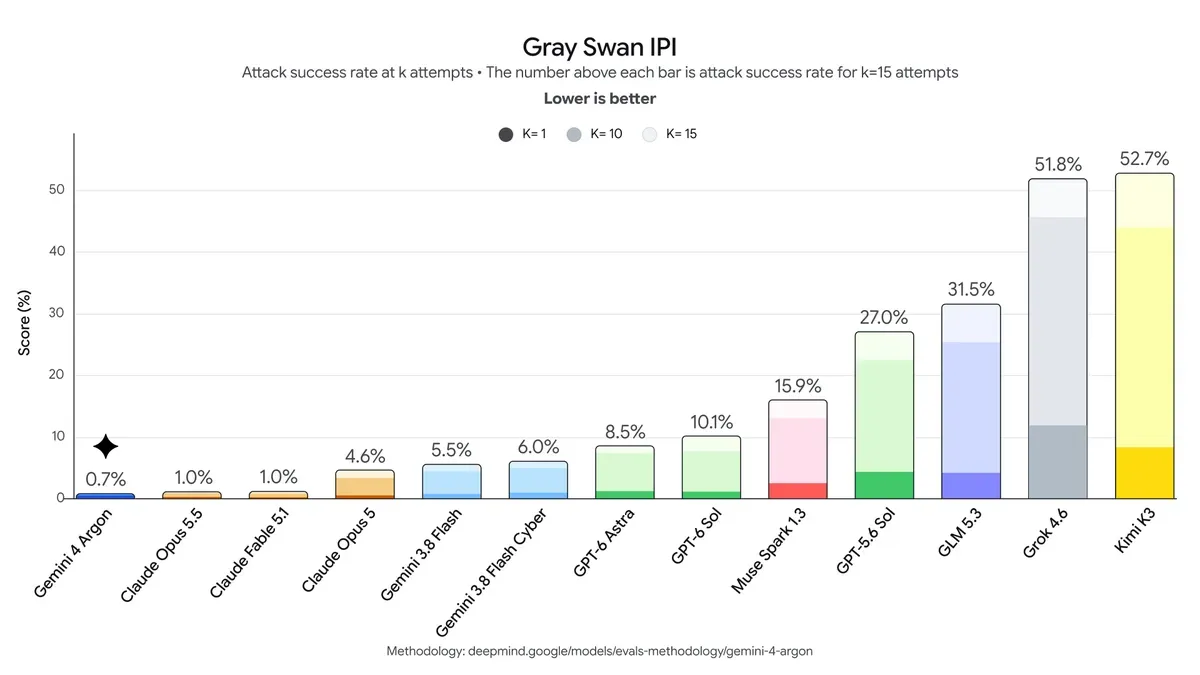
- Security-first tuning may mean stricter refusals. The announcement details extensive misuse defenses, internal-activation monitoring, and red-teaming; everyday writing behavior may feel different from the benchmark scores.
- No Arabic-specific claims. Google said nothing about Arabic quality, so treat any viral claim you see about language performance as unverified until public testing exists.
- Benchmarks are not your use case. A 77.9% score on a software engineering benchmark or 91.7% on video understanding does not automatically translate to better blog posts — the real verdict arrives with broad public use.
Frequently asked questions
When can regular users try Gemini 4 Argon?
There is no fixed date. The announcement says "soon" and defines the order: trusted cyber defenders via the Fairwind Program first, then paid API customers and Google AI Ultra subscribers, then everyone else. If early access matters to your business, watch Google AI plan updates.
How much does Gemini 4 Argon cost?
The introductory API pricing is $2 per million input tokens and $10 per million output tokens, with cached input at 95% off. These are developer API rates — consumer access arrives through Google AI Ultra subscription tiers, which are priced separately.
Does Gemini 4 Argon support Arabic?
The announcement makes no Arabic-specific claims. Gemini models generally handle Arabic in existing apps, but Argon's real-world Arabic quality will only be known after public release and independent testing.
Will the free Gemini app change immediately?
No. The rollout is phased and starts with paid channels. Free-app users should expect the usual pattern: later arrival, likely with reduced limits compared to paid tiers.
I write marketing content and blog posts — is the 1M token ceiling actually useful?
It shines on big projects: complete guides, white papers, content series, research reports. For short daily posts the difference is smaller, and a faster, cheaper model often wins there — you can run that workflow today with tools like ARWriter without waiting.
The bottom line
Gemini 4 Argon is less about another chart-topping score and more about where the competition is heading: long-horizon knowledge work. Deep research, specialist drafting, massive coherent documents — at prices small teams can pay. For writers, the smartest move right now is preparation: nail down a clean writing and publishing workflow in one place, so that when frontier models like this reach your tools, you compound the gain instead of scrambling. The writers who win the next cycle are the ones whose systems were ready before the model arrived.