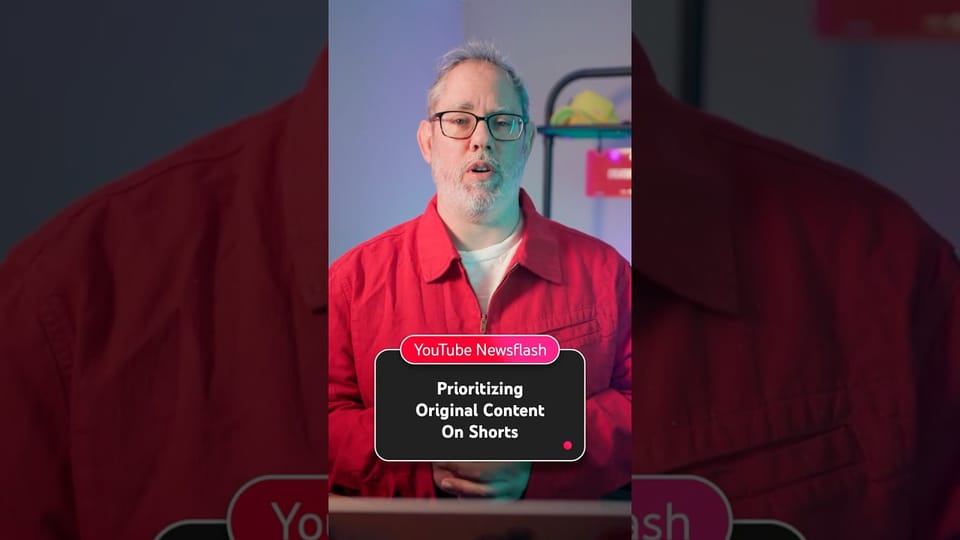
YouTube has quietly redrawn the rules of Shorts discovery. On October 1, 2026, Rene Ritchie, the platform's Creator Liaison, published a video on the official Creator Insider channel announcing that YouTube's recommendation system will now prioritize original Shorts — and deliberately squeeze the reach of channels that mostly re-upload other people's clips without meaningful changes. If your Shorts strategy leans on borrowed footage, this is the moment it gets expensive.
The official announcement video from YouTube's Creator Insider channel, October 1, 2026.
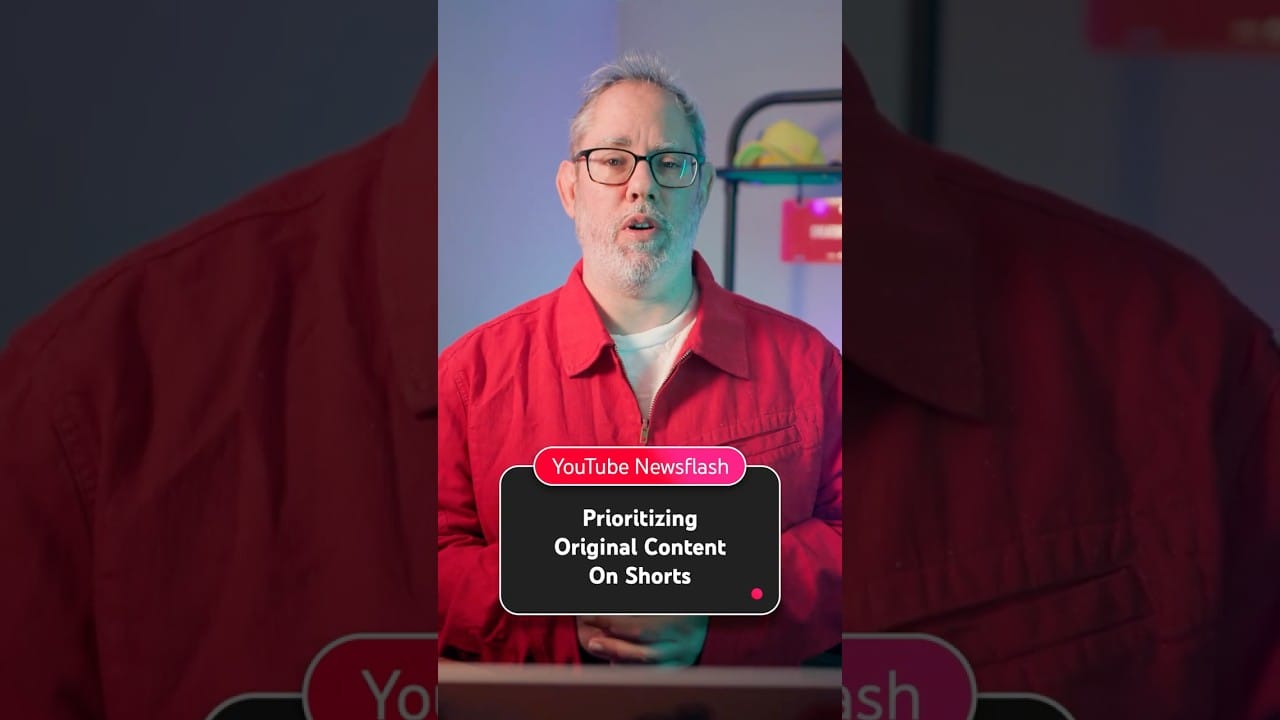
What exactly changes
Three things, per the announcement. First, the recommendation system now ranks genuinely original Shorts higher in the feed. Second, channels that mainly aggregate or re-upload other creators' clips "without significant changes" will see measurably less reach. Third — and this is the part most summaries skipped — the door is open for recovery: channels that shift toward original content will have their reach re-evaluated. YouTube is not exiling anyone permanently; it is repricing attention in favor of makers.
Worth underlining: this is a recommendation update, not a monetization change. YouTube's earning rules for borrowed content stay as they were clarified in July 2025, and the new video doesn't touch them.
What doesn't count as original anymore
Ritchie was unusually concrete about the three workarounds that will no longer protect a re-upload:
- Voiceover narration that merely describes the picture — "now the player shoots… and scores" adds nothing a viewer couldn't see.
- Minor technical edits — a trim here, a zoom there, a logo in the corner, a subtle speed change.
- Template-based bulk changes — the kind of formulaic transformations that get stamped onto dozens of clips in one batch.
What YouTube wants instead is your own commentary, your analysis, your storytelling — something in the clip that did not exist in the source. And for creators who simply want to put someone else's video in front of their audience, Ritchie pointed at the channel's Posts tab, which routes viewers to the original upload instead of a copy.
Why this matters for every Shorts creator
The economics of Shorts channels have long rewarded a gray zone: find a viral clip, add a caption track, ride the algorithm. That zone is closing. If you run a commentary, reaction, or compilation channel, the honest question to ask of your last twenty uploads is blunt: if I deleted the borrowed material, would anything of mine remain? If the answer is "not much" in most of them, the update is aimed at you.
The practical reading of the policy is also more forgiving than the headlines suggest. Reaction content isn't banned — lazy reaction content just lost its subsidy. A reaction that pauses, argues, explains and adds a perspective the original never had is exactly what "original" means here. Meanwhile, platforms are converging on the same answer: Instagram already excludes re-upload accounts from recommendations (reels since 2024, photos and carousels since April 2026, with a 30-day recovery window), and Facebook has been cutting distribution for permissionless reposters since July 2025.
Three kinds of channels, three outcomes
To make the rule concrete instead of abstract, picture three typical channels and how the new system treats them.
The "best moments" aggregator with descriptive voiceover: squarely in the crosshairs. Even if the back catalog keeps some traffic, new uploads face a descending reach ceiling, and growth stalls until the workflow changes. The good news is that the return door is officially open — and pivoting early costs less than pivoting late.
The reaction channel that pauses, argues and explains: mostly safe, because added analysis is precisely what Ritchie called value of your own. The discipline is checking the ratio in every upload: a reaction that's mostly laughter and silence drifts toward the gray zone, while one that supplies context and opinion becomes more valuable as weaker competitors exit the feed.
The fully original channel: the biggest winner. Less aggregator competition for the same recommendation slots, and an algorithm explicitly re-priced in its favor.
Context worth pinning: YouTube is neither first nor fastest here. Instagram settled the same fight on reels in 2024 and extended it to photos and carousels in April 2026; Facebook tightened its reposting rules in July 2025. YouTube's tardiness is exactly what made Shorts the last refuge for aggregation channels once other platforms closed their doors — and that door has now shut too. The industry-wide message is uniform: 2026 algorithms pay a premium for content that exists nowhere else.
A worked example of the pivot
Take a channel that compiles odd AI-generated clips with a one-line caption. The defensible version of the same idea looks like this: pick one clip instead of ten, and build thirty seconds of narration around it — "this looks like magic, but it was generated by a specific tool, and here's how to spot the fake with your own eyes" — then add your take and close with a question to viewers. Similar effort, but the clip is now intellectually yours: its angle, structure and voice. That is precisely the difference the new system measures, and it's the muscle worth training over the coming weeks — turning existing material into a perspective only you would produce.
Quick comparison: how each platform treats re-uploaded content
| Platform | Current rule | Recovery path |
|---|---|---|
| YouTube (new, Oct 1, 2026) | Less reach for re-uploads without significant change | Yes — reach is re-evaluated as you shift to original |
| Re-upload accounts ineligible for recommendations (reels 2024; photos/carousels Apr 2026) | Yes — rolling 30-day originality window | |
| Less distribution, monetization suspensions for reposters (since Jul 2025) | Yes — after suspension period |
Honest limits of this announcement
The video did not give a precise enforcement date for every account, and it described no strikes, flags, or account-status penalties — the lever is distribution, not discipline. It also stayed silent on a popular gray area: creators who cut Shorts out of their own long-form videos, a practice awaiting clearer wording. And because this is a recommendation change, channels may see reach drift gradually rather than fall off a cliff, which makes early measurement important.
What to do this week
- Audit your last twenty Shorts and tag each one: fully mine, borrowed with real input, or borrowed with cosmetic input.
- Rebuild your three best-performing "borrowed" clips as original pieces — same idea, your script, your voice, your angle.
- Use the Posts tab to share other creators' videos your audience loves, instead of re-uploading them.
- Track average views over the next two weeks; that trend is your earliest signal of where you sit in the new equation.
For scripting help, ARWriter's auto-writer drafts complete original scripts — and if you missed them, we covered the new AI tools YouTube shipped inside Studio earlier this season, which pair well with this pivot.
Frequently asked questions
Is voiceover over someone else's clip now original?
Descriptive voiceover alone is not. YouTube requires added value — your commentary, analysis, or storytelling, not a narration of what's visible on screen.
When does the change take effect on my channel?
The October 1, 2026 announcement gave no exact per-account schedule. Recommendation changes at YouTube typically roll out progressively, so watch your analytics rather than a calendar date.
Does this affect my monetization?
Not directly. The update governs recommendations and reach. Monetization rules for borrowed content are separate and unchanged by this announcement.
Are reaction videos dead?
No — hollow ones are. Reactions that bring genuine commentary, pauses, analysis and personality are precisely the "original with added value" this policy rewards.
Can a channel recover its reach after being hit?
Yes. YouTube explicitly said channels that move toward original content will have their reach re-evaluated. The policy is designed to push behavior change, not to end accounts.
Sources
Primary: Prioritizing Original Content on Shorts — Creator Insider, October 1, 2026. Corroborating coverage: Search Engine Journal, Social Media Today. Related reading: our earlier look at YouTube's Amazon shopping integration, or start from ARWriter's writing tools.