Source: Black Forest Labs' official announcement post on X, September 10, 2026.
On September 10, 2026, Black Forest Labs announced FLUX Video Edit, a prompt-driven video editing model exposed through an API. The headline capability sounds deceptively simple: instead of regenerating an entire clip from scratch, it re-edits only the section you target — remove, add, or replace an object; change the setting; restyle a shot; even swap text or dialogue — while the rest of your footage survives untouched, pixel for pixel. Days later, detailed English coverage remains thin and Arabic coverage is essentially nonexistent. This explainer closes that gap: what the tool actually does, what it costs at real-world volume, who should care, and the honest limits hiding behind the launch hype.
First, context: who is Black Forest Labs?
Black Forest Labs is the German company built by the original team behind Stable Diffusion — the project that kicked off the generative image era back in 2022. The company's FLUX image models became a staple among designers and developers who needed open, license-friendly alternatives to closed cloud tools. In 2026 the company extended into video with the FLUX 3 family, whose generation model — clips up to 20 seconds at 1080p — became publicly available in August.
FLUX Video Edit is the logical next brick: if FLUX 3 Video creates new footage, Video Edit operates on footage that already exists. That distinction matters more than it sounds, because most working creators spend far more time fixing, cleaning, and adapting existing clips than generating scenes from nothing.
What FLUX Video Edit actually does
The workflow: upload a clip (up to 15 seconds), describe the change you want in plain language, and mark the section to edit. The model rebuilds only that region and returns the clip with everything else intact — same lighting on the untouched areas, same camera movement, same faces.
That last part is the entire value proposition. Video generation tools re-invent the whole shot on every run: lighting drifts, faces shift, camera behavior changes between attempts. Section-scoped editing works like a professional colorist or VFX artist would — surgical, local, reversible in spirit. And because your edit can't ruin what you already got right, the cost of iteration collapses.
The company's launch demos document three scenarios: removing an orange bucket from a background with no trace, changing only a cook's apron color to orange while everything else holds steady, and swapping a person in the scene for someone else while preserving the camera motion. Remove an object, recolor a product, replace a person — conveniently, three of the most requested commercial edit types in existence.
How you actually use it
Unlike the video apps you know from your phone's store, FLUX Video Edit does not ship as a consumer application. It is an API service, documented officially on Black Forest Labs' developer site. In practice, that means one of three routes:
- You (or someone on your team) can code: connect to the API directly — send the clip plus a text instruction, receive the edited clip back. The official documentation walks through the parameters step by step.
- You don't touch code: wait for the wrapper tools. The pattern is well established — every capable model released via API gets no-code consoles and GUI front-ends built on top of it within weeks. Watch the automation platforms that already integrate FLUX tooling.
- You run an agency or production team: have a developer build an internal "edit button" that serves your whole content team. This is precisely the use case APIs are designed for.
A practical note for international creators: the service is cloud-based with no regional restrictions announced, so access from the Middle East, North Africa, Europe, or Asia works the same — you will need an account and an internationally-valid payment method (typically a card that handles USD), and clips move by upload and download.
The pricing, translated into real production math
Published pricing is a flat $0.03 per second of video. Here is what that means at realistic volumes:
- Single edit on a short Reel (10 s): about $0.30.
- One full-length clip edit (15 s): about $0.45.
- 20 varied edits per month (~12 s average): about $7.20 per month.
- 100 edits per month for a content team (~12 s average): about $36 per month.
A practical budgeting note: failed or unsatisfying generations may still count toward your usage depending on billing settings, so set an explicit monthly cap in your account before your first batch of experiments, and treat month one as learning spend rather than production spend. And when you compare against alternatives, add the technical time to the tool's side of the ledger: one developer hour spent wiring the edit script costs roughly the same as a hundred edits — meaning the upfront investment pays back quickly for anyone editing regularly, and never pays off for someone who needs two fixes a month.
Compare that with the alternatives it displaces: reshooting a take because a cleaning bucket crept into frame, a motion-designer round for a product recolor, or the fixed monthly subscriptions of cloud video suites that you pay even in months when you ship nothing. Pay-per-edit pricing makes sense for surgical, occasional fixes; it makes less sense for teams producing dozens of fully generated clips daily. The two models complement rather than compete.
For fairness: the company published a quality-versus-price chart positioning itself ahead of tools like Seedance 2.5 and MiniMax H3. It is a chart drawn by the company itself — treat it as a documented marketing claim, not a neutral verdict. Independent head-to-head evaluations have not accumulated yet.
Why this matters for working creators
- You produce Reels and TikToks: the everyday problems — a stray object, a wrong color, a messy background — go from "reshoot" to "one prompt for pocket change."
- You run a store or restaurant page: fixing an ad that shipped with the wrong product or price becomes a targeted edit instead of a full re-shoot.
- You freelance in video: delegate the soul-draining cleanup work (object removal, small corrections) to the API and keep your hours for storytelling and pacing.
- You operate a small agency: at $0.45 per maximum-length edit, there is comfortable margin to resell "AI video correction" as a service built on top of the API.
One caveat worth spelling out: prompts describing the edit can be written in your own language, but the model's ability to render or modify on-screen text in non-Latin scripts (Arabic in particular) is unverified in the launch material. Test it on a real frame before promising it to a client — video models' track record with connected, diacritic-heavy scripts is still short.
Quick comparison against the alternatives
- FLUX Video Edit: section-scoped editing via API at $0.03/s — for fixing and upgrading existing footage.
- FLUX 3 Video: generation up to 20 seconds at 1080p — for creating new shots from scratch.
- Runway (Gen-4.5 / Dev): integrated platform with a ready GUI and unified credits — for teams wanting generation and editing in one place.
- Mobile editors like CapCut: manual editing with AI assists — for traditional cutting, trimming, and assembly.
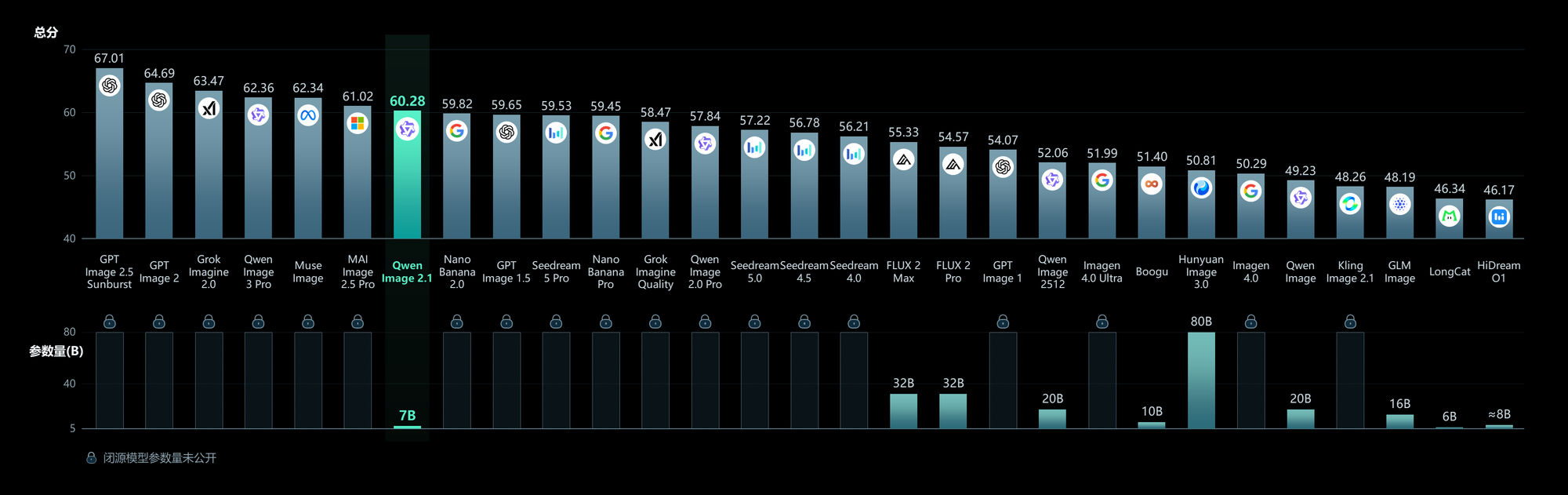
The tools sit on a spectrum: manual editing on one end, section-scoped AI editing in the middle (FLUX Video Edit), full generation on the far end (FLUX 3 Video and peers). Most creators underestimate how much of their work lives in that middle band. For the money side of the equation, see our coverage of Runway's move to unified credit pricing, and for the parallel shift in still images, read our explainer on Alibaba's open-weight Qwen-Image-2.1 — the images-and-video frontier is moving on both fronts at once.
A practical first-week plan
If you decide to test the tool seriously, here is a realistic path that assumes no prior experience:
- Day one — inventory: collect ten short clips (under 15 seconds) from your archive that contain fixable flaws: a stray object, a wrong color, a cluttered background. This is your test bench.
- Day two — account and guardrails: set up your developer access on the Black Forest Labs portal, read the usage and billing terms in the official documentation before your first request, and set a hard monthly spend cap for month one.
- Days three and four — structured testing: run exactly one edit per clip and log every attempt in a sheet: the prompt you used, the outcome (worked / needed a retry / failed), and the actual cost. After ten tries you will have a real average cost per successful edit for your niche.
- Day five — the comparison that matters: put your log next to the true alternative — what would reshooting or manually fixing those clips have cost in time and money? That number, not enthusiasm, decides whether the tool enters your pipeline.
- End of week — decision: if seven of ten attempts succeeded below the cost of the alternative, build a permanent path (a small script, or an adopted third-party front-end). If not, you lost an afternoon and gained a benchmark for the next release.
The golden rule with every new AI tool: test on material you can afford to lose before you build client or audience commitments on it.
Labeling and disclosure: the part enthusiasts skip
Editing video with AI stopped being a purely technical question; it is now a platform-policy question too. YouTube, Instagram, and TikTok all tightened their rules on disclosing AI-generated or AI-modified content during the past year — especially when real people appear or when a scene could be mistaken for authentic footage. Swapping a person inside a scene — one of this tool's documented capabilities — sits squarely in the sensitive zone of those policies.
Translated into practice:
- Enable the platform's AI-content disclosure toggle at upload where one exists, even for "small" edits like removing a background object.
- Never use person-swapping in commercial material without clear consent from the people in the original footage — their rights survive the edit.
- Keep the unedited original clip archived; you will want it if a platform, client, or partner ever questions the material's authenticity.
The honest limits — read before you reorganize a pipeline
- 15 seconds is the per-clip ceiling. Perfect for short-form; an interview or a podcast episode means manual chunking first, which changes the economics of the whole operation.
- API-only at launch. No official app, no official GUI. Non-technical users wait for third-party wrappers or hire an hour of developer time.
- Speed and accuracy claims come from the vendor. "Fastest and lowest-cost video editing model in the world" is a launch line — a signal of the company's confidence, not an independent finding.
- Reference inputs are roadmap, not reality: citing additional images, videos, and audio during an edit is announced as upcoming. Do not build a project that assumes the feature exists today.
- Rights stay your problem. The tool does not clear licenses for you: editing footage you don't own remains a violation regardless of how good the edit is, and commercial deployments should read the service terms on usage and privacy.
- Complex, interdependent changes — coordinated edits across multiple shots — remain closer to a full editing project than to a single prompt.
Frequently asked questions
What is FLUX Video Edit?
A Black Forest Labs model that edits a targeted section of an existing video (up to 15 seconds) from a text prompt, leaving the rest of the clip untouched.
How much does it cost?
$0.03 per second of video processed — roughly $0.45 for a maximum-length 15-second clip — billed on actual usage through the API, with no announced subscription requirement.
Can I use it without coding skills?
Not directly today; the official route is the developer API. Non-technical creators should expect third-party GUI tools to appear on top of it within weeks, as happens with every strong API-only release.
How is this different from AI video generation?
Generation creates an entirely new clip from a text description; FLUX Video Edit works on footage you already shot and modifies only what you point at — the right tool for corrections and upgrades rather than creation from scratch.
Does it work on long videos?
Not within current limits: clips cap at 15 seconds, so longer material must be split, edited section by section, and reassembled in an editor.
When was it announced?
September 10, 2026, via Black Forest Labs' official account and documentation; this explainer follows days later to serve readers searching for it now.
Bottom line
FLUX Video Edit captures the clearest trend of 2026 in creator tooling: AI stepping down from the "impressive generation" pedestal and starting to work on your real footage. At three cents per second, with edits that respect everything you already got right in camera, it functions as a permanent production-fixer for Reels pages, store accounts, and small agencies — once you clear the API hurdle, or wait for someone to clear it for you. And when you assemble the rest of your content pipeline, keep the management layer in one place: the ARWriter platform combines writing, imagery, and scheduled publishing to shorten the road from idea to post.