
Last updated: November 2026
Most marketing weeks have the same shape: pull the Monday report, draft Tuesday's content, build Wednesday's email, queue Thursday's posts, scan competitors on Friday. Almost none of that needs senior judgment every time — which is why AI agents for marketing teams have moved from keynote demos into weekly operations. Gartner predicts task-specific agents will sit inside up to 40% of enterprise applications by 2026, up from under 5% in 2025.
The catch: pressure is everywhere, practice is not. In Supermetrics' 2026 survey of 435 marketers, 80% feel pressure to adopt AI but only 6% have fully embedded it. The gap is delegation design — deciding what an agent owns, where a human signs off, and what never leaves your hands.
This playbook covers exactly that: what agents are (versus chatbots and automations), the numbers behind the shift, a 90-day rollout, a delegate-or-not matrix, five copy-ready briefs, real USD cost math, documented cases, and the failure modes that catch teams out.
The short version: delegate recurring, verifiable work — weekly reporting, content repurposing, social queues, email segmentation, competitor scans — to narrowly briefed AI agents with human approval gates. Keep strategy, brand statements, pricing claims, legal wording and crisis replies with people. Expand agent autonomy only as its override rate falls.
What an AI agent is — and how it differs from a chatbot or an automation
A chatbot answers. An automation executes. An agent completes.
A chatbot — scripted or LLM-backed — responds inside a conversation and stops there. An automation platform follows fixed if-this-then-that rules and never decides anything. An AI agent takes a goal ("pull this week's channel numbers and flag anything that moved more than 10%"), plans the steps, calls the tools it needs — analytics APIs, ad accounts, your CRM — checks its own output, and escalates when it hits a wall.
| Chatbot | Automation | AI agent | |
|---|---|---|---|
| You give it | A question | A trigger | A goal |
| It decides | Nothing | Nothing | Steps, order, retries |
| Tools it reaches | Chat surface only | Fixed connectors | Any connected tool or API |
| Memory across steps | None | None | Carries context through the run |
| Typical failure | A wrong answer | A broken step stops the run | A confident wrong action |
| Oversight needed | Low | Low | Explicit approval gates |
Most teams mature in three phases, a progression Demandbase describes as copilots that suggest, agents that execute under review, then coordinated agent workflows. The middle phase is where a 2026 marketing team earns the most value per hour invested.
Why lean teams delegate first: the 2026 numbers
The adoption data is blunt. PwC surveyed 308 US senior executives in April 2025: 79% say AI agents are already being adopted, 88% plan to increase AI budgets within 12 months, and 66% report measurable business value. Among B2B go-to-market leaders in the US and UK (RevSure/Ascend2, 306 respondents), 76% are deploying generative AI and 90% expect it to be decisive within two years.
Gartner pushes the timeline out: by 2028, at least 15% of day-to-day work decisions will be made autonomously, up from 0% in 2024. Yet only 44% of marketers use AI for audience segmentation and 24% achieve personalization at scale — recurring, rules-heavy work is still done by hand.
For a solopreneur, a five-person agency, or a one-marketer SaaS team, that translates into one operational fact: the recurring share of marketing work — pulling numbers, reformatting content, segmenting lists, checking competitors — is now delegable at software prices, while judgment stays with you.
Vendor results point the same direction. HubSpot says content-agent users see +14% marketing reach and +9% brand visibility, and the prospecting agent delivers +65% more sales leads per month with a +26% higher win rate. Verify vendor numbers on your own data — but the direction is consistent: capacity without headcount.
The 90-day delegation guide: from one agent to a working system
- Log two weeks of work. Track every recurring task, its frequency, and rough minutes. You are hunting for high frequency, low judgment, verifiable output.
- Pick exactly one task to start. The weekly performance report is the classic first delegate: high frequency, numeric, easy to verify, low brand risk if it waits an hour for review.
- Write the brief before you pick the tool. Scope, inputs, constraints, output format, escalation rules. A precise brief makes any platform work; a vague one breaks all of them. If you would rather build than buy, a no-code voice agent build is a good first exercise.
- Run in shadow mode first. The agent produces the report; you still produce yours. Compare for one or two weeks and log every error.
- Set the approval chain. One person approves copy, a second approves anything involving spend, a third approves publish. Write it down before the first run.
- Grant the narrowest access that works. Read-only analytics access for a reporting agent. No payment tools, no deletion rights, no direct-to-client channels.
- Track the override rate. Every time you edit or reject agent output, log it. A falling override rate is your green light for more autonomy.
- Chain the survivors. Once two agents run cleanly, connect them: the research agent feeds the content brief, content feeds the scheduler. For a worked example of that architecture, see our guide to building an AI SEO content pipeline.
Set expectations on time. Supermetrics notes that productive use of agent tooling can take four to six weeks, not four days. Gate the rollout: day 30, one agent live in shadow mode; day 60, agent output shipping weekly with edits trending down; day 90, a second agent plus a documented approval chain. Miss a gate, stay another month at the current level — patience separates teams that embed agents from teams that demo them.
What to delegate — and what to never hand to an agent
| Recurring task | What the agent owns | Human gate | Cadence |
|---|---|---|---|
| Performance reporting | Pull numbers, compare periods, flag moves over 10% | Marketer approves before it reaches anyone | Weekly |
| Content repurposing | Turn one article into platform variants inside voice rules | One-pass edit before scheduling | Per publish |
| Social scheduling | Fill the approval queue at optimal slots, reschedule misses | Approver clears the queue daily | Daily |
| Email operations | Segment the list, draft lifecycle sends, propose subject variants | Approval before send; second approver above threshold | Weekly |
| Competitor monitoring | Scan five competitor feeds and ranking shifts, output a gap table | Monthly review of the monitored set | Weekly |
| First-draft content | Research summary and structured draft inside the brief | Substantive edit; no publish without sign-off | Per piece |
| Lead research | Enrich and score against your stated criteria | Spot-check before any sequence launches | Continuous |
Never delegate, regardless of how mature your setup gets:
- Final brand statements and positioning — the words that define you.
- Pricing claims and discounts — an invented "30% off" is a legal problem, not a typo.
- Legal, privacy and compliance wording.
- Crisis replies and anything emotional — outage apologies, complaints, sensitive news.
- Spend above your threshold without a named human approver.
- Irreversible actions — deleting data, canceling accounts, sending to the full list.
Five agent briefs you can copy today
A brief is a delegation contract: goal, inputs, constraints, output, escalation, and who approves. The five below mirror the campaign-readout pattern Anthropic publishes for Claude: narrow goal, numeric triggers, human gate. Adapt each one to your stack; for a deeper template library, see our collection of AI content brief templates.
AGENT 1 — Weekly Marketing Report Agent
Role: Report on marketing performance across channels.
Inputs: GA4 (or Shopify analytics), Meta Ads, TikTok Ads,
LinkedIn Ads, email platform.
Job: Every Monday 07:00, pull last week's numbers by channel.
Compare week over week. Flag any metric moving more than 10%.
Output: One-page summary — headline numbers, three biggest
movers, one recommended action per mover.
Constraints: Numbers only from connected sources. No outside
estimates. Western digits. If a source fails, say so instead
of guessing.
Human gate: Marketing lead approves before the report is sent
to anyone. Never auto-send to clients.
AGENT 2 — Content Repurposing Agent
Role: Multiply one published piece into platform-native variants.
Inputs: The published article URL plus the brand voice guide.
Job: Produce a thread for X, a post for LinkedIn, a caption
for Instagram, and a two-paragraph email teaser.
Constraints: Every claim must exist in the source article —
no new stats, no new promises. Respect character limits.
If unsure about a joke, drop it.
Human gate: One-pass edit before anything is scheduled.
AGENT 3 — Social Scheduling Agent
Role: Keep the approval queue full at the right times.
Inputs: Approved content backlog, posting-time rules per platform.
Job: Fill the queue at optimal slots. Reschedule missed posts.
Draft replies to routine comments.
Escalation: Trending or negative brand mentions go to a human
within one hour.
Hard rule: Never auto-publish brand statements, pricing, legal
topics, or crisis replies. Queue only.
Human gate: Approver clears the queue once daily.
AGENT 4 — Email Operations Agent
Role: Run list hygiene and lifecycle drafting.
Inputs: CRM segments, lifecycle map, send calendar.
Job: Re-segment the list weekly. Draft nurture emails per
segment. Propose two subject-line variants per send following
A/B rules.
Constraints: Unsubscribes and bounces are flagged, never
auto-removed. No new offers without a named owner.
Human gate: Approval before every send. Sends above the
volume threshold need a second approver.
Pair this one with our A/B testing system for AI-assisted copy, and for seasonal volume, our Black Friday email sequence walkthrough.
AGENT 5 — Competitor Research Agent
Role: Watch the competitive set and the search results.
Inputs: Five named competitor blogs and social profiles,
target keyword list.
Job: Weekly scan. Note new posts, messaging shifts, and
ranking changes on target keywords. Output a gap table with
links and one-line takeaways.
Constraints: Verifiable links only. No invented numbers,
no guessed traffic estimates.
Human gate: Monthly review of the monitored set — drop stale
competitors, add emerging ones.
Feed its weekly output into a proper gap analysis — our AI content gap analysis guide shows the full method.
By the way, if you're looking for a writing layer that keeps one brand voice across languages and platforms inside these workflows, ArWriter drafts, repurposes and schedules content in English and Arabic from a single workspace — starts at $4.99/month.
Agent delegation in the wild: three documented cases
IBM — the internal-first enterprise. From its Armonk, New York headquarters, IBM ran agentic AI on itself before selling it: the internal AskHR agent answers 94% of HR inquiries, and IBM attributes $3.5B in value to its "Client Zero" AI program. The marketing lesson is the pattern, not the scale — start with internal, high-volume, low-risk queries where errors are cheap.
Ignite Reading — one automation, measured. The US education company, a HubSpot customer, saved roughly 350 hours per year from a single agent-driven automation. That is one workflow, instrumented, with the hours counted — the right model for any team of ten or fewer.
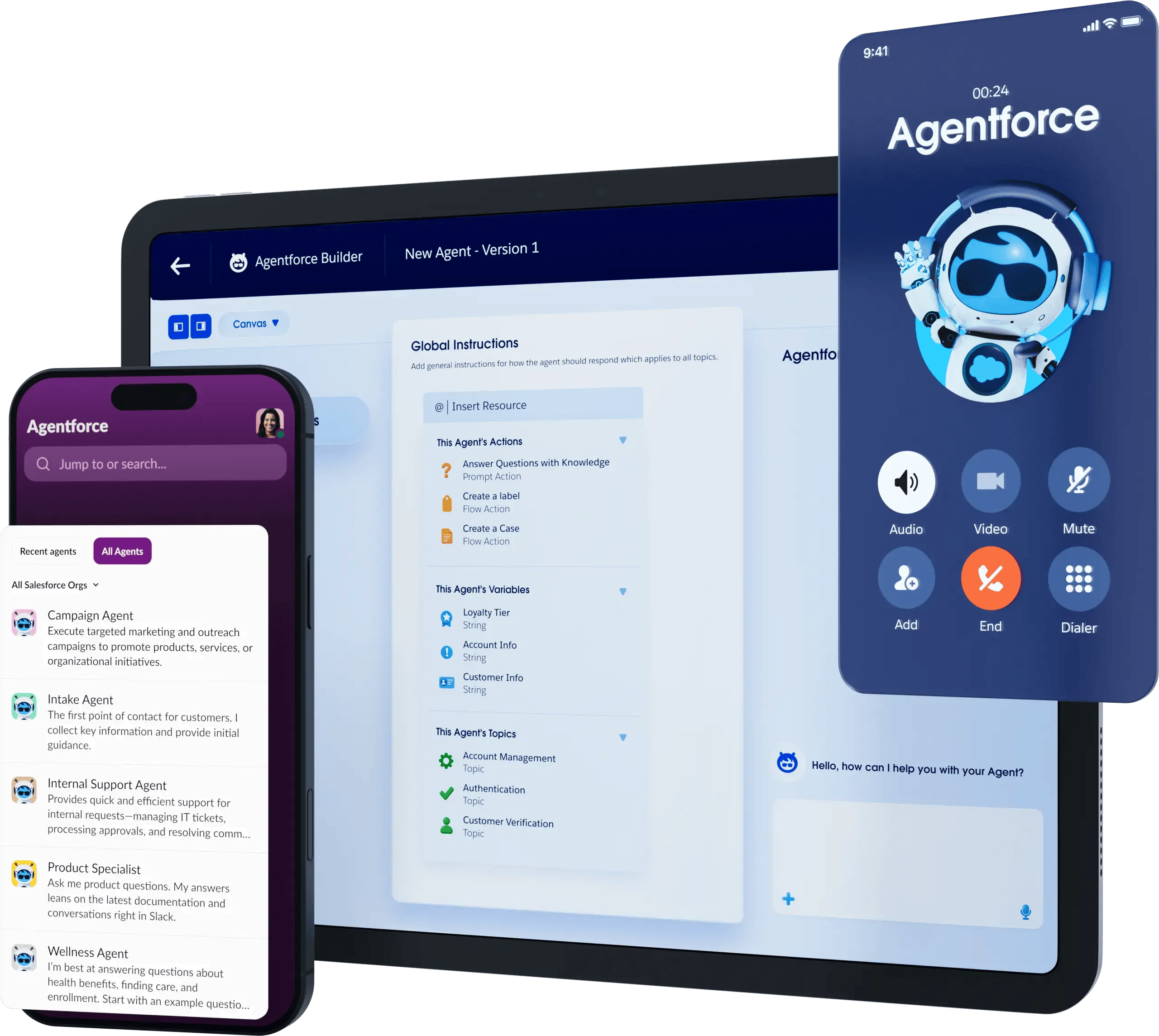
The bundled-agent era. Salesforce reports that more than 18,000 companies already run Agentforce, and HubSpot now includes Agent Hub in every Starter, Professional and Enterprise plan. Agents stopped being a budget line; they arrive inside tools you already pay for. The differentiator is no longer access — it is delegation design.
The cost math: what delegation actually costs in 2026
Agent pricing is public, so do the arithmetic before you commit. Salesforce Agentforce charges $2.00 per conversation, or Flex Credits at $500 per 100,000 — an agent action costs 20 credits (about $0.10), a voice action 30. Add-ons run $125/user/month, with agent user licenses at $5/user/month. HubSpot Agent Hub is bundled into Starter, Professional and Enterprise editions. Claude Team costs $20/seat/month on annual billing with a 20-seat minimum — a $400/month floor. ArWriter starts at $4.99/month.
| Scenario | Setup | Monthly cost |
|---|---|---|
| Weekly reporting agent | 80 agent actions via Agentforce Flex Credits | $8 (80 × $0.10) |
| Customer-facing agent at scale | 2,000 conversations × $2.00 on Agentforce | $4,000 |
| Research and analysis seats | Claude Team, 20 seats × $20 annual billing | $400 |
| Drafting and repurposing layer | ArWriter entry plan | $4.99 |
Note the first line. A reporting agent doing 80 metered actions a month costs less than two takeout lunches. Compare that with the hours it replaces: Ignite Reading's single automation freed about 350 hours a year. Whatever your fully loaded hourly cost, a well-chosen first agent pays back in weeks, not quarters.
Two cautions: conversation-priced agents get expensive at volume, so model your monthly counts first, and seat-based tools quietly grow with headcount. For a fuller framework, read our guide to cutting AI costs for content teams.
Where each platform fits: an honest comparison
| Platform | Published pricing | Best for | Watch out for |
|---|---|---|---|
| Salesforce Agentforce | $2/conversation; $500 per 100k Flex Credits; add-ons $125/user/mo | Salesforce-first teams running service and support agents at scale | Conversation costs climb fast at volume |
| HubSpot Agent Hub | Included in Starter, Professional, Enterprise | HubSpot shops: content, prospecting and support agents on one CRM | Lifts are vendor-reported — verify on your data |
| Claude (Anthropic) | Team $20/seat/mo, 20-seat minimum | Deep research agents, campaign readouts, analysis | Seat minimum; you design the workflow |
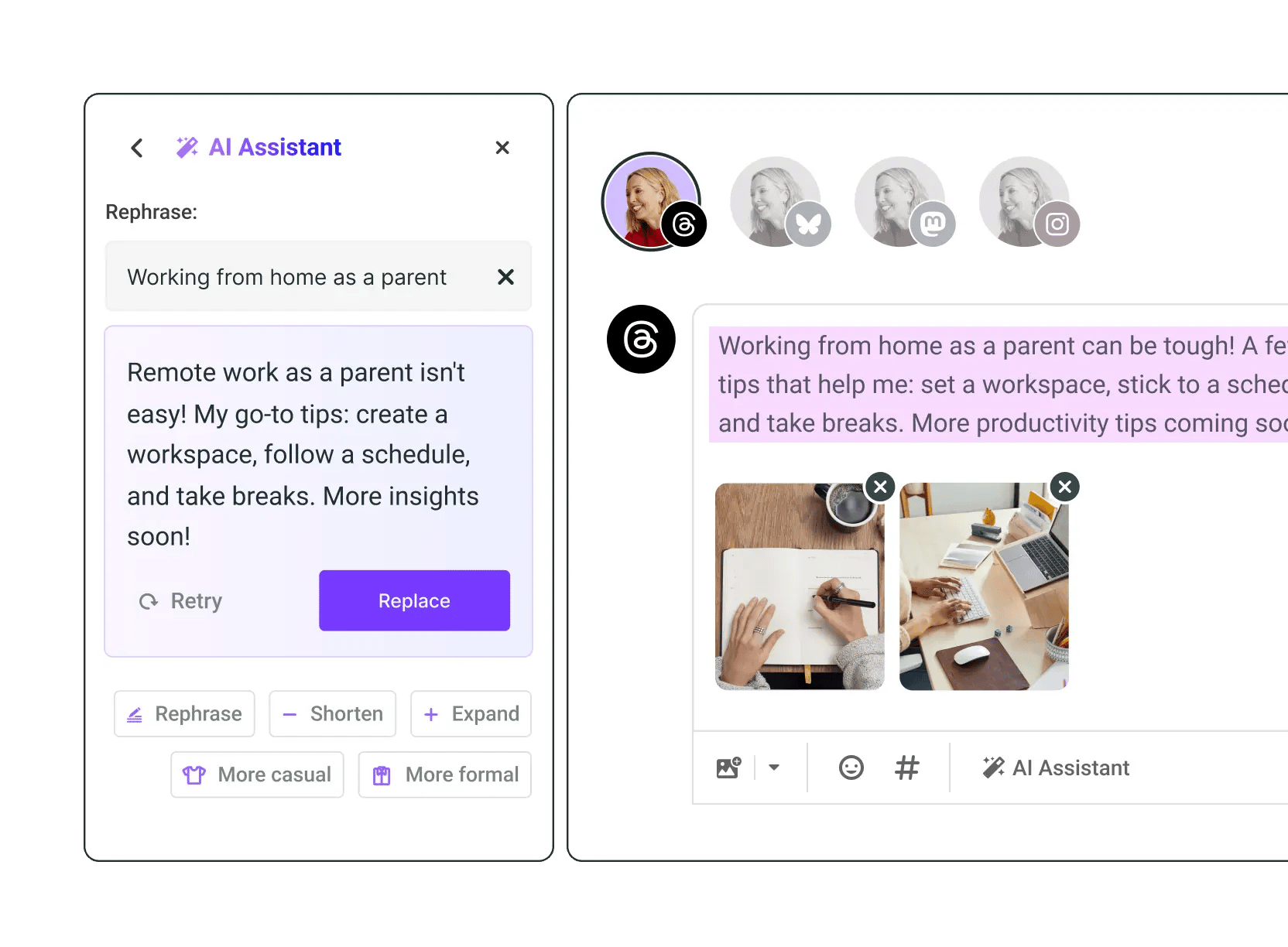
| Buffer AI Assistant | Varies by Buffer plan | Repurposing and tone tweaks inside the scheduler | It is an assistant, not an autonomous agent — keep gates |
| ArWriter | From $4.99/month | Bilingual drafting and repurposing inside agent workflows | Content layer, not an orchestration platform |
| Custom API build | Usage-based API costs plus engineering time | Exact-fit multi-agent systems | You own maintenance, monitoring and failure modes |
Failure modes and the review gates that catch them
Agents fail in patterns. Learn the three that show up most.
The confident fabricator. The agent invents a statistic or a link because the brief asked for insight and the data ran out. Gate: a constraints line in the brief (verifiable sources only) and a spot-check of every claim that carries a number. When this fails publicly, your credibility breaks, not the agent's.
The scope creeper. Asked to repurpose a post, it rewrites your positioning "for consistency." Gate: brief boundaries in writing, and diff review — approve the changes, not just the final artifact.
The silent spender. Left near a budget, it optimizes past your ceiling at 2 a.m. Gate: hard spend thresholds in the tool, a second human approver above the line, and alerts on any metric that moves more than 10% — the same trigger Claude's own campaign-readout agent uses.
Then write down the approval chain. Copy is approved by whoever owns voice. Publish is approved by the channel owner. Spend is approved by the budget owner. Three hats — in a one-person team they are all you, on a schedule, with the agent's queue in front of you.
This is why only 6% of marketers have fully embedded AI while 80% feel pressure to. The bottleneck was never access. It was governance — a checklist, not a philosophy.
Frequently asked questions
Can AI agents replace marketing teams?
No. Agents replace tasks, not teams. They absorb recurring execution — reports, repurposing, segmentation, first drafts — while strategy, brand judgment, relationships and crisis calls stay human. Gartner expects just 15% of day-to-day work decisions to be made autonomously by 2028, which describes augmentation, not replacement.
Can AI agents do marketing?
Defined slices of it, yes. Agents run briefed work end to end: they pull reports, draft and repurpose content, segment lists and fill social queues. HubSpot reports content-agent users seeing +14% marketing reach. What they cannot do is decide what matters — that judgment still comes from you.
Will AI agents work with my existing marketing tools?
Mostly, yes. HubSpot's agents run natively on your CRM data, Agentforce sits on Salesforce records, and reporting agents connect to GA4 and ad accounts through standard connectors. Before buying, list your stack and check each agent's connector coverage against it — integrations are where cheap pilots die.
How much do AI marketing agents cost?
Anywhere from $4.99/month for a content layer like ArWriter to $2.00 per conversation on Agentforce, $500 per 100,000 Flex Credits, or $20 per seat monthly for Claude Team (20-seat minimum). HubSpot bundles Agent Hub into paid plans. Metered pricing rewards narrow, well-briefed agents.
Do I need technical skills to deploy AI agents?
Not for packaged agents. HubSpot and Agentforce agents are admin-configurable, and no-code tools make a first build realistic for marketers. Custom multi-agent systems that chain APIs together are a different story — those need engineering. Start packaged; bring in build help only after the workflow proves itself.
How do you keep human-in-the-loop oversight of AI marketing agents?
With approval gates per artifact, shadow mode for the first two weeks, and an override log. Escalation triggers handle the rest: spend thresholds, brand-safety word lists, and any metric moving more than 10% routes to a human before anything ships publicly.
How do you measure the ROI of AI marketing agents?
Track four numbers per agent: hours reclaimed (Ignite Reading counted roughly 350 a year from one automation), cost per completed task, override rate, and one business metric such as reach or leads. Review monthly, and retire any agent whose override rate refuses to fall.
How do multiple AI agents coordinate with each other?
Through an orchestration layer that routes work between them. The research agent's output becomes the drafting agent's input; the drafting agent feeds the scheduler. Each agent stays narrow, handoffs get logged, and shared state lives in the CRM. Never let two agents approve each other's work.
What to do next
This week, without buying anything:
- Start the two-week task log. Every recurring task, minutes spent.
- Draft the reporting agent brief from Agent 1 above — one page.
- Name your three approval hats: copy, publish, spend.
- Set the gates: 30 days to shadow mode, 60 to weekly output, 90 to a second agent.
- Choose your measurement trio now: hours reclaimed, override rate, one business metric.
Our verdict: agent delegation in 2026 is a governance project that pays like an automation project. Winning teams are not the ones with the biggest budgets — survey data says budgets are everywhere. They are the ones who wrote down what an agent may own, what it may never touch, and who signs the difference. Write that page this week.
Sources
- Gartner press release — prediction that up to 40% of enterprise applications will feature task-specific AI agents by 2026, up from under 5% in 2025.
- Salesforce Agentforce — official hub; over 18,000 customer companies; conversation and Flex Credit pricing listed.
- HubSpot Agent Hub — official page with vendor-reported agent lifts and plan availability.
- PwC on AI agents — survey of 308 US senior executives on agent adoption, budgets and measurable value.
- IBM think — AI Agents in Marketing — enterprise explainer covering governance plus IBM's internal AskHR and Client Zero results.
Try ArWriter Today
Every agent workflow needs a writing layer that keeps up. ArWriter drafts, repurposes and schedules content in English and Arabic from one workspace, built for teams that refuse to let quality slip in a second language or market. Plans start at $4.99/month.
Pick your first recurring task, paste in the brief, and let ArWriter handle the drafting while you keep the approvals. See the plans at arwriterai.com/en/pricing and start today at app.arwriterai.com.