On September 24, 2026, OpenAI formally retired the Sora API and removed every Sora 2 model from its cloud, closing the final chapter on the world's first mass-market AI video generator barely a year after it became a household name. The shutdown itself surprised nobody who was paying attention: OpenAI announced the deprecation on March 24, 2026, and killed the Sora app and web experience on April 26. What this week's removal actually ends is the last bridge between professional content workflows and the service — the programmatic interface that third-party tools used to generate video on their customers' behalf.
If you used Sora directly, you left the ship back in April. But if you relied on a third-party app that generated video "powered by Sora" — the group hit hardest by this week's change — there is a good chance the video feature inside your tool quietly stopped working in the past few days. This piece explains exactly what happened, what to do with your old assets, and how to move your workflow onto the alternatives available today without losing time or money.
The complete timeline: from hype to shutdown in twelve months
The story opens in October 2025, when OpenAI launched the Sora app alongside the Sora 2 model and the name became the most searched topic in creator circles worldwide — fueled in part by the controversy over generated clips imitating real people. Then the sequence turned, fast, and every step below is documented in the company's own communications:
- March 24, 2026: OpenAI publishes the official deprecation notice on its API deprecations page with a full withdrawal schedule. Outlets including Axios and MacRumors reported the shutdown decision the same day.
- April 26, 2026: The Sora web experience and app stop working entirely. The site converts into an export page for legacy content.
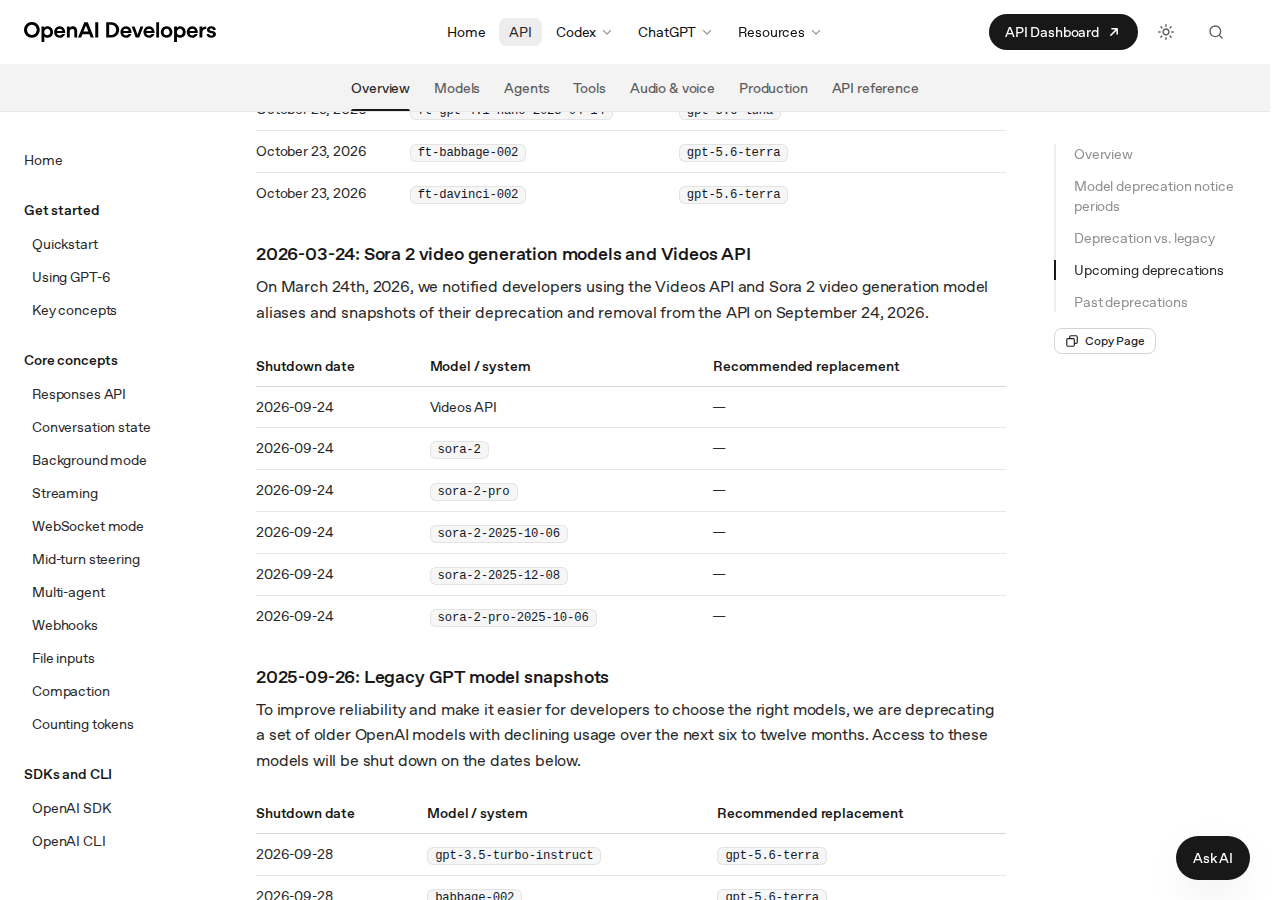
- September 24, 2026: The Videos API and every Sora 2 model leave the service: sora-2, sora-2-pro, and three dated snapshots. The official "recommended replacement" column next to each model is empty — as of this writing, OpenAI has named no successor to Sora.
Worth noting: the removal even covered the frozen snapshots some developers pinned for reproducible results. There is no remaining doorway — official or sideways — to generate video on OpenAI's infrastructure.
Why did OpenAI shut down its video service?
The company never published a detailed post-mortem. Press coverage of the March decision — including reporting carried by Axios, CBS, and NBC — connected the closure to two threads: refocusing compute and people on projects the company considers higher priority, and tidying the portfolio ahead of the long-rumored public offering. That reading remains journalistic interpretation, not an official statement, and the distinction matters: the only thing OpenAI itself has confirmed is the calendar.
What matters practically for creators: the market did not wait. The six months between announcement and final removal were enough for most platforms and agencies to re-platform onto alternative engines. With the last door now closed, everyone who delayed is out of options except immediate migration.
What this means for you: three clean scenarios
Scenario one: you used the Sora app for fun or experiments. Nothing new here — the app died in April and your account hasn't been able to generate since. If you want to keep your old clips, you have exactly one action left: export them before final deletion.
Scenario two: a tool or app you use generated video "using Sora." This is your week. Any provider that had not announced a new engine before now either migrated silently or is currently experiencing an outage. Open the tool, try generating one clip, and if it fails, contact support and ask the question directly: which engine are you on now?
Scenario three: you're a developer or agency building on the API. Your calls to the /videos endpoint have been returning errors since September 24. Log in to the developer dashboard, update any code referencing sora-2 or sora-2-pro, and pick a replacement engine from the list below before your customers notice the gap.
Your old data: export before permanent deletion
OpenAI's help center is clear to the point of friendly menace: any data associated with your Sora usage will be permanently deleted once the final export window closes, and the company recommends you "export your content as soon as possible." The published steps are three:
- Go to the dedicated export page at sora.chatgpt.com/sunset and sign in with your account.
- Press the Export button and wait for a confirmation email saying your file is ready.
- Download the archive and store it somewhere safe — this is the final copy before permanent deletion.
One field-tested piece of advice: do not postpone this. Export windows for sunsetted services sometimes close without a clearly announced date, and clips you produced on a paid plan deserve two minutes of caution today. Inspect the archive after downloading — play a sample of the videos and confirm they're intact — because a corrupted archive discovered after the window closes cannot be re-requested. Large libraries may take time to prepare, which is one more reason to start now rather than "sometime this week."
Quick comparison: where do you go after Sora?
The good news is that the void Sora leaves is crowded with capable engines — one of which went genuinely free in the same week the API closed. Here is a short comparison of the leading destinations, all covered in earlier deep dives on this blog:
| Alternative | Best for | Cost | Key note |
|---|---|---|---|
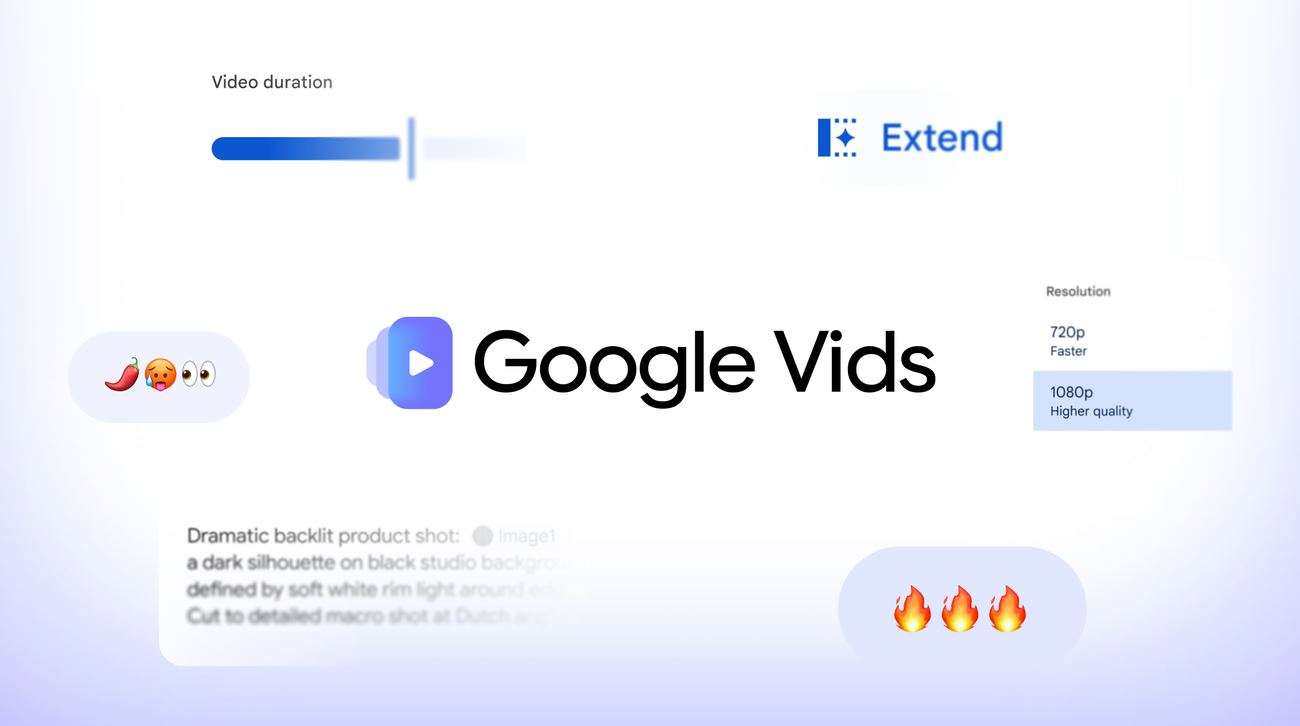
| Google Vids (Gemini Omni 1.1 engine) | Fast business, marketing, and social video | Free for any Google account, with paid tiers for more generation | Became free for everyone on September 23, 2026 — one day before the Sora API closed |
| Google Flow | Longer-form video and visual storytelling | Included in paid Google AI subscriptions | Same Omni engine with deeper directorial controls |
| MiniMax H3 Max via fal | Short high-quality clips with audio | Pay-per-use through fal | Topped independent video-with-audio leaderboards at launch |
| FLUX Video Edit by Black Forest Labs | Editing existing footage instead of generating from scratch | About $0.03 per second edited | Preserves the untouched parts of your clip — built for a "shoot, then edit" workflow |
| Runway | Production teams and professional freelancers | Unified credit system across web and API | Consolidated pricing in September 2026 into one fungible credit pool |
| Kling and other Chinese engines | Quick experiments and daily generation | From limited free plans to paid | Always verify commercial-use terms before building a project on them |
For longer-form creators there's an extra filter worth applying before price: continuity tooling. If you produce explainer episodes or narrative pieces beyond a minute, weigh scene-extension and consistency features more heavily than raw generation speed — being able to extend a scene while preserving lighting and characters, as Google's new engine allows, saves you from regenerating entire shots after every small tweak. If your output is ten-to-twenty-second marketing clips, everything in the table qualifies, and price plus turnaround should decide it.
Each alternative has a dedicated piece on this blog: the FLUX Video Edit guide, the breakdown of MiniMax H3 Max performance and pricing, and the explainer on Runway's unified credit system — all written as practical walkthroughs for working creators.
Lessons from the shutdown: protecting your workflow from the next one
Sora is not the first service to sunset on creators, and it won't be the last, but it is a free lesson in risk management if you read it right. Rule one: never build an entire workflow on a single engine, however dazzling. Treat video generation as a replaceable stage in your production line — write scripts in a neutral place, keep your prompts and source files on your own storage, and export outputs the moment they're finished instead of leaving them on the engine's servers. People who did that with Sora lost a tool; people who didn't lost an archive.
Rule two: watch for early deprecation signals. The March notice wasn't a surprise ambush — the company gave six full months between announcement and removal and published the schedule in an official, linkable place. Subscribe to the changelog and deprecation pages of the tools your income depends on and check them monthly. Ten minutes a month is enough to catch a shutdown notice while it's still a plan rather than an emergency.
Rule three: document your dependencies. Keep a single file listing the tools your pipeline rests on, and the ready alternative for each if it vanished tomorrow. That list converts a migration from a panicked overnight scramble into a scheduled task — the same discipline professional teams apply to cloud vendor management.
How to choose without trialing everything
Before you open ten new accounts, answer four questions that settle the decision:
1. What kind of video do you actually make? Short product and store marketing clips are fully served by free or near-free engines like Google Vids, which spare you the subscriptions. Narrative and cinematic work puts you in the Flow, Runway, and MiniMax tier, where directorial control runs deeper.
2. Do you need an API or a UI? Sora was closed to the app, then open to developers, then closed to both. If your workflow is automated — generating hundreds of clips programmatically — prioritize engines with stable APIs like fal and Runway. If you work by hand, visual interfaces will be faster for you.
3. How does the engine handle your prompts and language? Most English-language roundups skip this, but it decides output quality: some engines parse non-English prompts well and respect the details, while others translate them loosely in ways that show up as garbled on-screen text. A practical pattern that works for bilingual creators: draft the idea in your strongest language, then produce a precise English prompt from it before generating — you keep the concept sharp and give the engine input it understands. A structured prompt library makes the second step a copy-paste instead of a rewrite.
4. What are the commercial terms and watermark policy? Read two lines of the agreement before paying: may you use the outputs in paid advertising, and is a non-removable watermark baked in? Google, for instance, embeds its invisible SynthID mark in every Vids clip — it's a provenance stamp that doesn't disturb viewing, but you should know it's there before a client asks.
Honest limits you should accept upfront
Let's be direct: nothing gives you "Sora as it was," because Sora no longer exists. Current engines are stronger in some dimensions — built-in audio in MiniMax, section-scoped editing in FLUX — and weaker in others; character consistency across shots remains an industry-wide unsolved problem. Likewise, the absence of any official successor announcement means anyone selling you "Sora 3 coming soon" is selling speculation, not information. Don't build a content plan on a promise nobody made.
One final point many miss: the API closure doesn't touch ChatGPT itself, nor OpenAI's text and image models. This is a withdrawal from the video arena only. If your workflow mixes OpenAI text generation with video from another vendor — the smarter architecture right now — the first half of that pipeline is entirely intact.
A migration plan you can execute this hour
Compressing everything above into one immediately actionable sequence: open a free Google Vids account now and generate your next marketing clip in it to test new ground at zero cost; at the same time, export any Sora remnants you still have before permanent deletion; then pick a single paid engine from the table above if you need higher production volume. Three steps separate you from the end of your Sora relationship at minimum loss.
And if your content pipeline is bilingual or multilingual anyway, treat the migration as the moment to reorganize the whole line: ideas, scripts, and voiceover drafted in one place, then exported to whichever video engine you chose — instead of chasing every new engine that opens and closes.
Frequently asked questions
Did the Sora app shut down or just its API?
Both, in two stages: the app and web experience stopped on April 26, 2026, while the video API and all Sora 2 models were removed on September 24, 2026. There is currently no official path to generate video through OpenAI services.
Has OpenAI announced a replacement or Sora 3?
No. The official deprecations page shows an empty "recommended replacement" column for every Sora model, and the company has issued no announcement of a direct successor as of this article's publication. Any talk of Sora 3 remains unconfirmed rumor.
Can I still recover my old clips?
Yes, for a limited window. The official help page directs users to the export page at sora.chatgpt.com/sunset to request an archive of their clips by email, and warns that data will be permanently deleted once the export window closes. Export now — don't wait.
What is the best immediate free alternative to Sora?
Google Vids is the clearest free option today: any Google account can generate HD video on the Gemini Omni 1.1 engine without paying, with paid plans for heavier volume. For deeper professional use, Runway, MiniMax, and FLUX start paid but sit closest to the old Sora workflow.
Does this closure affect ChatGPT or OpenAI's image generation?
No. The shutdown is scoped to the video products specifically. ChatGPT, the text models, image generation, and other features operate as usual and are unrelated to the Sora deprecation schedule.
Sources
- Official API deprecations page — OpenAI — the official table removing the Videos API and Sora 2 models as of September 24, 2026
- "What to know about the Sora discontinuation" — OpenAI Help Center (archived) — app and API closure dates plus export instructions
- Google's announcement making Google Vids free for everyone — the leading free alternative, announced one day before the final closure