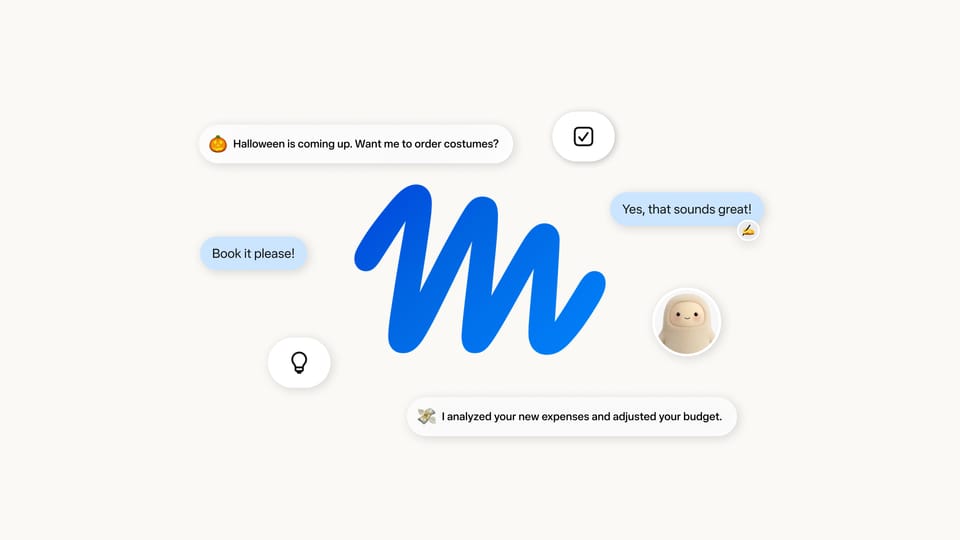
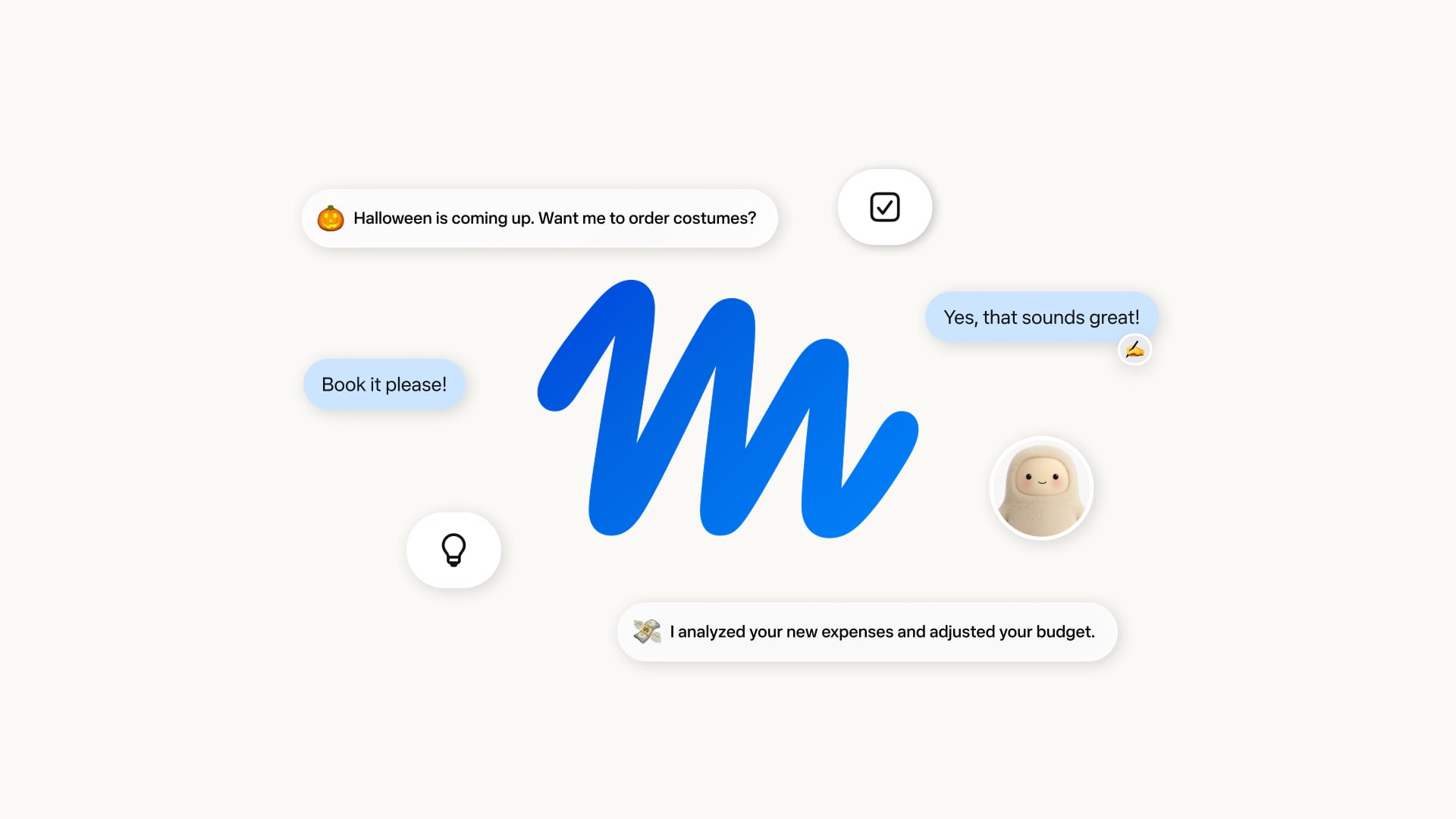
Meta on Tuesday, September 8, 2026 unveiled Muse, which it bills as "the world's first personal AI agent built for everyone." Unlike chatbots that answer questions, Muse actually does the work: it books appointments, fills out forms, negotiates on your behalf, tracks long-term goals, generates images and documents, and connects to the apps you already use — all through a conversation that feels like messaging a friend, either in the dedicated Muse app or directly inside WhatsApp.
What Muse is and how it works
According to Meta's official newsroom post, Muse runs on the Muse Secure VM — a dedicated, cloud-based virtual machine for each user that houses both the agent and the person's data, complete with its own browser. The premise: personal agents need a new kind of secure computer, so Meta built one for every individual.
The most interesting technical decision is the Sentinel agent — a separate supervisor that runs on the same machine but is isolated from Muse at the system level. Nothing Muse does reaches the internet unless Sentinel approves it, and Sentinel asks the human for permission when needed. The agent itself is powered by Muse Spark, Meta's most capable model to date, purpose-built for real-world agentic work.
Using it is deliberately simple: you tell Muse what needs to get done the way you'd message another person. It builds an action plan, coordinates your time and resources, and advances the work on its own. It can open a browser, fill out forms, and negotiate for you — and it keeps working after you close the app, returning when something changes or when it needs your approval, like before sending an email or completing a purchase.
What it can do for content creators specifically
This is where Muse becomes relevant to our audience. From the official product page and announcement, Muse can:
- Generate images — a core capability built into the agent, not an afterthought.
- Create documents — from planning notes to structured drafts.
- Connect to Instagram, email, and calendar (and other daily apps) through connectors, with precise control over what the agent can see and do in each one.
- Turn saved content into action — Meta's own example: Muse can turn a recipe reel you saved on Instagram into a grocery list, suggest a dinner-party menu, and remember your friends' dietary restrictions before sending the invitations.
- Build its own tools — if a task needs a tool that doesn't exist, Muse builds it.
In other words, what used to be scattered assistance — an image generator here, a notes app there — becomes a system that can take over the routine layer of a creator's life: research, organization, reminders, visual and written first drafts, while you keep the decisions and the voice. For creators who want a dedicated multilingual content workspace today rather than a general assistant, specialized platforms like ARWriter's toolset remain the immediately available option.
Privacy and safety: the historic weakness, redesigned
The question that stops most people from handing an agent their data is simple: what does it do with that data? Meta's announcement addresses it with an unusually long list of explicit commitments:
- Muse has no visibility into your passwords or payment methods — credentials go into secure storage the agent can use but never see.
- Your approval is required before sensitive actions like sending an email or making a purchase, with a complete audit trail of everything the agent has done and plans to do.
- You choose which apps Muse connects to and exactly how much access each one gets, and you can revoke access anytime.
- Your conversations and VM data are never shared with Meta's ad systems.
- You can opt out of your interactions being used to train Meta's AI models, and you can tell Muse to "forget" specific things it has learned about you.
For payments, Muse integrates with Link by Stripe, making it the first AI agent covered by Link's purchase protections: free coverage for damaged or lost items, price drops, no-fee returns, and a return guarantee on eligible purchases. Link's agent wallet generates a one-time-use card number so neither the merchant nor the agent ever sees your real card. Shop Pay support and 1Password integration are coming soon. Later this year, Meta plans Muse Confidential VM — the entire VM, including your data and conversations, encrypted with a key only you hold, so not even Meta can access it.
Availability and pricing: who can use it today?
The current rollout is US-only: the Muse apps on iOS and Android, plus muse.ai, with AI glasses support coming soon. The pricing model is simple in principle: free for most of what people need, with a usage limit, and paid subscription plans for heavier use — though specific plan prices have not been announced yet.
The WhatsApp interface is the detail that matters most for international users: because WhatsApp is one of Muse's two primary interfaces, expansion into regions where WhatsApp dominates — the Middle East, South Asia, Latin America, parts of Europe — won't require learning a new app. That said, Meta has made no official announcement about geographic expansion timelines or language support beyond English, so treat any date you see elsewhere as speculation.
Quick comparison: Muse versus ordinary chatbots
| Capability | Meta Muse | Typical chat assistants |
|---|---|---|
| Actually executes tasks (forms, bookings, purchases) | Yes — dedicated VM with its own browser | Limited or absent |
| Keeps working after you close the app | Yes; returns for approvals | No |
| Image generation + document creation in-chat | Yes | Partial, in some |
| Connects to Instagram, email, calendar | Yes, per-app permission controls | Limited |
| Interface | Standalone app + WhatsApp | Standalone apps |
| Declared purchase protections & privacy architecture | Link, Sentinel, audit trail, Confidential VM coming | Varies by service |
Honest limitations
- US-first launch. No announced timeline for other regions; the wait could be long.
- Paid pricing is unknown. The free tier's principle is clear; its exact limits and subscription prices are not.
- Agents make mistakes. However well-guarded, delegating sensitive tasks to an agent requires oversight — which is exactly why Meta built the approval system.
- Privacy promises meet reality at scale. The commitments read well on paper; the real test begins once hundreds of millions of people use it.
- It's not a vertical content tool. Generating a quick image or draft document is one thing; running a full publishing calendar with marketing logic is another — dedicated tools remain deeper in their niche.
Since Meta connects its products to each other, you may also want our earlier analysis of Instagram's AI-content mislabeling wave and Gemini Spark's takeover of Google Photos management — the picture is coming together fast.
Frequently asked questions
What is Meta Muse?
A personal AI agent announced by Meta on September 8, 2026. Instead of only answering questions, it executes tasks on your behalf: browsing, booking, purchasing, generating images and documents, and connecting to your apps — usable through its own app or inside WhatsApp.
Is Muse free?
It's free for most everyday usage with a usage limit; paid subscriptions unlock more. Specific subscription prices haven't been announced yet.
Does Muse work outside the US?
Not yet. The launch covers the US on iOS, Android, and muse.ai. No official dates exist for other regions or languages — the WhatsApp interface makes wider expansion natural, but nothing is confirmed.
How does Meta protect my data in Muse?
A private virtual machine per user, a separate Sentinel supervisor that authorizes every internet action, no agent visibility into passwords or payment methods, approvals before sensitive actions, a complete audit trail, no sharing of conversations with Meta's ad systems, opt-out of AI training, a "forget" command — and a fully end-to-end-encrypted Muse Confidential VM planned later this year.
Can Muse create and publish content for my accounts?
It can generate images, create documents, and connect to Instagram via connectors, but the announcement doesn't detail social publishing or scheduling capabilities. Treat it today as a personal production assistant rather than a complete publishing tool.
The bottom line
With Muse, Meta enters the personal-agent race with an unusually considered product: a new security architecture, protected payments, a familiar WhatsApp interface, and genuine image and document production that makes it relevant to creators. The launch is US-only and key details — pricing, languages, international dates — are still open. But the direction is unmistakable: 2026 is the year AI assistants shift from answering to accomplishing. Until Muse reaches your region, you can build your own content operation today — writing, designing, and scheduling in one workspace with ARWriter.