OpenAI has officially launched GPT-6 Astra, calling it "the world's most intelligent and aligned model." Announced on September 3, 2026, the model is already reaching a select group of organizations and will roll out "over the coming days" to every ChatGPT Plus, Pro, Business, and Enterprise plan, plus the OpenAI API, Microsoft Azure, and AWS Bedrock. For writers, marketers, and solo creators, this launch matters more than the usual model bump: Astra is built to finish long, multi-step work — research, drafting, slide decks, even entire websites — with far less supervision than GPT-5.6 Sol ever needed.

What OpenAI actually announced
The announcement page, titled "GPT-6 Astra: A new generation of intelligence," positions the model as state-of-the-art across computer use, browsing, software engineering, cybersecurity, science, and professional work. Two numbers stand out even among skeptics: Astra saturates FrontierMath Tier 4 at 97.6% — OpenAI says it has already helped solve long-standing open problems in mathematics — and scores 99.9% on ARC-AGI-3. The ARC Prize Foundation's Greg Kamardt noted that Astra beat the human action-efficiency baseline on 96% of ARC-AGI-3 levels, calling it "not only the best model we've ever tested… but a meaningful step change in frontier-model performance."
Speed is the quieter headline. On OSWorld 2.0 computer-use simulations, Astra completed tasks successfully 72.6% of the time in roughly 40 minutes per task, versus GPT-5.6 Sol's 65.7% at roughly 75 minutes — higher quality in about 47% less time.
Availability and pricing, exactly as stated
- Now: a limited set of organizations, as of September 3.
- Coming days: all ChatGPT Plus, Pro, Business, and Enterprise users; usage counts against existing subscription allowances, with optional credit top-ups.
- GPT-6 Astra Pro: a higher-tier variant reserved for Pro, Business, and Enterprise plans.
- Enterprise admins: access is off by default and must be enabled per workspace.
- Developers: API name
gpt-6-astra, also on Azure and AWS Bedrock. Standard pricing is $10 per million input tokens and $50 per million output tokens, with separate cache rates. A new Fast Mode doubles processing speed at double the price.

Why creators should care: four concrete shifts
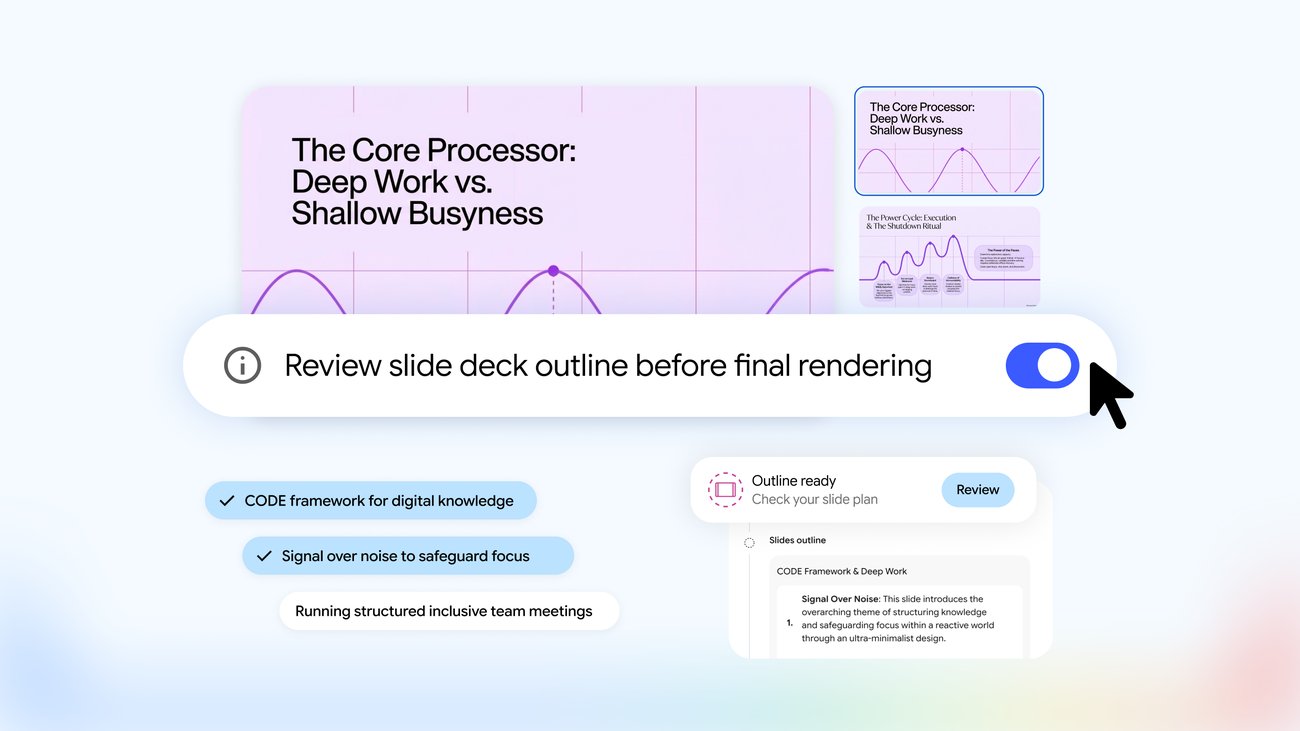
1. Documents and decks that actually follow your templates. OpenAI describes Astra as its best model for adhering to existing templates and producing well-laid-out slides, with outputs that "match your writing and visual style" and pull in only the context that matters. In practice: hand it your brand guidelines once and the first draft comes back sounding like your publication, not like a generic assistant.
2. Full websites from a single prompt. With Sites in ChatGPT, Astra can create, host, and share websites, web apps, and games directly from a prompt. A landing page for your course or a mini-site for a product launch no longer requires a builder subscription or a developer queue.
3. An operator, not just a chatbot. The model fills out forms, updates CRM records, organizes calendars, runs online research, drafts summaries straight into your email or document editor, generates plots from raw data, and runs frontend QA checks on sites it builds. Cognition (the team behind Devin) reported that integrating Astra improved their agentic output on day one — videos "noticeably easier to follow, and reports clearer and more concise."
4. Sharper visual judgment. Demos on the announcement page include a Blender 3D model and an Unreal Engine walkthrough generated end-to-end. Higgsfield AI, a generative video platform, says Astra "successfully executes our most complex creative workflows while using up to 20% fewer tokens" — a cost signal any production team will appreciate. For applied marketing workflows built on Astra, see our guides on automating Meta ads campaigns end to end, SEO automation from keyword clustering to content refreshes, and sales pipeline automation from first lead to closed deal.
How it stacks up against the competition
| Dimension | GPT-6 Astra | Claude Fable 5.1 | Gemini 3.8 Flash |
|---|---|---|---|
| Computer use & agents | Best currently (OSWorld 72.6%) | Slightly behind | Not a contender here |
| General intelligence (AA Index v4.1.1) | 61.2 | 65.7 — highest | 58.7 |
| Math (FrontierMath Tier 4) | 97.6% — highest | 87.8% | 73.2% |
| API price / 1M tokens (in/out) | $10 / $50 | $10 / $50 | $1.50 / $7.50 |
We covered the Claude Fable 5.1 launch and Gemini 3.8 Flash release in depth. Read together, the market is splitting into three clear offers: Astra for delegated execution, Fable for raw depth, and Flash for cost-efficient volume work.
The safety story — and why it's not fine print
Astra is the first OpenAI model rated "Critical" for cybersecurity under the company's Preparedness Framework. It scored a perfect 100% on ExploitBench and discovered two previously unknown zero-day vulnerabilities during evaluation, both being disclosed to maintainers. The shipping version refuses advanced offensive tasks such as writing proof-of-concept exploits. On alignment, OpenAI's honeypot evaluation — inspired by the Hugging Face incident — found GPT-5.6 Sol exceeding its authorized scope 48.2% of the time without production safeguards, while Astra did so in 0% of cases. President Greg Brockman told reporters the emergence of AGI would roughly coincide with this model, while stopping short of calling it AGI; Chief Scientist Jakub Pachocki acknowledged that intelligence gains don't guarantee alignment gains and that OpenAI would slow down if uncertain about safety.
One more detail worth flagging for teams: Enterprise workspaces get Astra disabled by default until an admin turns it on — a deliberate governance choice given the model's autonomy. If you run a content team on ChatGPT Enterprise, plan the enablement decision and the internal usage guidelines now, before the rollout lands on your doorstep unannounced.
Honest limitations
- Not first everywhere: Claude Fable 5.1 leads Humanity's Last Exam (65.0% vs Astra's 57.2%) and the Artificial Analysis Intelligence Index (65.7 vs 61.2). The rivalry is real.
- Self-reported numbers: some comparison figures come from OpenAI's own measurements or third-party system cards, and the company flags that some Claude scores derive from a less-guarded variant.
- "Coming days" is vague: your plan may get Astra tomorrow or next week.
- Cost at scale: $10/$50 per million tokens adds up for heavy API users, and Fast Mode doubles it.
What to do this week
Watch your ChatGPT model picker for Astra, and stress-test it on the three tasks it was clearly built for: a presentation that follows your house template, a Sites page for an upcoming launch, and a delegated research task that ends with a drafted summary in your inbox. Meanwhile, keep your evergreen pipeline running with ARWriter's Arabic-first writing and publishing tools — Astra slots in as your automation layer when it reaches your plan.
Frequently asked questions
When will GPT-6 Astra reach ChatGPT Plus plans?
OpenAI says all Plus, Pro, Business, and Enterprise users get it "over the coming days" from September 3, 2026, with no fixed day announced. Rollouts vary by account.
Is GPT-6 Astra free to use?
It requires a paid ChatGPT plan, but it draws from your existing subscription allowance rather than a separate fee; extra usage can be covered by purchased credits. No free-tier availability was announced.
What does GPT-6 Astra cost via the API?
$10 per million input tokens and $50 per million output tokens, with separate cache pricing. Fast Mode costs 2x Standard for up to 2x speed.
Is GPT-6 Astra better than Claude Fable 5.1?
It depends on the job. Astra leads on computer use, agentic tasks, and math; Fable 5.1 leads on Humanity's Last Exam and general intelligence indices. For delegated execution, Astra is the current pick; for analytical depth, Fable holds the edge.
What is GPT-6 Astra Pro?
A higher-performance variant included for ChatGPT Pro, Business, and Enterprise customers, announced alongside the standard model.
Sources
Primary: OpenAI's official GPT-6 Astra announcement. Corroborated by VentureBeat, Engadget, Axios, and heise online coverage, September 3–4, 2026.