On September 1, 2026, Anthropic shipped Claude Fable 5.1 alongside a restricted sibling, Claude Mythos 5.1. If you write, edit, or publish for a living, three things in this release actually matter: a 75% cut to cached-token pricing, safeguards that interrupt legitimate work far less often, and a watermark baked in to comply with Europe's AI Act code of practice. The rest is benchmark bragging — useful context, but not what changes your workflow next week.

Two models, one brain: which one you'll actually use
Anthropic describes the pair as "the same model, but with different levels of safeguards." Fable 5.1 is the general-availability release — live on Claude.ai and Anthropic's tools from day one, and on all three major clouds (AWS, Google Cloud, Microsoft Azure). Mythos 5.1 is limited to vetted US organizations working in cybersecurity and life sciences under verification programs run with the US government. Unless you run a security lab, everything below refers to Fable 5.1.
There is no migration work for existing users: the new model replaces its predecessors at every access point, so whatever Claude was doing in your editorial pipeline this morning, it now does with 5.1 under the hood.
The pricing story: flat base rates, dramatically cheaper caching
The API price holds at the previous generation's level: $10 per million input tokens and $50 per million output tokens. The real movement is in cache reads, which dropped 75% to $0.25 per million tokens. Anthropic frames this as roughly 25% savings on typical workloads and up to about 45% on highly repetitive ones.
Translate that to a content operation: any workflow that re-reads the same long source material — a brand book, a product catalog, a season of research notes — gets cheaper every single run. Teams that generate article variants from one master brief are the clearest winners here, because the input side of their bill mostly evaporates after the first pass.
Fewer refusals, by design
The announcement dedicates substantial space to safeguard tuning, and the numbers are specific: 60% fewer false positives on cyber-related prompts, and biology safeguards that fire 85% less often on benign queries. Vulnerability discovery is now permitted on Fable 5.1 itself (exploit development still routes to Opus models). For writers, the practical effect is fewer of those maddening mid-task refusals that earlier generations produced on perfectly ordinary marketing or health-adjacent copy.
New "effort levels" (low through max) let you trade depth for speed per request — the system defaults to High in Claude Code and Medium in Claude.ai and Cowork. A quick social caption and a 3,000-word investigative draft no longer need to consume the same amount of reasoning budget.
What early customers say about the writing
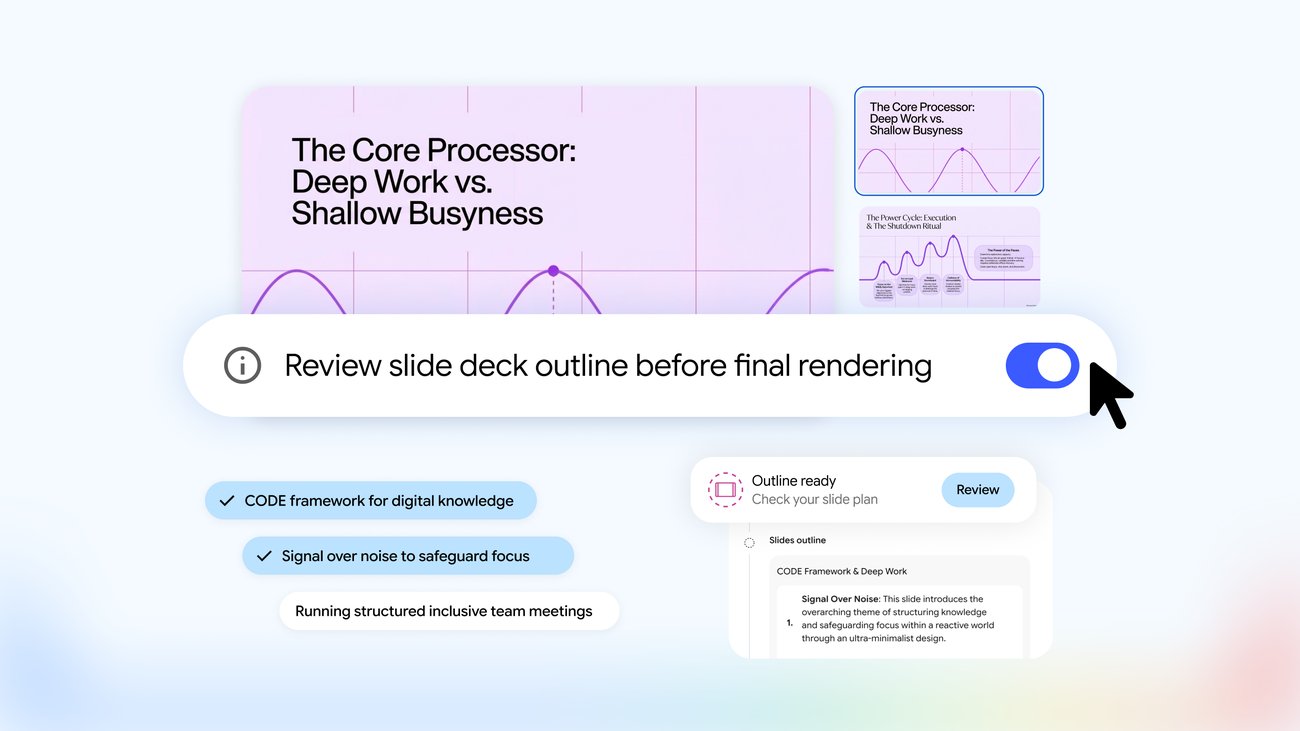
Three named testimonials stand out for content teams. Canva praised the model's writing and noted it built a rhythm game inside Canva Code with synced music. Hebbia called its slide-deck generation best in class. And Crosby reported its RedlineBench editing score jumping from 47.9 to 57.0 over the previous generation. Vendor testimonials deserve skepticism, but editing and deck generation are exactly the categories professional writers pay for, so the signal is worth registering.

The numbers, quoted directly
The official numbers as Anthropic published them: on Terminal-Bench 4.0, Fable 5.1 scores 55.8% versus 42.0% for Fable 5, 52.3% for Opus 5, and 37.3% for GPT-5.6 Sol; on Humanity's Last Exam without tools it reaches 60.9% against 57.8% for the previous generation; on GDPval-AA v2 it records 1853 versus 1723, 1824, and 1711 for the same three rivals in order; and on CursorBench 3.2.0 it hits 73.4% versus 70.5%, 70.0%, and 67.2%.
These are the vendor's own published figures and lean heavily toward engineering and knowledge-work tasks rather than creative prose. Still, the gap over Fable 5 is consistent. If you're weighing Claude against alternatives for your stack, our earlier Claude Opus 5 walkthrough for content creators maps where each generation fits.
The watermark angle nobody should ignore
Under the EU AI Act code of practice signed in July 2026, models released after August 2, 2026 must carry a watermark — and Fable 5.1, released September 1, is one of the first major models to ship with it enabled from day one. A detection API is in private preview. We covered the mechanics of Claude's text watermarking and the C2PA image standard in a dedicated piece on AI watermarks for content creators; the short version is that machine-detectable provenance is moving from policy papers into shipped product. Publishers serving European audiences should assume detection tooling will keep spreading.
What this means for your workflow
Be precise about what did not change: Anthropic made no specific Arabic-language claims in this announcement, the model is text-only (no image or video generation), and consumer subscribers see no price change — the savings land on API users with cache-friendly workloads. The upgrade is essentially free efficiency: same list prices, cheaper repetition, less friction, and a compliance feature you didn't ask for but now inherit.
If your process is multi-model — research, drafting, then scheduling across platforms — tools like ARWriter's article and research writer let you keep one editorial home while cheaper models like this one do the heavy lifting underneath.
Where to get it and how to start safely
Availability was immediate across the board: Anthropic states Fable 5.1 went live "on all platforms" on launch day, including AWS Bedrock, Google Cloud's Vertex AI, and Microsoft Azure for cloud customers, while Mythos 5.1 remains limited to US organizations accepted into the Cyber Verification Program and the Life Sciences Verification Program. The API identifier is claude-fable-5-1. A sensible rollout plan for a content team: keep your current templates untouched, mirror them to the new model on a copy of last month's briefs, and diff the outputs — the combination of higher effort ceilings and looser guardrails occasionally changes tone in ways worth catching before a client does. Also re-baseline your caching strategy: if you were previously limiting cache use because the economics felt marginal at the old rates, the new $0.25 read price flips several previously break-even use cases — multi-variant generation, per-section regeneration of long drafts, and always-on brand-voice checks — into clearly profitable territory.
Honest limitations
An announcement post is marketing: the benchmarks are self-reported and the testimonials are selected by the vendor. The watermark detection API is private-preview, so its real-world accuracy is unproven. And "fewer false positives" is a statistical claim — your specific niche (finance, health, security-adjacent content) may still trip filters. Test with your own prompts before committing a client pipeline.
Frequently asked questions
Is Claude Fable 5.1 free to use?
It's included in Claude's existing apps and subscriptions. API pricing is $10 per million input tokens and $50 per million output tokens, with cached reads at $0.25 per million.
What's the difference between Fable 5.1 and Fable 5?
Same list price, higher benchmark scores, 75% cheaper cache reads, fewer false-positive refusals, and the EU-required watermark for models released after August 2, 2026.
Does Fable 5.1 support Arabic?
The announcement makes no Arabic-specific claims. Claude's Arabic quality has been strong in recent generations, but there is no official improvement to cite for this release.
Will it still refuse my marketing copy?
Anthropic reports 60% fewer cyber false positives and 85% fewer benign-query blocks in biology. Expect noticeably fewer interruptions, not zero — validate on your own content first.
Can the watermark be removed?
No opt-out is offered. It's invisible to readers and designed to be detectable via the official API now in private preview.
Bottom line
Fable 5.1 is an efficiency release rather than a creative leap: cheaper repetition, calmer guardrails, and regulatory watermarking arriving ahead of broader legislation. For professional writers, the smart move is to rerun your prompt library against it this week — the economics just tilted in your favor, and the provenance rules will catch up with everyone eventually.