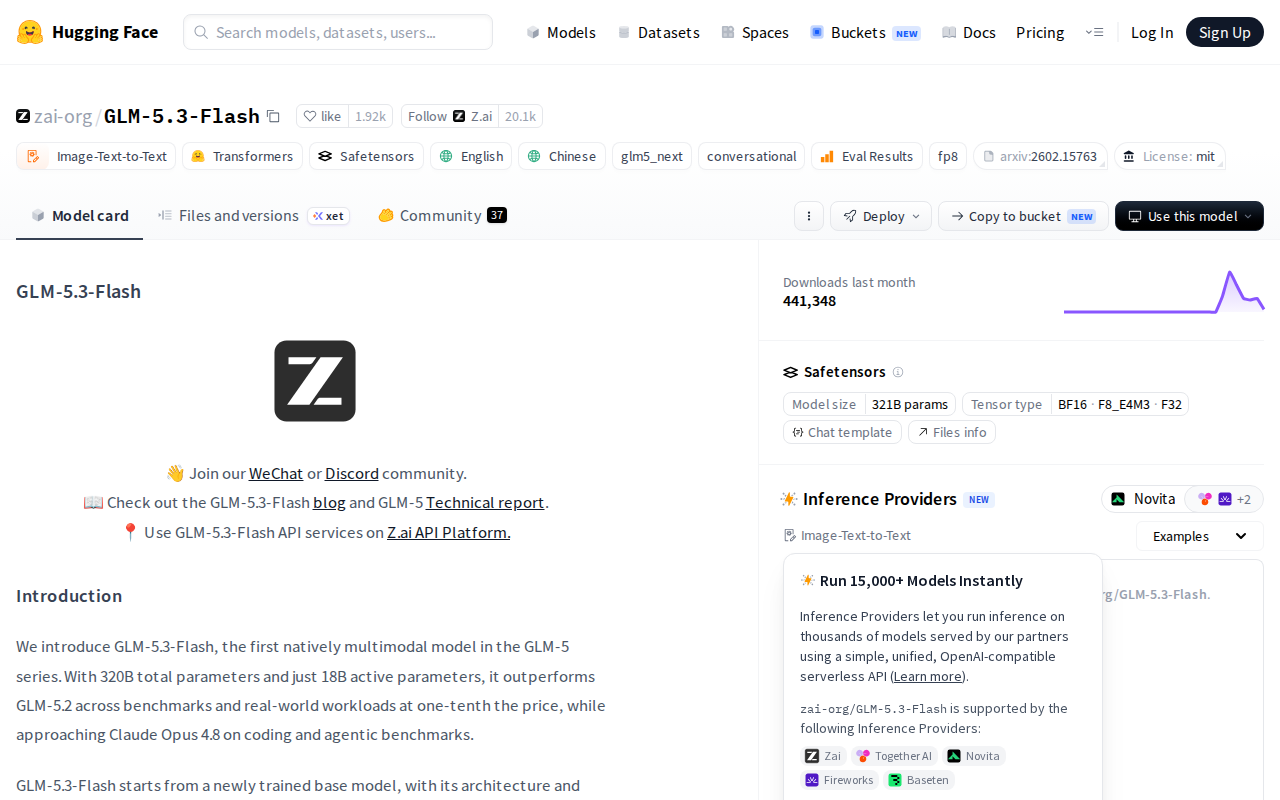
On August 25, 2026, Chinese AI lab Z.ai published the open weights of two new models on HuggingFace under the permissive MIT license: the base GLM-5.3 and its efficiency-focused sibling, GLM-5.3-Flash. The official model card makes a claim that should stop any content team lead mid-scroll: GLM-5.3-Flash "outperforms GLM-5.2 across benchmarks and real-world workloads at one-tenth the price, while approaching Claude Opus 4.8 on coding and agentic benchmarks." A week has passed since release — here is the deep explainer, dated honestly, on what this model is and whether it belongs in your stack.
What GLM-5.3-Flash is, in plain terms
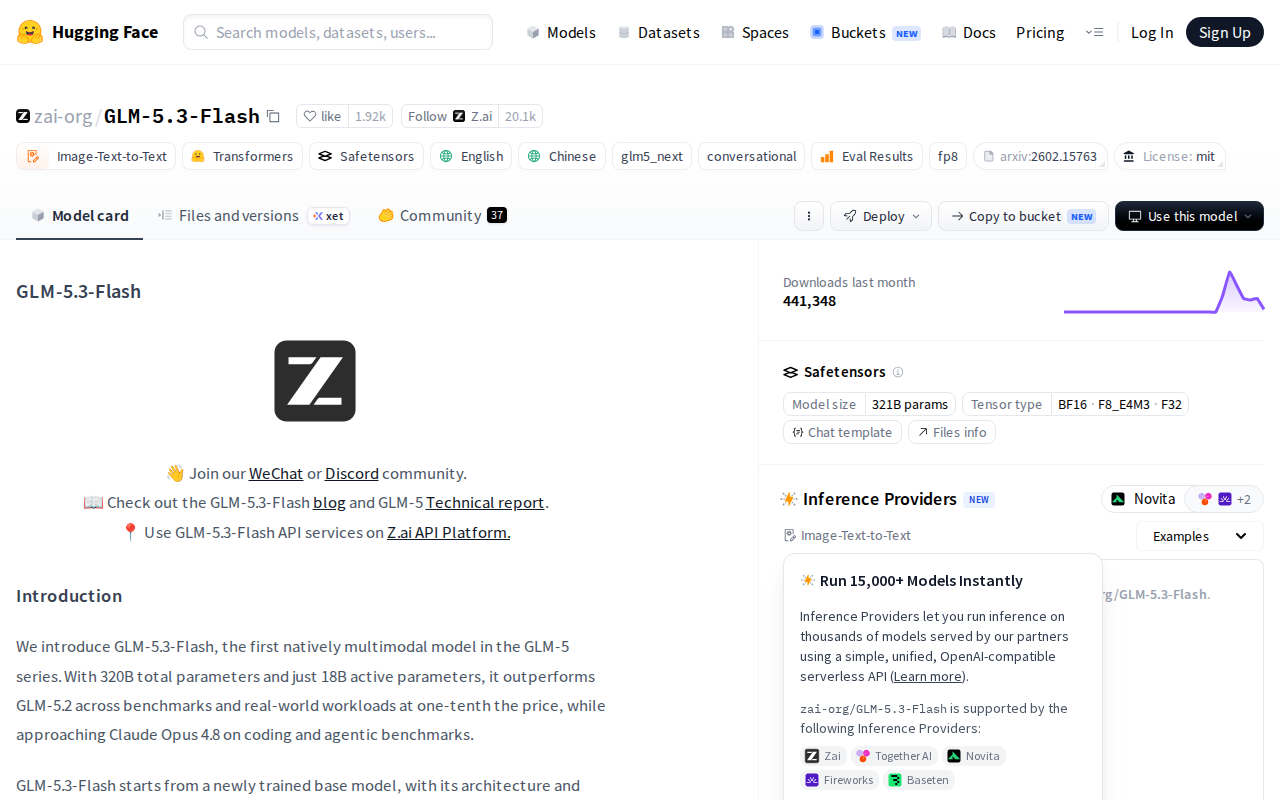
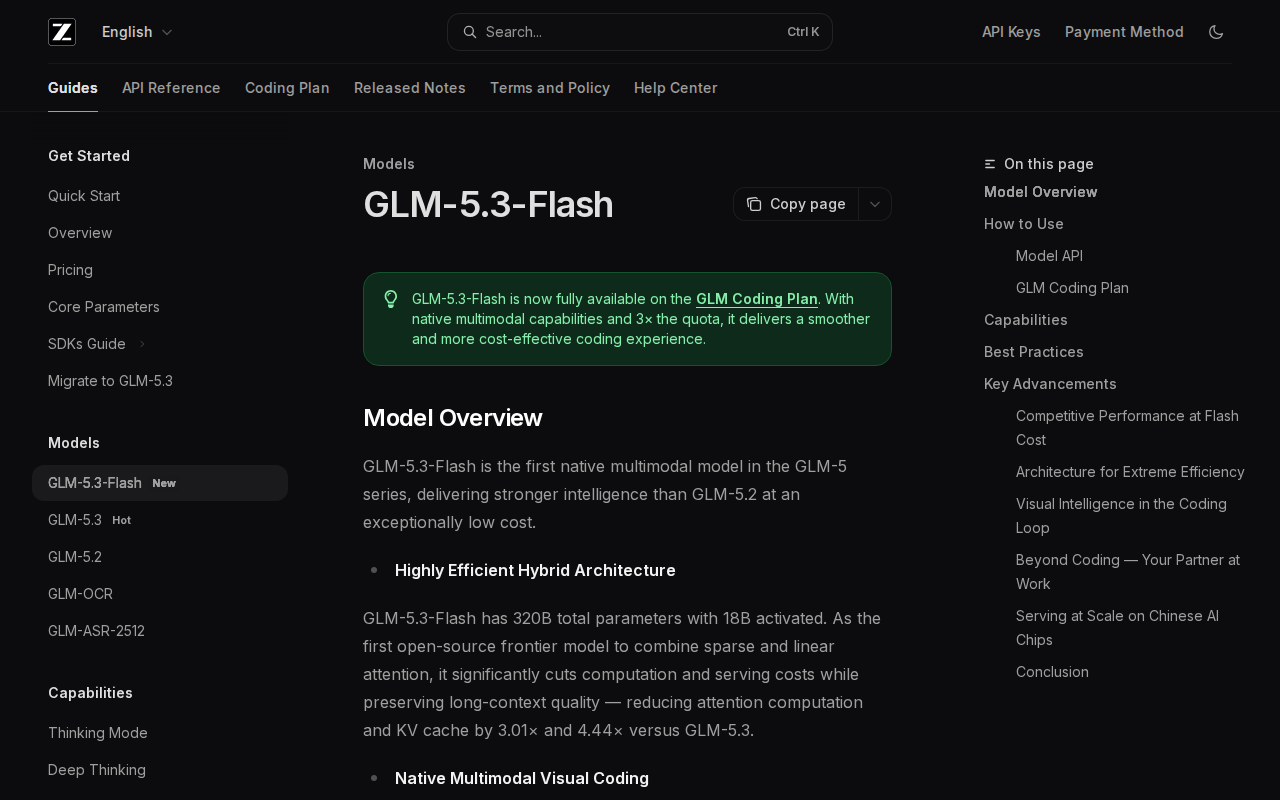
It's a Mixture-of-Experts model with 320 billion total parameters and just 18 billion active per token (the repository sidebar lists 321B). That architecture is the economic trick of this generation: the model carries the knowledge capacity of a giant while each inference step pays for a small one. The official docs quantify the value proposition via the Artificial Analysis Intelligence Index v4.1.1, where GLM-5.3-Flash scores 57 at $0.045 per task (discounted) — a level of intelligence the docs note was previously available at roughly 10x the cost.
More consequential than raw numbers: the card calls it "the first natively multimodal model in the GLM-5 series." Feed it images, video, text, or files; it responds in text. For content workflows, that converts the model from "text generator" to "assistant that can see your materials" — a competitor's screenshot, last quarter's campaign video, a photographed document.
The million-token context, and what it actually buys you
The official documentation lists a 1M-token context, and the card's own evaluations exercised it — knowledge work at 300K tokens on Humanity's Last Exam, repository-scale tasks at a full 1M on NL2Repo. In non-technical terms: an entire book, a season of research sources, or years of newsletter archives can enter a single prompt. The card credits this affordability to a "hybrid architecture combining sparse and linear attention" that sharply cuts long-context serving costs — engineering you don't need to master, but whose effect shows up directly on your invoice.
Documented performance: the official numbers
The official results: a score of 57 on the Artificial Analysis composite intelligence index; 84.3% on Terminal-Bench 2.1, which measures complex execution tasks; 63.4% on DeepSWE for software engineering; and a mean of 80.75 on ExtractBench for document data extraction, including 96.3 on short documents — the closest measured proxy to what content teams do all day: pulling dates, numbers, names, and quotes from sources before writing.
That last row deserves a second look. Extraction at 96.3 on short documents is the closest measured proxy to what content teams actually do all day: pulling dates, numbers, names, and quotes out of source material before writing. We previously covered GLM 5.2 for content teams — the new Flash generation now beats that model at one-tenth the running cost.
Why the MIT license matters more than it sounds
MIT is as permissive as open-source licensing gets: commercial use, modification, and product integration with essentially no strings. That distinguishes GLM-5.3-Flash from "open-weight" releases wrapped in restrictive custom terms. Adoption signals look genuine rather than launch-week hype: 441,348 downloads in the first month on HuggingFace, 83 community quantizations, and 12 fine-tunes within days. For publishers and tool builders, permissive licensing is long-term insurance — the model can't be yanked out from under a product on a vendor's whim.
Three caveats stated plainly
First, Z.ai has not published a clean per-million-token price on the pages we verified — what's officially documented is the "one-tenth of GLM 5.2" claim and the $0.045-per-task figure at discounted rates. Treat any other token price you see online as unverified until you check the official docs. Second, there is no official Arabic-language claim anywhere on the card; its languages are English and Chinese. Third, "Flash" is the economy tier of the 5.3 family — if your task is depth-critical long-form writing, the base GLM-5.3 released the same day may fit better. Both are available now.
Ready-made agents on the Z.ai platform
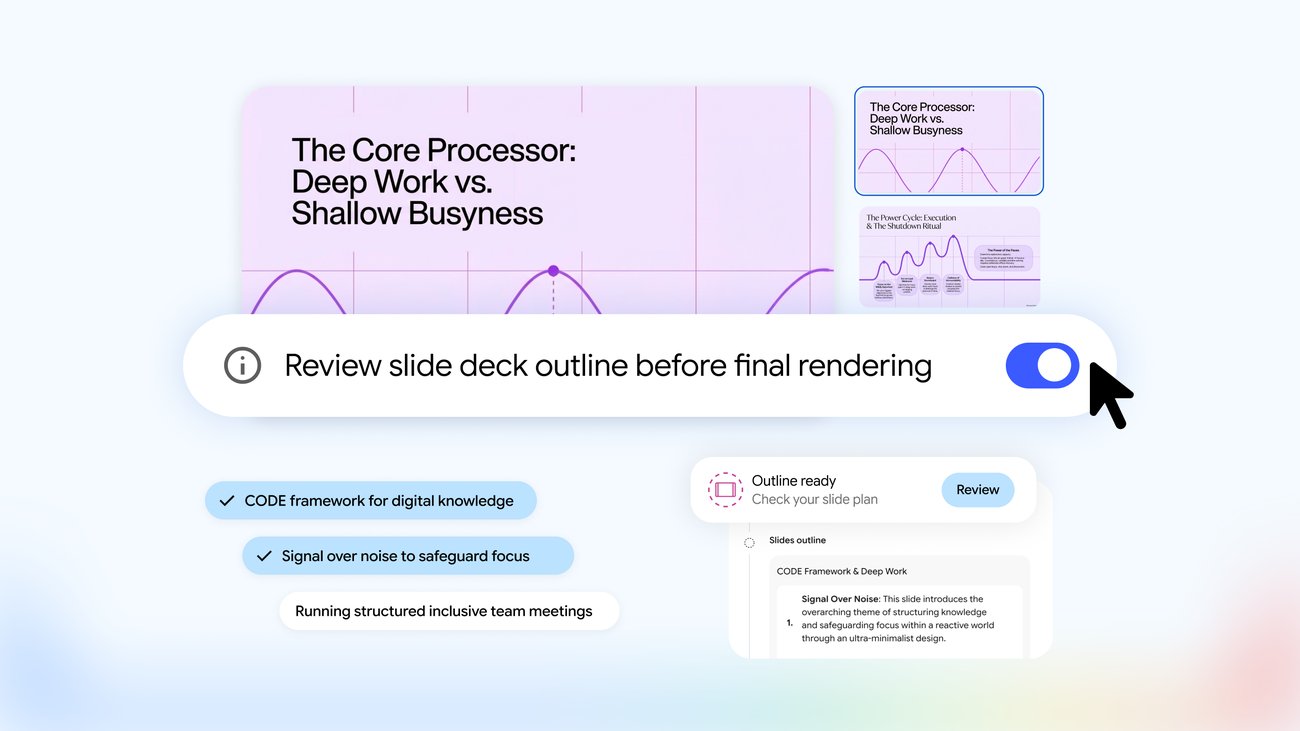
Buried in the official developer documentation is a detail content creators shouldn't miss: beyond the raw model, Z.ai ships ready-to-run agents on its platform — a Slide/Poster Agent (beta) that turns analysis into finished PPTX, PDF, DOCX, and XLSX deliverables, a dedicated Translation Agent for multilingual text, and a Video Effect Template Agent for applying template-driven effects to video clips — the kind of behind-the-scenes work that eats hours in a small content team's week. These are platform services rather than model features, but they signal where Z.ai is aiming: office work and content production, not chatbot demos. Our earlier guide on free and paid ways to access GLM 5.3 remains valid, with Flash now added to the lineup.
What this means for content operations
Three practical takeaways. Economics: if you're paying premium Western model rates for routine work — summarizing, extracting, first drafts, internal translation — a model at one-tenth of GLM 5.2's price (itself already cheaper than Western frontier options) lets you reserve the expensive model for the work that actually justifies it. Vision: native image/video understanding unlocks daily-use cases like visual competitor analysis or pulling data from screenshots and photographed documents, previously gated behind expensive multimodal tiers. Separation of concerns: treat models like this as the cheap engine for volume work, and keep a specialized editing environment for final polish — multilingual teams, for instance, can run the heavy lifting through GLM while tools like ARWriter's content suite handle the language-sensitive final pass.
The family tree: four generations in six months
HuggingFace's own timestamps sketch the pace: GLM-5 landed February 2026, GLM-5.1 in April, GLM 5.2 in June, and GLM-5.3 plus Flash on August 25 — four generations in roughly six months, each closing in on native multimodality until Flash became the first in the family born with it. The card also stresses that Flash "starts from a newly trained base model" trained on a 30-trillion-token multimodal corpus — the cost savings come from architecture (Manifold-Constrained Hyper-Connections, hybrid attention), not from distilling down a bigger sibling. The practical lesson for buyers: waiting for "the big release" no longer makes sense in this market; improvements arrive continuously, so benchmark available options today rather than waiting for promises.
Three workflows that show the math
Concrete examples from common content work. E-commerce: upload product photos and videos, ask for specs and benefit extraction to build listings — a task that used to require a premium vision API now costs next to nothing at scale. Publishing: drop hundreds of pages of research into the million-token window and ask for structure, gaps, and sourced summaries — days of reading compress into hours. Small agencies: generate drafts and first-pass translations on the economy model, reserve the frontier model for final client-facing copy — the savings land directly in margin. The common thread: the cheap model doesn't replace the premium one; it frees the premium one from work that never deserved it.
Quick comparison
A quick comparison: cost — GLM-5.3-Flash is cheapest at one-tenth of GLM 5.2, versus low-mid for 5.2 and highest for Western frontier models. Vision — native image/video input on Flash, not available on GLM 5.2, and available on some Western models. Max context — one million tokens on Flash, lower on 5.2, and varying across competitors. License — MIT open weights for Flash versus proprietary for Western models. And Arabic — no official claim for Flash, decent in practice for 5.2, and the strongest official support among Western options.
Honest limitations
The model's declared focus is coding, agents, and execution — not literary long-form writing; complex stylistic work exposes that. Reasoning defaults to maximum effort per the docs, meaning simple tasks respond slower than necessary unless you adjust the effort level yourself. Institutions with sourcing policies should weigh that this is a Chinese lab's model — a legitimate governance consideration for sensitive editorial work, and one to decide consciously rather than discover later. And every performance claim cited here is the vendor's own; the final verdict is your evaluation on your texts and your audience.
Frequently asked questions
What is GLM-5.3-Flash?
An efficiency-focused 320B-parameter (18B active) Mixture-of-Experts model from Z.ai — natively multimodal (image/video/text in, text out), 1M-token context, open weights under MIT, released August 25, 2026.
Is GLM-5.3-Flash free?
The Z.ai chat platform has a limited free tier; API use is paid, officially documented at one-tenth of GLM 5.2's price, with a recorded $0.045 per task (discounted) on the Artificial Analysis index. The open weights are free for those who self-host.
Does it support Arabic?
No official claim — the card is English/Chinese. Community experience is broadly positive, but test on your own Arabic text before committing a pipeline.
What's the difference between GLM-5.3 and GLM-5.3-Flash?
The base model targets maximum performance; Flash is the economy tier that still beats the previous GLM 5.2 at one-tenth of its cost, per the official model card. Both shipped together on August 25, 2026.
Where would I use the vision capabilities?
Feed it a screenshot, a cover image, a photographed document, or a video clip and ask for analysis, extraction, or summarization in text. Document extraction is documented at 96.3 on ExtractBench for short documents.
Is it right if I only write Arabic articles?
It's a strong economic engine for drafts, summarization, extraction, and first-pass translation — but if polished Arabic prose is your product, keep a specialized Arabic editing tool for the final stage and use Flash for the volume work.
Is it good for real-time interactive applications?
Not its declared strength: reasoning defaults to maximum effort, which slows simple prompts. Lower the effort setting for interactive use, or pair it with a lighter chat model and route the heavy loads to Flash in the background.
How to evaluate it this week without risking your pipeline
A safe three-step adoption path that any team can run in a few hours. Step one — shadow test: pick ten real tasks from last month (two summaries, three extractions, two drafts, two translations, one vision task) and run them through GLM-5.3-Flash alongside your current model without changing anything in production. Score the outputs blind. Step two — split routing: whichever category the cheap model wins or ties on, route that category to it via your tooling while the premium model keeps the rest. Most teams find extraction and summarization migrate first, nuanced prose last. Step three — monitor and re-test quarterly: at this release cadence, today's clear winner is next quarter's baseline, so keep the comparison harness you built in step one and rerun it whenever a new generation lands. The teams that win from cheap capable models are the ones with a repeatable evaluation habit, not the ones making a single dramatic switch.
How do I keep up with the GLM family without drowning?
Follow the official zai-org organization page on HuggingFace and the models section of the Z.ai docs — those are where every official release appears first with its model card. Ignore the flood of community quantizations and forks; only official generations warrant a decision from you.
GLM-5.3-Flash versus other open-weight rivals like Qwen — which should I pick?
Both ride the same wave of dense Chinese open-weight releases this year, and each optimizes a different corner: GLM leads with native vision, ready-made platform agents, and the million-token window; other families lead elsewhere. Benchmark spreads between them have narrowed enough that your specific workload decides it — which is exactly why the shadow-test method above matters more than any leaderboard.
What does "441K downloads" actually tell me?
It's a health signal, not a quality verdict. That many pulls in the first month, plus 83 quantizations and a dozen fine-tunes, means a real ecosystem is forming around the model — more tooling, faster fixes, more community answers when something breaks. Popularity de-risks adoption; it doesn't replace your own evaluation.
Bottom line
The open-weights release of GLM-5.3-Flash under MIT is one of the clearest signals that 2026's real question is no longer "can I afford an intelligent model?" but "how much intelligence am I actually willing to pay for?" For content operations, it puts native vision, a million-token window, and previous-flagship quality at a tenth of the running cost. Test it this week on your routine workloads, measure against real outputs, and migrate only what wins. Open competition like this is the best thing that has happened to anyone who produces content — and pays an AI bill at the end of the month.