Last updated: 4 August 2026 — Lane B explainer for an event dated 23 July 2026 (not fake breaking news).
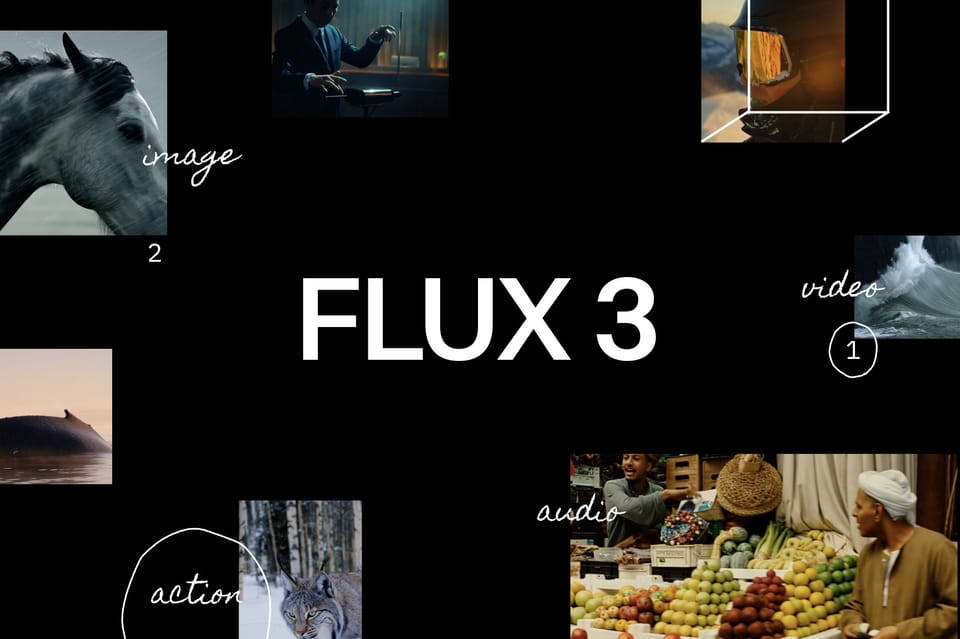
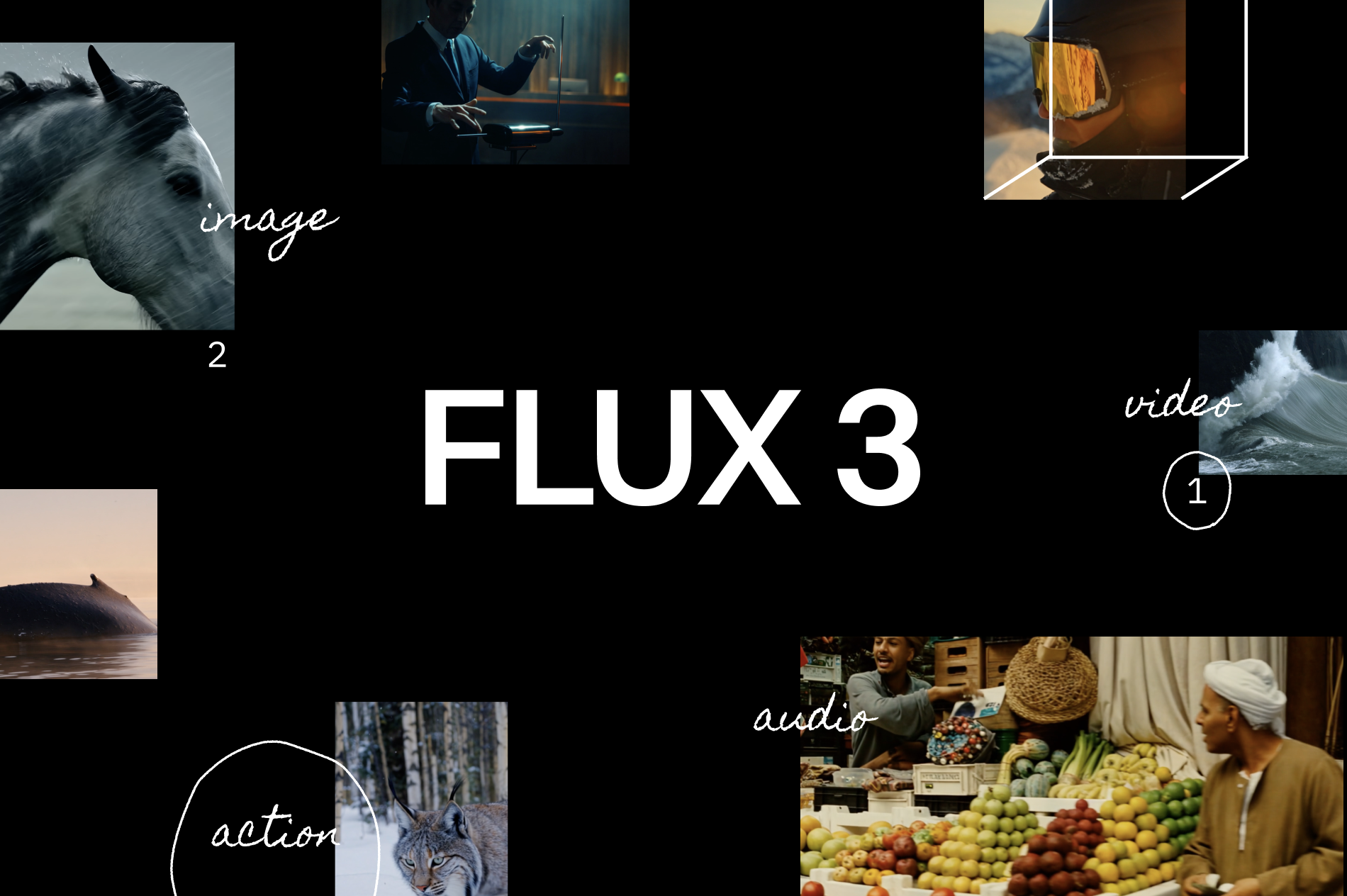
On 23 July 2026, Black Forest Labs announced FLUX 3: a multimodal foundation model trained jointly on images, video, and audio, with an early path into action prediction. Primary source: the official BFL blog and the @bfl_ai post. This piece ships about twelve days later. The question for content teams is practical: what can you use now, what is still early access, and how should you change short-form video and creative workflows?
Introducing FLUX 3. One multi-modal model for Image, Video, Audio and Action-Prediction. Creations are truer to life in every kind of style. FLUX 3 Video is now available in early access.
— Black Forest Labs (@bfl_ai) July 23, 2026
Source: official Black Forest Labs account on X — https://x.com/bfl_ai/status/2080308988961554582
What FLUX 3 is (primary source only)
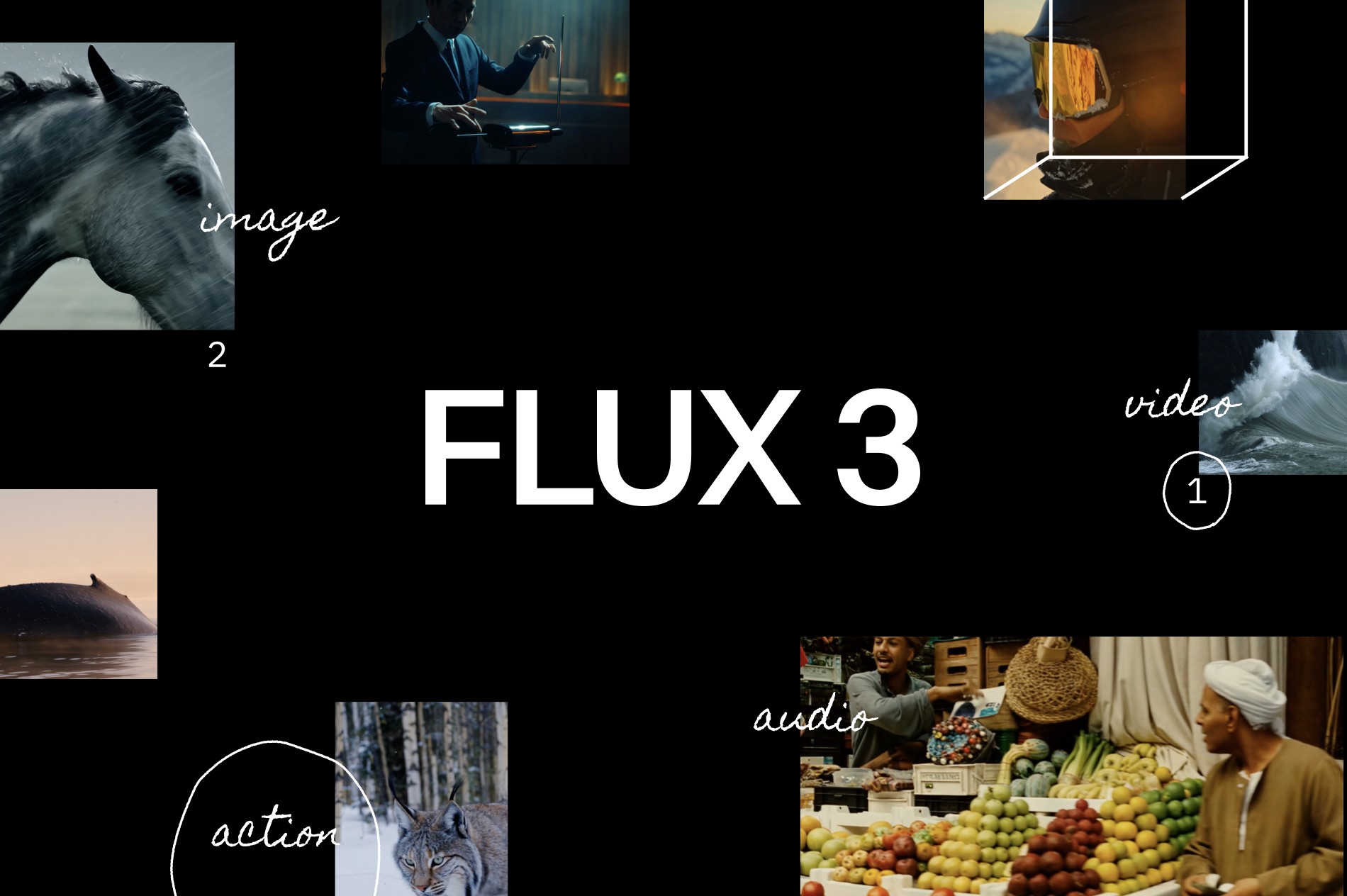
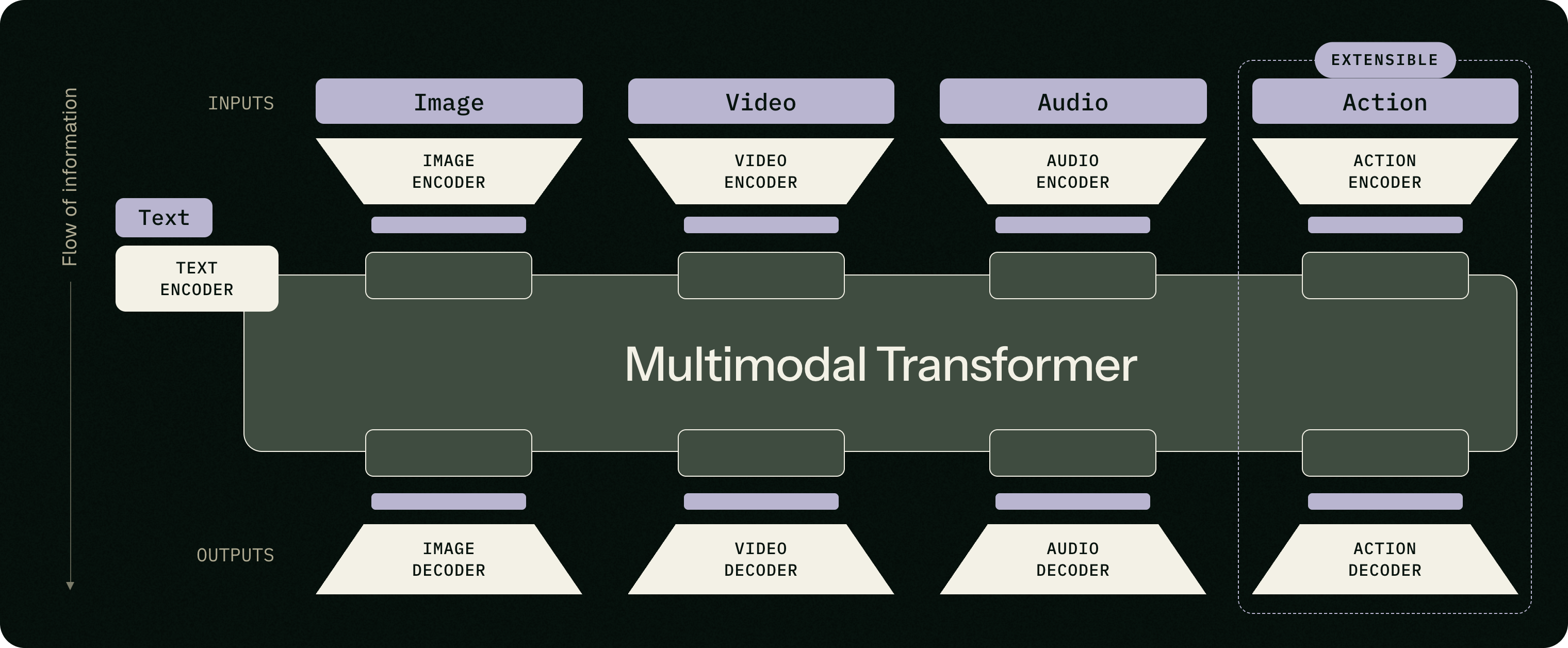
BFL describes FLUX 3 as a single multimodal backbone: modalities constrain each other so motion, impact sound, and spatial structure stay coherent. For marketers and creators, the shippable surface today is FLUX 3 Video in Early Access. Image early access is promised “in the following weeks.” Request access on bfl.ai/models/flux-3 — do not assume open free GA.
Video capabilities that change creative ops
Official list (native audio on outputs, per BFL wording): text-to-video; image-to-video (animate or reference); video-to-video with character carry-over; generative video-audio continuation; keyframe-to-video; multilingual dialogue; wide style range; strong typography and animated designs; agentic chaining of clips into multi-shot sequences. Duration: up to 20 seconds with audio in a single generation — enough for many product ads and social spots.
How to read the preference numbers
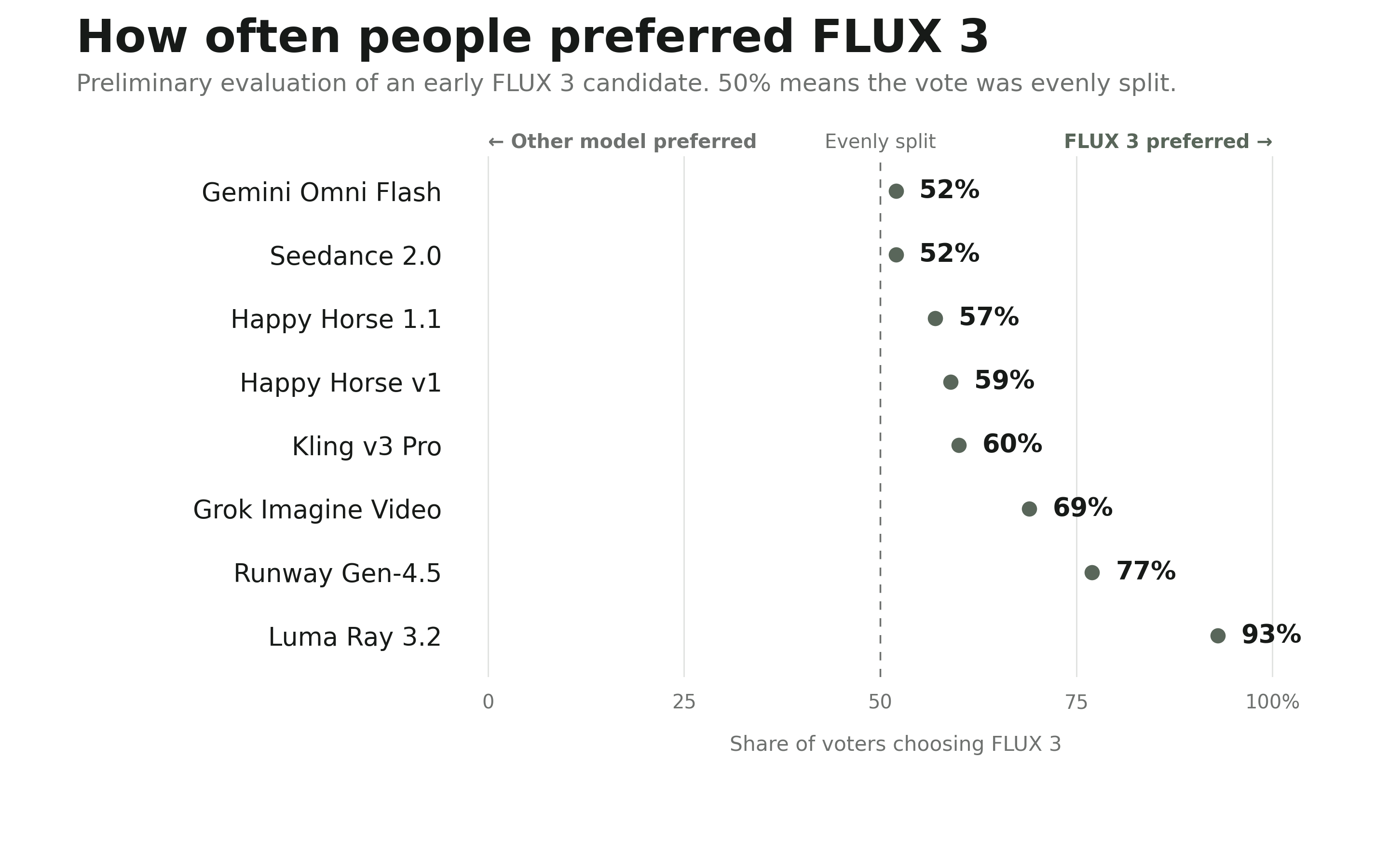
Early human preference on 10-second 720p clips with audio (company-reported, preliminary): up to 69% vs Grok Imagine Video; 60% vs Kling v3 Pro; ~52% vs Seedance 2.0 / Gemini Omni Flash; 77% vs Runway Gen-4.5; 93% vs Luma Ray 3.2. Treat these as directional signals. Run your brand faces, packaging, and on-screen type before promising clients “we beat everyone.”
What this means for content creators
- Short ads with sound: fewer silent generations + external foley pipelines when native audio is good enough.
- Character continuity: video-to-video and visual references matter for series and avatar content.
- Typography-heavy creatives: animated type is called out — still test non-Latin scripts yourself.
- Access friction: early access can delay campaigns; never put unapproved tools in a client SLA.
- Pricing: the launch post does not publish a simple public creator price card; watch API/weight terms after acceptance. We will not invent rates.
Your writing, scheduling, and prompt stack can stay centralized on ArWriter, the prompt library, and the image prompt library. FLUX 3 is a visual/video engine candidate — not a full social OS.
Quick comparison for daily tools
| Dimension | FLUX 3 Video | Grok Imagine Video 1.5 | MiniMax H3 | Midjourney V8.2 |
|---|---|---|---|---|
| Focus | Multimodal image+video+audio (EA) | Video with multi-refs up to 1080p | 2K video + stereo PAYG | Still aesthetics (V8.2 default) |
| Stated duration | Up to 20s with audio | Short practical clips (product settings) | ~15s class in our prior coverage | Not a full video suite |
| Access | Early Access request | grok.com/imagine + API | MiniMax platform | Midjourney subscription |
| Best for | Multi-shot + audio experiments | Face/voice lock-in | Paid high-end video | Still campaigns |
| Honest limit | Not full GA | Tier/region rollout | PAYG cost | Does not replace video AI |
Related explainers: MiniMax H3 for creators and Midjourney V8.2.
Honest limits
- Early access is not universal instant access.
- FLUX 3 Image was not fully open at announcement time.
- Preference charts are vendor-run and preliminary.
- Robotics/action path is mostly out of social-publishing scope.
- No dedicated “new Arabic launch” claim in the post — validate scripts yourself.
- Label AI content where platforms or laws require it — see our EU AI content labeling note.
By the way: if you batch bilingual drafts and social calendars in one place, ArWriter starts at $4.99/month (Plus) with Pro $9.99 and Premium $24.99 — use Auto-Writer for long posts, keep FLUX for the visual layer.
A one-week test plan if you get access
- Request early access and log the grant date.
- Prepare five real prompts: product, approved face, logo, location, on-screen text.
- A/B against your current stack on identity lock, audio, type readability, and queue time.
- Legal review on likeness, music, and disclosure before client publish.
- Schedule elsewhere — the model does not post for you.
Workflow scenarios
DTC brand: 15–20s launch spot with native ambience; human-check price claims.
Reels agency: multi-shot character continuity across three scenes.
Podcast clips: studio look + dialogue clarity tests.
Blog-to-video: keep the SEO article as the asset; video is distribution. Draft in ArWriter tools, then generate the clip.
Launch plan (as BFL wrote it)
Rolling phases: Video/audio APIs and private weights; Action with partners; Image APIs; later open-weight FLUX 3 Dev. Treat dates as vendor plans, not contracts.
Frequently Asked Questions
What is FLUX 3?
Black Forest Labs’ multimodal model announced 23 July 2026, spanning image, video, and audio in one architecture, with FLUX 3 Video in early access for up to 20-second native-audio clips.
Is FLUX 3 free for everyone today?
No. Video is early access by request. The launch page does not promise unlimited free public GA.
Does it replace Midjourney?
Not as a default still-image workflow yet. It expands into multimodal video+audio while Midjourney remains strong for still aesthetics.
How does it compare to Grok Imagine Video?
Different stacks: Imagine emphasizes multi-reference identity tools already rolling to consumers; FLUX 3 emphasizes a unified multimodal backbone and longer 20s EA clips. Compare on your assets.
Any regional pricing for MENA creators?
Not specified in the launch post. Confirm payment and access after approval; do not invent regional list prices.
What to do next
Log the event date 23 July 2026, request access if video is core to your funnel, and do not rip out your publishing stack until five real outputs pass review. Keep Arabic/English drafting and scheduling coherent via app.arwriterai.com.
Sources
- FLUX 3 — Black Forest Labs Blog — primary announcement
- FLUX 3 model page — early access
- @bfl_ai on X — official post
Extra operating notes for small teams
Solo creators and two-person shops often rebuild their entire stack every time a model drops. Do not. Freeze writing, approval, and scheduling first. Add video generation as a late stage after the script is approved. Any model — FLUX, Imagine, or otherwise — fails if it enters before you know what you are saying. Write the script, define the CTA, then generate. Fact-check prices manually. Save winning prompts. Iterate weekly at first so you do not burn API or subscription budget on random trials.
Payment methods, regional availability, and privacy policies differ by vendor. Test checkout with a sandbox account before promising a client a weekly delivery that depends on a tool you cannot pay for. Keep a fallback (second tool or simple live footage) so publishing never stops. Reputation beats model FOMO.
When sharing outputs with clients, disclose AI involvement where they ask or where platforms require labels. That is expectation management, not a marketing weakness. Offer tiers: fast AI draft versus human-polished edit.
Finally, watch channel metrics, not internal hype. If retention, CTR, or CAC does not improve after two weeks on a new model, roll back without drama. Loyalty to models is expensive. Loyalty to channel outcomes compounds.
Extra operating notes for small teams
Solo creators and two-person shops often rebuild their entire stack every time a model drops. Do not. Freeze writing, approval, and scheduling first. Add video generation as a late stage after the script is approved. Any model — FLUX, Imagine, or otherwise — fails if it enters before you know what you are saying. Write the script, define the CTA, then generate. Fact-check prices manually. Save winning prompts. Iterate weekly at first so you do not burn API or subscription budget on random trials.
Payment methods, regional availability, and privacy policies differ by vendor. Test checkout with a sandbox account before promising a client a weekly delivery that depends on a tool you cannot pay for. Keep a fallback (second tool or simple live footage) so publishing never stops. Reputation beats model FOMO.
When sharing outputs with clients, disclose AI involvement where they ask or where platforms require labels. That is expectation management, not a marketing weakness. Offer tiers: fast AI draft versus human-polished edit.
Finally, watch channel metrics, not internal hype. If retention, CTR, or CAC does not improve after two weeks on a new model, roll back without drama. Loyalty to models is expensive. Loyalty to channel outcomes compounds.
Extra operating notes for small teams
Solo creators and two-person shops often rebuild their entire stack every time a model drops. Do not. Freeze writing, approval, and scheduling first. Add video generation as a late stage after the script is approved. Any model — FLUX, Imagine, or otherwise — fails if it enters before you know what you are saying. Write the script, define the CTA, then generate. Fact-check prices manually. Save winning prompts. Iterate weekly at first so you do not burn API or subscription budget on random trials.
Payment methods, regional availability, and privacy policies differ by vendor. Test checkout with a sandbox account before promising a client a weekly delivery that depends on a tool you cannot pay for. Keep a fallback (second tool or simple live footage) so publishing never stops. Reputation beats model FOMO.
When sharing outputs with clients, disclose AI involvement where they ask or where platforms require labels. That is expectation management, not a marketing weakness. Offer tiers: fast AI draft versus human-polished edit.
Finally, watch channel metrics, not internal hype. If retention, CTR, or CAC does not improve after two weeks on a new model, roll back without drama. Loyalty to models is expensive. Loyalty to channel outcomes compounds.
Extra operating notes for small teams
Solo creators and two-person shops often rebuild their entire stack every time a model drops. Do not. Freeze writing, approval, and scheduling first. Add video generation as a late stage after the script is approved. Any model — FLUX, Imagine, or otherwise — fails if it enters before you know what you are saying. Write the script, define the CTA, then generate. Fact-check prices manually. Save winning prompts. Iterate weekly at first so you do not burn API or subscription budget on random trials.
Payment methods, regional availability, and privacy policies differ by vendor. Test checkout with a sandbox account before promising a client a weekly delivery that depends on a tool you cannot pay for. Keep a fallback (second tool or simple live footage) so publishing never stops. Reputation beats model FOMO.
When sharing outputs with clients, disclose AI involvement where they ask or where platforms require labels. That is expectation management, not a marketing weakness. Offer tiers: fast AI draft versus human-polished edit.
Finally, watch channel metrics, not internal hype. If retention, CTR, or CAC does not improve after two weeks on a new model, roll back without drama. Loyalty to models is expensive. Loyalty to channel outcomes compounds.
Extra operating notes for small teams
Solo creators and two-person shops often rebuild their entire stack every time a model drops. Do not. Freeze writing, approval, and scheduling first. Add video generation as a late stage after the script is approved. Any model — FLUX, Imagine, or otherwise — fails if it enters before you know what you are saying. Write the script, define the CTA, then generate. Fact-check prices manually. Save winning prompts. Iterate weekly at first so you do not burn API or subscription budget on random trials.