On August 10, 2026, YouTube announced the first structural overhaul of its Partner Program since 2018 — and it lands squarely on the roadmap of anyone planning to launch a channel. Starting February 1, 2027, new channels will need 8,000 qualified watch hours in the past 365 days to join the program — double today's 4,000 — while the Shorts-based entry route doubles from 10 million to 20 million qualified views in 90 days. In exchange, YouTube is opening new revenue streams from its subscription pools and rolling out incentive programs for smaller Shorts creators.
The announcement, published on YouTube's official blog under the banner of Partner Program updates for 2027, is more than a numbers bump. It redraws the financial map for incoming creators across every market. This guide breaks down every threshold, date, and revenue pool — and answers the question that matters most to you: what should you do between now and February 2027?
Exactly what changed: every number and date
Until now, the entry bar for ad revenue sharing and subscription revenue sharing has been 1,000 subscribers plus 4,000 qualified public watch hours over 12 months, or 1,000 subscribers plus 10 million qualified Shorts views over 90 days. Under the new terms:
| Route | Old threshold | New threshold | Effective |
|---|---|---|---|
| Long-form watch hours (365 days) | 4,000 hours + 1,000 subs | 8,000 hours + 1,000 subs | Feb 1, 2027 — new applicants only |
| Shorts views (90 days) | 10M qualified views | 20M qualified views | Feb 1, 2027 — new applicants only |
| Shorts ad/subscription revenue-sharing threshold | 10M views / 90 days | Unchanged | — |
| Fan funding (Super Chat, memberships, shopping) | Reduced thresholds (500 subs...) | Unchanged | — |
One point YouTube repeated across the announcement: current Partner Program members are not affected. Creators who qualify and join before February 2027 keep their ad revenue eligibility even if their numbers dip below the new bars afterward. Shorts channels already in the program but under the 10-million-view threshold keep earning on long-form content, and Shorts revenue sharing resumes "automatically" whenever they cross back over the line.
Why YouTube did it: the official rationale
The explanation came from YouTube's VP of Creator Product, Amjad Hanif, and was picked up widely across trade coverage: higher watch time translates into higher payouts, and by raising entry thresholds YouTube wants creators joining the program to earn a meaningful income rather than "a few cents for that month." In other words, the platform would rather split its revenue pools among a narrower base of committed channels than atomize them across millions of barely-active accounts. Before you model any future payout tier, run your uploads through the YouTube SEO workflow with AI so titles, descriptions and chapters all support discovery.
The context numbers YouTube disclosed alongside the policy tell the scale of the story: more than 3 million creators already participate in the Partner Program, Shorts now exceeds 200 billion daily views, and TV screens alone account for more than 1 billion watch hours per day. Against that backdrop, concentrating revenue distribution on the most active creators is an economic decision — and a strategic signal: YouTube expects to pay creators more in 2027 than it did in 2026.
The bigger new opportunity: Premium Lite and revenue pools
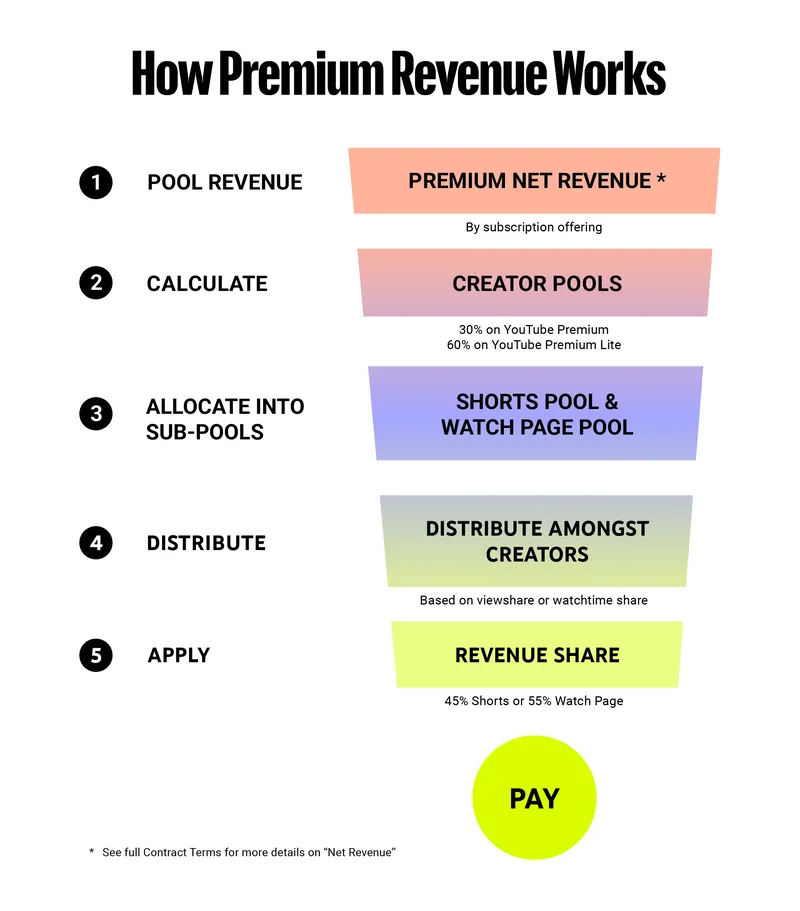
The flip side of the announcement is a growing income source most creators underestimate: YouTube Premium Lite is rolling out to every country where YouTube Premium is offered. The cheaper tier attracts subscribers who skip the music bundle, widening the pool of paying members whose subscription fees flow back to creators. The distribution mechanics, per the official blog:
- 30% of net subscription revenue from Premium goes into the creator revenue pool, versus 60% for Premium Lite (after operating and promotion costs and music partner payments).
- Within the pool, distribution is based on each creator's share of member watch time and views.
- The creator's cut of the pool: 55% for long-form content and 45% for Shorts.
- YouTube states that, based on 2026 performance, creators "on average earn more" from a subscriber's viewing than from the same user watching ads.
This is a structural shift. The larger the paying-subscriber base grows, the less your income depends on advertising volatility and ad blocking. In practice, watch-time-heavy long-form content just became financially heavier than ever.
New incentive programs for smaller Shorts creators
For channels below the 10-million-view threshold, YouTube announced three categories of incentives, with details promised later:
- YouTube Shopping bonuses: incentives for integrating products and shopping into Shorts.
- Brand deal incentives: support for Shorts creators closing paid partnerships with brands.
- Trend-starter earnings boosts: rewards for channels that launch and grow new content trends.
Translation: the full ad door for Shorts got a higher hinge, but YouTube is replacing it with earlier alternative earning tracks — reshaping Shorts economics from "accumulate cheap views" toward "build a business."
The mandatory step you should not miss: signing the new terms
One procedural detail in the announcement that deserves more attention than it got: every current Partner Program member must review and sign the new terms inside YouTube Studio, with the terms taking effect February 1, 2027. Skipping the signature risks your eligibility entirely, so set a reminder now. There is no advantage to waiting — the signature becomes available as soon as the notice appears in your dashboard.
What this means for you as a working creator
- You run an established channel already in the program? You are the biggest winner: you keep your protected status, you benefit from the expanding Premium pools, and you face less incoming competition at the entry gate.
- You are starting a new channel? You have less than six months to enter under the current 4,000-hour terms. Do the math: 4,000 hours over 365 days averages roughly 11 watch hours per day — achievable with evergreen search content and strategic playlists. The new 8,000-hour bar averages about 22 hours per day, which changes the nature of the game for small channels.
- A Shorts-only channel? The revenue-sharing threshold is unchanged (10M views/90 days), but the new Shorts entry route (20M) makes Shorts-alone entry much heavier. The smart move: build parallel long-form content that accumulates hours.
- Outside the US? Premium growth in your region means serious long-form content (tutorials, reviews, series) captures heavier subscription-pool shares — and in many non-English markets, the competition for long watch time is thinner than in English.
The deeper truth: the creators who win the next cycle are the ones who produce consistently and at sustainable cost. A continuous long-form pipeline needs an organized workflow from idea to script to description to cross-platform posts — exactly what a tool like ARWriter's research and article writer is built for: from episode concept to a full script, ready to record.
The math made concrete: what 8,000 hours means for your channel
Let's translate. A channel publishing 15-minute videos with an average viewed duration of 6 minutes needs roughly 80,000 completed views to reach 8,000 hours. Under the old 4,000-hour bar, that number was about 40,000. The new Shorts entry route (20 million views in 90 days) requires averaging over 220,000 qualified Shorts views per day — a number that only genuinely viral output or massive daily publishing volume can sustain.
From another angle: when YouTube raises the bar, it is effectively saying that a hobby channel publishing sporadically will not enter the program after February 2027, while a weekly publishing cadence with evergreen search content gets there comfortably in 6–9 months. The difference between those two outcomes was never video count — it is the kind of watch hours each video accumulates over months, which is precisely what the new threshold measures more strictly.
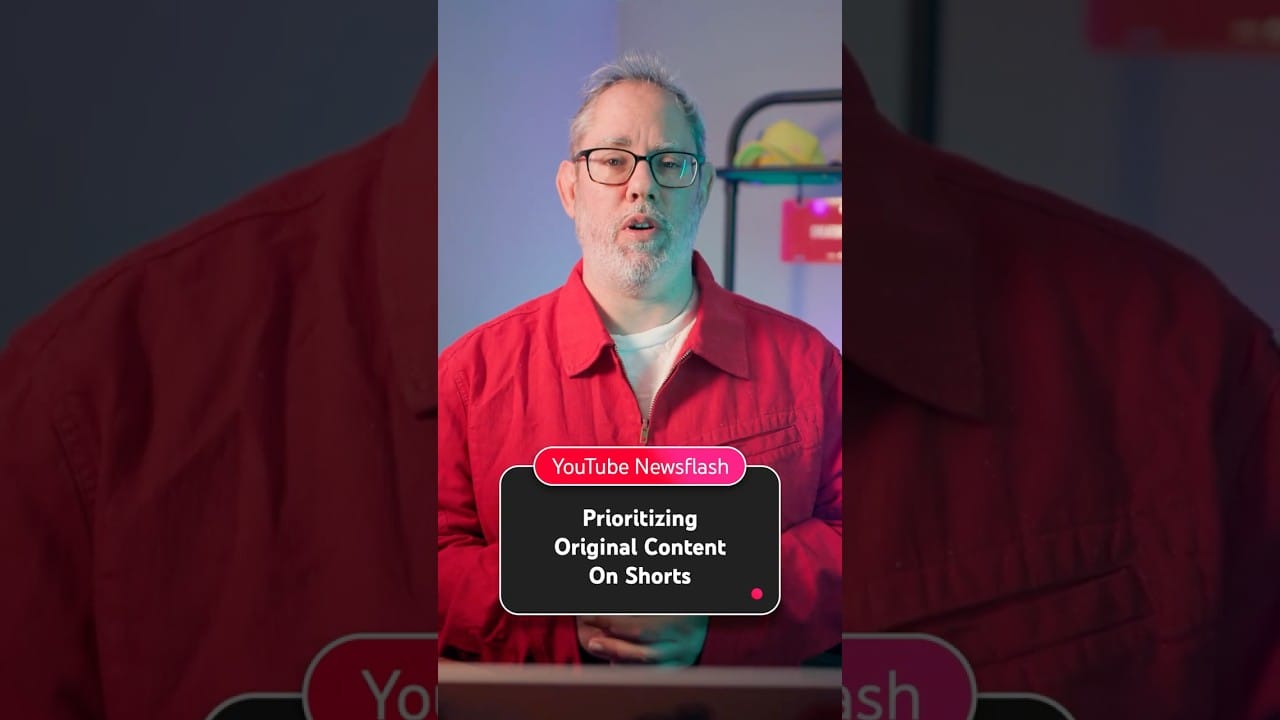
YouTube's official video explaining the changes
YouTube published a video walkthrough on its official channel — the fastest way to hear the official framing from the source:
Quick comparison: YouTube versus the alternatives
| Platform | Monetization entry bar | Notes for creators |
|---|---|---|
| YouTube (before Feb 2027) | 1,000 subs + 4,000 hours or 10M Shorts views | Last window under current terms |
| YouTube (after Feb 2027) | 1,000 subs + 8,000 hours or 20M Shorts views | Higher bar, offset by Premium pools and incentives |
| TikTok (Creator Rewards) | 10,000 followers + 100,000 views/30 days | Lower bar, lower and more volatile payouts |
| Instagram (via brand deals) | No direct program threshold | Income mostly from partnerships and shops |
Bottom line: YouTube's bar is now the hardest to enter among major platforms — but it remains the highest ceiling for durable, compounding income, especially with the new subscription revenue distribution.
Honest limitations to keep in view
- The door narrows for hobbyists: anyone planning a casual, occasional-upload channel now faces a near-daily commitment to clear 8,000 hours.
- Incentive details are deferred: YouTube promised Shorts program specifics "later" — do not build a financial plan on numbers that have not been published.
- "More than ads" is an average: the claim that subscribers out-earn ad viewers rests on 2026 averages; your mileage varies with actual watch duration.
- In-program Shorts channels live in a transitional zone: those under 10 million views sit between the incentive programs and full sharing, with partial clarity.
- Content rules are tightening in parallel: in July, YouTube sharpened its "inauthentic content" policies around mass-produced and AI-generated material — see our earlier coverage before building a channel on purely automated output.
What about AI-generated content creators?
A fair question after this announcement: can you build a channel on AI-generated material and stack 8,000 hours? The official calculus says the updated "inauthentic content" rules target exactly the generic, repetitive, unsatisfying material — so the winning formula is not "automated content" but "original content produced with automation." Use writing and image tools to accelerate production while keeping a clear editorial fingerprint; template-dumping channels are the ones being pushed out of recommendations and revenue sharing alike.
A practical plan: from zero to 4,000 hours before February 2027
Because the window is fixed, here is a realistic plan based on the math above (roughly 11 watch hours per day on average):
- Pick an evergreen angle: content that continues to be discovered through search — tutorials, reviews, problem fixes, long-form storytelling — accumulates hours from the archive daily, while news-of-the-day dies after 48 hours.
- Build strategic playlists: every video belongs to a playlist that auto-advances viewers to the next one — that is the real engine of watch-hour accumulation.
- Publish on a steady rhythm, not a perfect one: one consistent weekly video beats four videos in a month followed by silence — both the algorithm and the audience reward regularity.
- Use Shorts as a funnel, not a product: make Shorts the trailer that pulls viewers into the long-form content that stacks hours.
- Activate fan funding early: once you clear the reduced thresholds (500 subscribers and the accompanying requirements), switch on Super Chat and memberships — those entry bars did not change.
- Keep everything in a production calendar: topic, script, description, tags, and the cross-platform companion posts; tools like ARWriter's toolkit exist precisely so you never start from a blank page.
Frequently asked questions
I am in the program with about 5,000 hours — will I be removed in February 2027?
No. YouTube confirmed the threshold changes "won't impact creators already in YPP." You keep ad revenue eligibility even if your numbers drop. Your only obligation is signing the new terms in YouTube Studio.
When exactly do the new terms start?
February 1, 2027. Every application submitted before that date is evaluated under the current terms (4,000 hours or 10 million Shorts views).
Did fan funding thresholds rise too?
No. YouTube explicitly stated that fan funding and shopping entry thresholds (Super Chat, channel memberships, shopping) remain unchanged — an important early income track for small channels.
Will my revenue share increase after the change?
The percentages are unchanged (55% long-form, 45% Shorts of the revenue pool), but the pool itself grows as Premium Lite expands — so the absolute payout per active creator is positioned to rise.
Did the Shorts sharing rate change with the new programs?
The 45% Shorts share of the revenue pool stays as is; the new programs (Shopping bonuses, brand-deal incentives, trend boosts) are paid outside the core sharing pool, with criteria to be defined at launch.
What is the fastest strategy for a new channel before February 2027?
Focus on evergreen, search-driven long-form content that accumulates watch hours continuously, combined with Shorts to pull subscribers. Hitting 1,000 subscribers and 4,000 hours before the end of January 2027 locks you in under current terms.
The bottom line
The 2027 changes are less a scare story than a repricing of professionalism: YouTube wants fewer, more serious creators — and pays them from wider revenue pools. If you are already in, sign the new terms and double down on long-form. If you are starting, a golden window closes in February 2027 — run it with a steady production plan and tools that save you time: start with ARWriter and go from idea to publish-ready content in minutes.
Sources: Official announcement on YouTube's blog (Aug 10, 2026) · Social Media Today analysis · Official Google support discussion · See also the TikTok–Disney creator deal.