Mistral and HUMAIN Will Build Frontier Models That Perform Strongly in Arabic
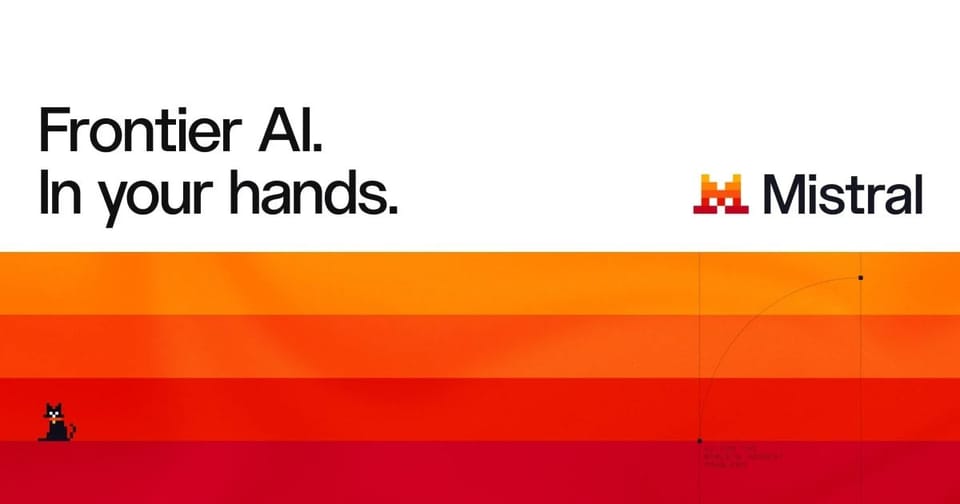
On August 24, 2026, France's Mistral AI and Saudi Arabia's HUMAIN announced a strategic collaboration the official announcement describes as being "in the hundreds of millions of Euros," spanning AI infrastructure, advanced model development, and the deployment of AI solutions across Saudi Arabia and the wider region. For anyone building content or products in Arabic, one sentence in the official announcement deserves a slow read: the two companies will pursue "frontier models that perform strongly in Arabic language to help support the broader region."
This is not a passing commercial gesture. Mistral — Europe's flagship open-weights lab — is tying its Saudi partnership into a broader sovereignty push it unveiled this summer: an expanded compute partnership with Microsoft in Europe, followed by "European Compute Units" launched in early August. Now it enters the Gulf through the front door: Saudi compute, French models, and a regional market that is finally treating Arabic as an engineering priority rather than an afterthought.
What the Official Announcement Actually Says
We read the full statement on Mistral's official blog. The core commitments, as published:
- Three workstreams: AI infrastructure, advanced model development and localization, and deployment of AI solutions in Saudi Arabia and across the region.
- The stated starting points: cybersecurity and voice are the two initial focus areas for model development — note that voice is a first-class track here, not a bolt-on feature.
- Arabic-first frontier models: the announcement pledges models that "perform strongly in Arabic language" to support the broader region.
- A declared scale: a collaboration "in the hundreds of millions of Euros," per the official page.
- Local compute: Mistral will explore using HUMAIN's data center infrastructure for its growing local compute needs.
- A regulated-market entry: a joint go-to-market strategy in Saudi Arabia focused on regulated industries — financial services, government and industrial sectors.

Why Now: Sovereign AI Becomes a Product
The announcement frames the partnership inside the concept of sovereign AI: keeping data, intelligence, compute and operations under the customer's control — data within customer-defined boundaries, models adaptable and ownable on open weights, training and inference running on infrastructure and in jurisdictions the customer chooses. Financial services, manufacturing, telecommunications, cybersecurity and the public sector — where security, compliance and operational autonomy are non-negotiable — are the first market for this model.
The wave is global, not just Saudi: Europe is building its own compute, China is advancing its stack, and the Gulf is investing to be a player rather than a customer. The biggest loser in this shift is the old assumption that the region's data and tools must forever live on someone else's servers.
What This Means for Content Builders and Arabic-Market Operators
- Voice first means Arabic audio opportunity: voice being one of the two initial focus tracks points toward Arabic text-to-speech, transcription and audio understanding improving fast. If you run an Arabic podcast, a voice channel, or voiceover for video, the quality bar of specialized Arabic tooling is set to jump within months.
- Models that actually understand Arabic change production economics: every point of improvement in Arabic comprehension and generation cuts the review and correction hours Arabic writers currently lose on tools built primarily for English.
- In-region compute means latency and privacy: for anyone building content products for Saudi and Gulf clients, local infrastructure means faster services and an easier compliance story — a genuine sales advantage with institutional customers.
- A signal for freelancers and agencies: partnerships at this scale create demand for people who can operationalize Arabic models and tune them to brand voices. Building expertise in customizing language models for Arabic dialects and sectors now is preparation for a market that is visibly forming.
For more on the same track, read our coverage of Mistral Studio's launch and what it means for prompt craft, and our analysis of BelMasry and the Arabic-language identity push in AI platforms. And if you want to produce high-quality Arabic content today from one place, try the ARWriter platform.
Quick Comparison: Global Platforms vs the New Arabic Track
| Criterion | Global platforms (ChatGPT et al.) | The new Arabic track (Karnak, Mistral–HUMAIN…) |
|---|---|---|
| Arabic language | Supported, but not an engineering priority | A stated, explicit goal in announcements |
| Data location | Usually outside the region | Saudi / regional data centers |
| Dialect & sector tuning | Limited through unified interfaces | Models tuned per sector and dialect |
| Maturity today | Stable products, massive adoption | Commitments and projects in progress |
| Timelines | Available now | No announced release dates for Arabic models |
Honest Limits and Caveats
- A partnership, not a product: what was announced is a strategic collaboration, not a released Arabic model. The models themselves still need to be developed and shipped — and the announcement itself carries a forward-looking statement cautioning that actual results may differ.
- No timeline: there is no announced date for any Arabic model from this partnership. Anyone building a content plan on it should work with today's alternatives and watch this space.
- The first market is institutional: the joint go-to-market targets regulated industries; the direct benefit for individual creators arrives later, through tools and services built on these foundations.
- A crowded lane: the Arabic AI track has multiple parallel initiatives. It is too early to pick winners — watch shipped products, not signed agreements.
The Saudi Context: HUMAIN Inside a Bigger Race
The partnership's weight becomes clear against the map of Saudi AI moves. Within two years the Kingdom has shifted from technology consumer to a player investing across all three layers: data centers and compute capacity, models and platforms, and sector applications. HUMAIN — the national arm of this track — had already signed major international infrastructure partnerships, and the Mistral deal adds the missing layer: frontier model development for the region, built with a European lab against explicit Arabic specifications.
The market signal travels beyond Saudi Arabia itself. When a lab of Mistral's stature — the open-weights choice for many developers avoiding US tools — commits to Arabic as a stated goal, it creates competitive pressure on other global labs to improve their Arabic support. The end beneficiary of these converging races is the Arabic-speaking user, who has long paid full price for tools that never fully understood them.
Frequently Asked Questions About the Mistral–HUMAIN Partnership
What is the Mistral and HUMAIN partnership?
A strategic collaboration announced on August 24, 2026, worth hundreds of millions of Euros, covering AI infrastructure, advanced model development and deployment in Saudi Arabia and the region — with cybersecurity and voice as initial focus areas and a commitment to frontier models that perform strongly in Arabic.
What is HUMAIN?
A Saudi AI company headquartered in Riyadh, working across AI infrastructure, models and solutions as part of the Kingdom's AI investment push, with activities spanning data centers and international technology partnerships.
When will the Arabic models be released?
No date has been announced. The official statement is a forward-looking strategic announcement; models and services will be revealed as the partners disclose them.
How does this affect Arabic content creators?
Near term: the prospect of better Arabic voice tools and more accurate Arabic models for audio and written production. Longer term: regional infrastructure that makes Arabic content products faster and more privacy-compliant.
Do I need a Mistral subscription to benefit?
Not directly. The benefits will arrive through products and services built on the joint models within the region — from HUMAIN and its partners — plus a general rise in Arabic tool quality.
Official Sources
- Full announcement text on Mistral AI's official blog: mistral.ai/news/mistral-x-humain
Bottom Line: Arabic Is Becoming an Engineering Priority, Not a Feature Flag
The deeper story beyond a nine-figure deal is the direction of travel: frontier-grade models being developed with Arabic in the core specification, on in-region compute, for a market hungry for tools that understand it. Your toolkit will not change tomorrow morning — but every indicator says 2027 will be the strongest year yet for Arabic content technology. Prepare early: sharpen your Arabic pipelines, and start today with ready tools like ARWriter for writing, design and scheduling in Arabic from a single place.