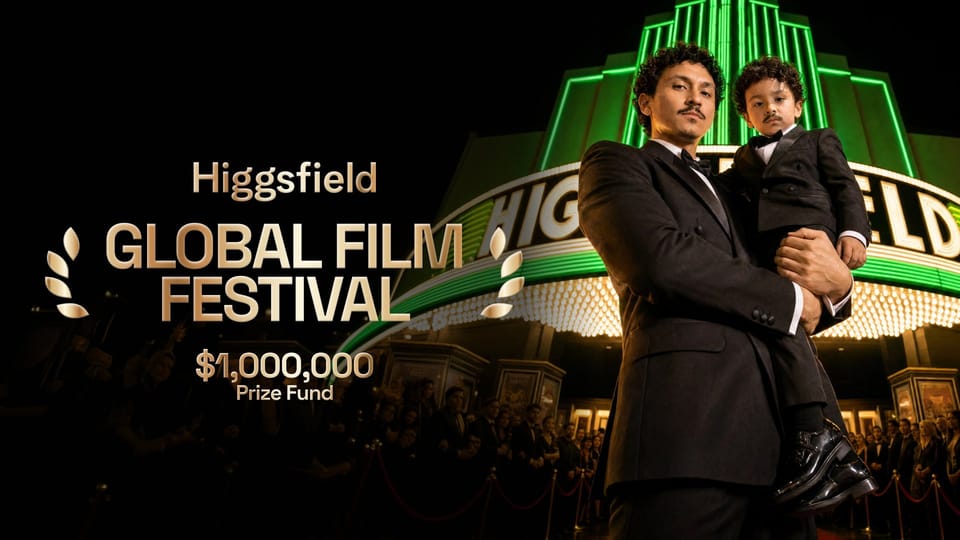
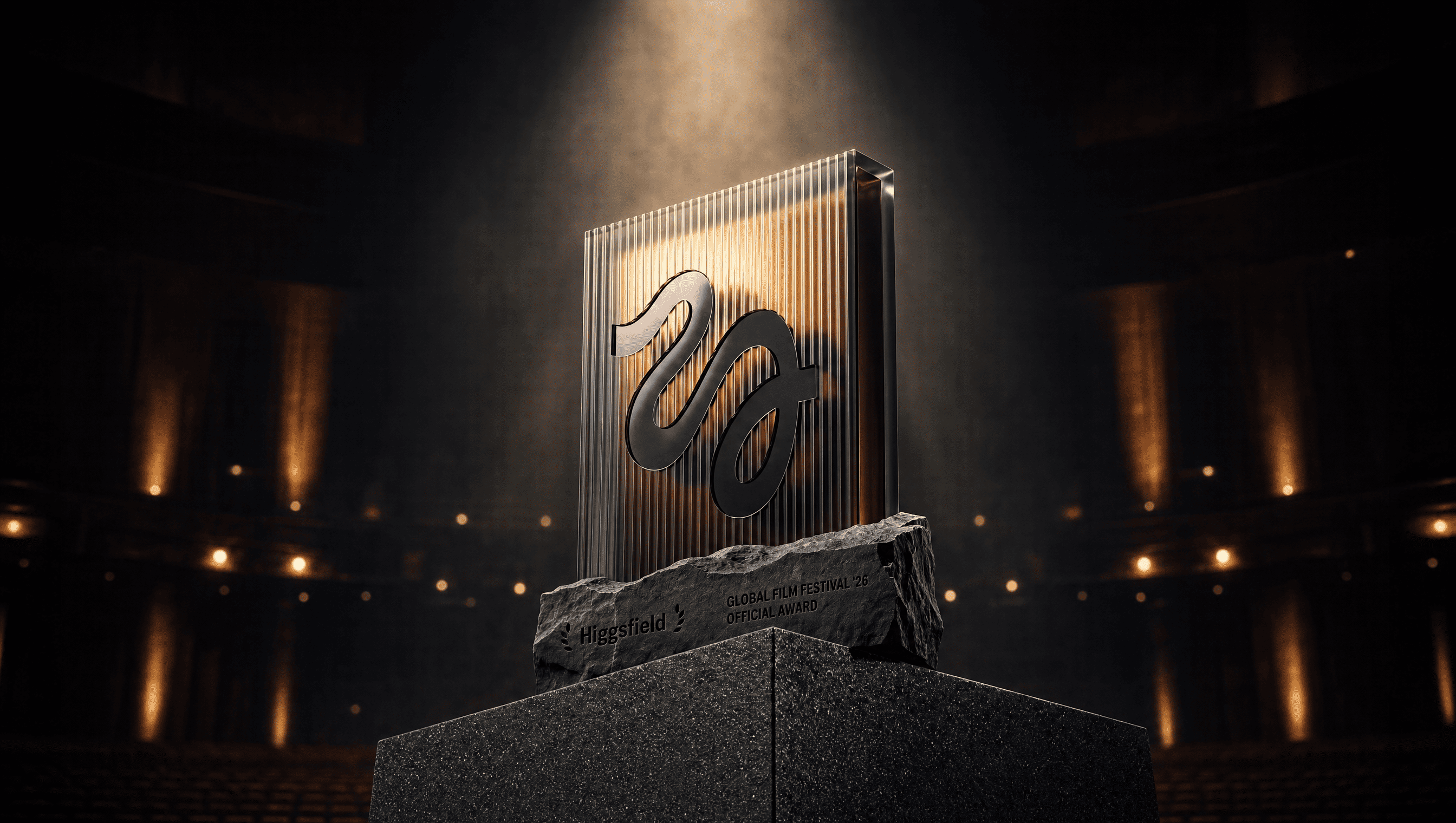
AI-generated film just got its own million-dollar moment. Higgsfield, the AI video and image generation platform, is running its Global Film Festival with a total prize pool of US$1,000,000, one of the largest AI filmmaking competitions ever announced. The program was revealed on August 3, 2026, submissions opened on August 10, and the deadline has since been officially extended: films and their required public posts are now due September 14, 2026 at 11:59 PM UTC, with winners announced in the first week of October. Here is everything the official rules say — prizes, restrictions, submission steps, and what the festival realistically means for working content creators.
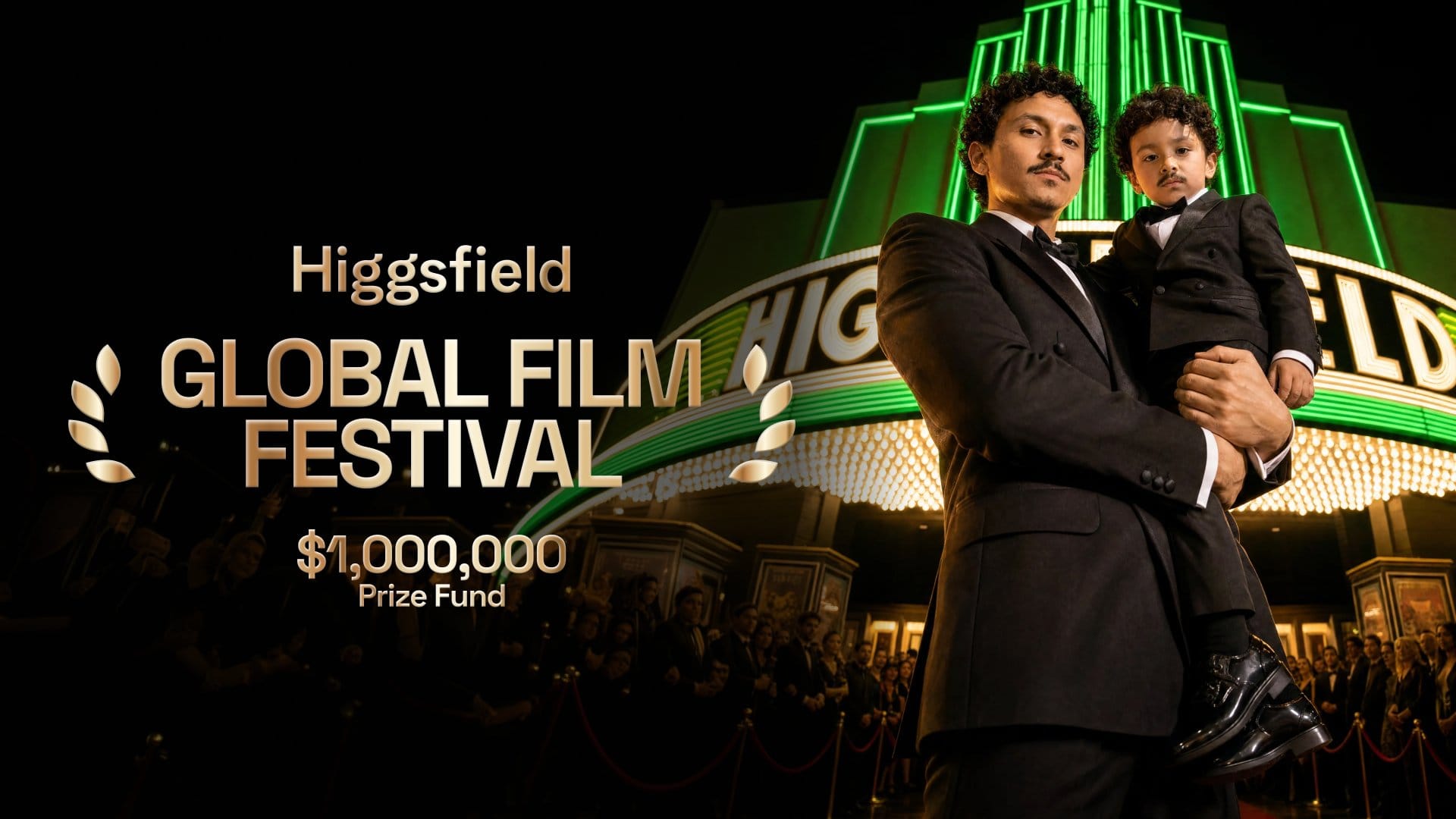
What the Higgsfield Global Film Festival actually is
Higgsfield builds AI tools for generating video and images, and the festival is built around its Cinema Studio workspace. The premise is deliberately strict: your short film must be generated entirely on higgsfield.ai — any model available on the platform counts — starting from scratch inside the Generation Window. You can reuse your own earlier outputs as references, but the visible material must be born on the platform. The goal, according to the official guide, is a level playing field where the competition measures directing, storytelling, and craft rather than budgets or stock footage.
One detail matters more than any other for anyone who saw the early announcements: the schedule changed. The contest page now carries an explicit banner stating the deadline has been extended, with the line "The timeline has shifted: deadline is now Sep 14." If you wrote the festival off in mid-August because the original window felt too tight, the door is open again for roughly three more weeks of production time.
The prize table: $1,000,000 across 14 winners
| Award | Winners | Prize per winner |
|---|---|---|
| First place | 1 | $500,000 |
| Second place | 1 | $200,000 |
| Third place | 1 | $100,000 |
| Audience Choice | 1 | $100,000 |
| Honorable Mention | 10 | $10,000 each |
Two anti-stacking rules keep the competition honest: a single film can only win one prize, and a single participant or team can only collect one prize no matter how many eligible films they submit. Quantity is not a strategy here. One well-directed film beats five rushed ones, because the extra entries add nothing to your payout.
Eligibility and film rules, line by line
Who can enter
Anyone aged 18 or older with a registered Higgsfield account, from any country where participation is legally permitted. You can compete solo or in a team of up to four people, with one designated Team Leader who owns the project and receives any prize. Critically, the official FAQ states that a registered account is enough — no paid subscription is required to submit an entry.
What your film must look like
- Runtime: minimum 3 minutes, recommended maximum 5:00; longer films remain fully eligible.
- Genre and theme: completely freeform — any story, any style.
- Format: 16:9 or 21:9 aspect ratio, MP4 or MOV, up to 4K resolution.
- Language: any language, provided there are English subtitles or an English voice-over.
- Generation: all video and image generation must happen on higgsfield.ai using any model on the platform, built from scratch inside the Generation Window; prior outputs may only be reused as references.
- No real faces or voices: inputs may not include a real person's face or voice — not even your own.
- Sound: music, voice, and sound design must be AI-generated, with rights held by the creator.
The public post requirement
This is the rule that surprises most first-time entrants. A valid submission needs the watermarked video uploaded to the festival plus a public post of that same video on Instagram, YouTube, X, or Reddit. The post must stay public and viewable without logging in; private accounts are disqualified outright. Eligible projects also remain open for other creators to study. The festival is not just judging films — it is engineering distribution, forcing every entry to exist publicly on at least one major platform.
How to submit, in four steps
- Shape the idea and gather your crew. Pick one cinematic concept you can execute cleanly, and decide whether you are working solo or with up to three collaborators under one Team Leader.
- Build the film in Cinema Studio. The festival project workspace opened August 10. Generate shots from first attempt to final cut, iterating scene by scene while keeping characters and locations consistent.
- Submit and post. Upload the final cut with the official watermark, then publish it publicly before the September 14 cutoff and keep it live through judging.
- Go through judging. Entries pass through screening, a shortlist, and jury review, with winners announced in the first week of October 2026.
The "Create in Public" accelerator
There is an optional track that changes the math for creators who already have an audience: build your film progressively and publicly, publishing your first scene, then adding new scenes and cuts as you go. The top 50 community-supported films from this track go straight to the jury's shortlist, bypassing part of the general funnel, and creators may receive credit grants of 100,000 Higgsfield credits to fund further generation. If you produce content about your own creative process anyway, this track turns your production diary into both contest equity and audience-facing content at the same time.
Full info on $1,000,000 Higgsfield Global Film Fest…— Higgsfield AI (@higgsfield_ai) the official announcement thread on X
The jury: Hollywood credentials, AI-native films
The listed jury members are Edwin Catmull, co-founder of Pixar, five-time Oscar winner, Turing Award laureate, and former president of Walt Disney Animation Studios; Phedon Papamichael, the two-time Oscar- and BAFTA-nominated cinematographer behind Ford v Ferrari and The Pursuit of Happyness; and Paul W.S. Anderson, director of Mortal Kombat and the Resident Evil series. Director Alex Proyas (The Crow, I, Robot) also announced via his official Instagram account that he is joining the jury. The stated judging criteria are four: directing and storytelling, visual craft, sound and editing, and originality of concept — explicitly judged "rather than follower count or platform history." For a creator without a big following, that sentence is the most encouraging line in the entire rulebook.
What this means for content creators
Real money has entered AI filmmaking. A million-dollar pool judged by Hollywood names signals that AI short film is now a portfolio category with a market, not a novelty demo reel. Even non-winning entries become proof-of-work for clients who need product films, ads, and narrative content made fast.
The mandatory public post is free distribution. You are required to publish your film on at least one major platform with the festival watermark. Plan that release deliberately — synchronized posting across your channels at peak audience times, with a behind-the-scenes follow-up — and one contest requirement becomes a small launch campaign. Scheduling tools can spread that release across platforms without you babysitting each upload.
Non-English films are first-class citizens. The rules accept any language with English subtitles or voice-over. That is an opening for creators working in Arabic, Spanish, Hindi, or any other language to write and direct in their strongest voice, then add subtitles for the jury and the global audience. Distinctive local storytelling is exactly the "originality of concept" criterion rewards.
Production-in-public builds your audience while you compete. If you take the accelerator route, every failed generation test and every scene iteration is publishable process content — the kind of material that consistently outperforms polished ads for creators building a following in the AI film niche.
A realistic three-week production plan
With the extended deadline, here is a schedule that fits inside three weeks:
- Days 1–3 — concept and script. Choose a story that resolves visually rather than through dialogue. Write a 3–5 minute script broken into shots and scenes; an AI writing assistant can turn a rough idea into a structured draft with shot descriptions in hours rather than days.
- Days 4–6 — the reference bible. Lock your characters and locations: fixed, repeatable descriptions for each protagonist and setting that you paste into every generation. Reusable prompt libraries cut this setup work dramatically and keep outputs consistent.
- Days 7–14 — generation. Work scene by scene inside Cinema Studio, generate multiple takes, keep the best, and reuse your strongest outputs as references to hold visual continuity.
- Days 15–18 — sound and edit. Generate music, effects, and voice with AI tools whose licenses you actually hold, then cut the film and add English subtitles.
- Days 19–21 — submit and publish. Upload the watermarked cut, publish the required public post, and verify the video plays without login from a logged-out browser.
Honest limits before you commit
- The watermark stays. The submitted cut must carry the official festival watermark, and that is the same cut you must post publicly.
- Your project stays open. Eligible projects remain visible for others to study — do not build something you need to keep commercially private.
- Generation costs are real. Submitting does not require a paid plan, but producing a full film takes many generation and regeneration cycles. Watch your credit balance and budget realistically, especially during the search for the perfect take.
- The field is global and already working. Entries opened August 10 and competitors have been producing since then; you are entering a race in progress, which is one more reason to bet on one distinctive story rather than several generic ones.
- Read the rights terms yourself. Parts of the creator community have publicly debated what marketing rights the platform holds over submitted works. Skip the secondhand summaries and read the official terms on the contest page before you submit.
Quick reference table
| Item | Official detail |
|---|---|
| Entry fee | None — a registered account is enough |
| Minimum runtime | 3 minutes (3–5 recommended) |
| Team size | Solo or up to 4 members |
| Production platform | All generation on higgsfield.ai |
| Public post | Required on Instagram, YouTube, X, or Reddit |
| Deadline | September 14, 2026, 11:59 PM UTC |
| Winners announced | First week of October 2026 |
Frequently asked questions
Do I need a paid Higgsfield subscription to enter?
No. The official rules require only a registered account to submit, though producing a complete film involves many generation cycles, so monitor your credit balance while you work.
Can I submit a film in a language other than English?
Yes. Any language is accepted as long as the film carries English subtitles or an English voice-over, and all visual generation happens inside higgsfield.ai.
What is the final deadline after the extension?
September 14, 2026 at 11:59 PM UTC. The required public post must be live before the cutoff, and the video must remain viewable without logging in.
Can I submit multiple films?
Yes, entries are unlimited and each film is judged as a standalone work, but prizes do not stack — one prize per film and one prize per participant or team.
Who judges the films and on what criteria?
A jury including Pixar co-founder Ed Catmull, cinematographer Phedon Papamichael, and director Paul W.S. Anderson, judging directing and storytelling, visual craft, sound and editing, and originality — explicitly not follower count or platform history.
What happens after the festival
Even if none of the fourteen prizes lands on your project, entering leaves you with tangible assets: a signed short film living on your own channel, an archive of production material you can recut into educational process content, and the first entry in an AI-film portfolio at the exact moment that category is being born. Demand for fast, cinematic, AI-produced narrative work — brand films, ads, concept pieces — is expanding as the models improve, and the creators who can show a finished, publicly released film with credits will be first in line for it.
Watch the competitive landscape too. If a million-dollar festival succeeds in pulling thousands of filmmakers onto one platform, rival platforms will answer with prizes and programs of their own — and every new circuit rewards the creators who already mastered the tools. The festival is a single event; the skill you build for it is a career asset.
The bottom line
The Higgsfield Global Film Festival is a benchmark moment for AI filmmaking: a million dollars, a Hollywood-grade jury, rules that welcome non-English films, and a freshly extended runway to September 14, 2026. Whether you compete or simply study the entries when they go public, the signal is the same — AI short film now has judges, prizes, and an audience, and the creators building names in this category are doing it now. Read the full rules on the official contest page, and if you decide to enter, start this week: three weeks is enough for one carefully made film, and one carefully made film is all the rules allow you to win with anyway.
- Official contest page: higgsfield.ai/contests/higgsfield-global-film-festival
- Official rules and prize guide: higgsfield.ai/blog/higgsfield-global-film-festival
- More on the AI video landscape: our guide to Dreamina Seedance 2.5 by ByteDance, and our analysis of the Higgsfield sponsorship disclosure backlash.