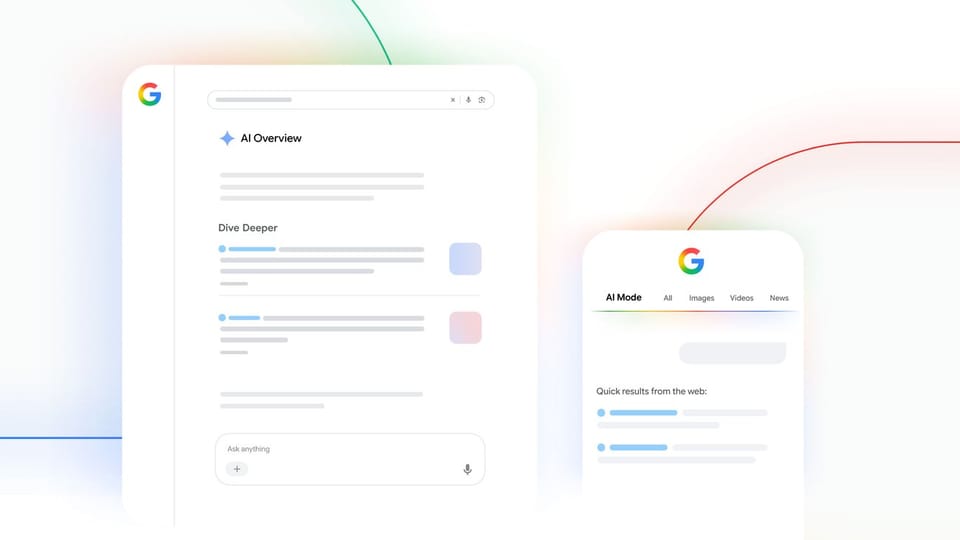
On October 15, 2026, Google used its official blog to announce a broad update to AI Mode and AI Overviews under the heading "More ways to connect with the web from Search." At the center of the announcement sit five changes with one shared purpose: putting links, sources, and clickable creator and publisher names back at the front of AI-generated answers — including, for the first time, tappable creator names on video results that lead directly to a creator's Search profile inside AI Mode.
If you publish articles, run a website, or make videos and depend on Google traffic, this announcement concerns you directly: it redraws how audiences reach your work from inside AI answers. This guide unpacks the five updates with practical examples, explains what they mean for publishers and creators worldwide, and lays out what to do about them now.
Primary source: Google's official blog post "More ways to connect with the web from Search" by Hema Budaraju, October 15, 2026.
The event: five announced changes from the primary source
The primary source is the official Google blog post by Hema Budaraju, VP of Product Management for Search, dated October 15, 2026. The changes exactly as announced:
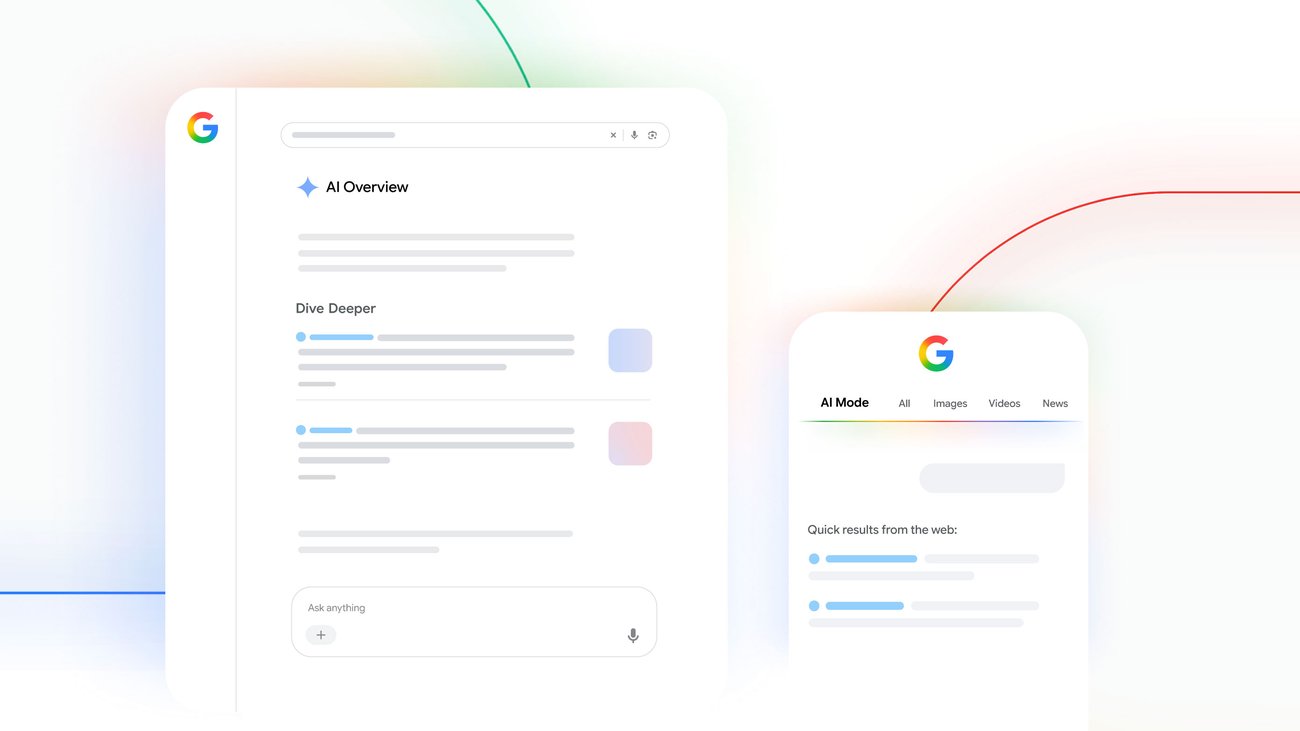
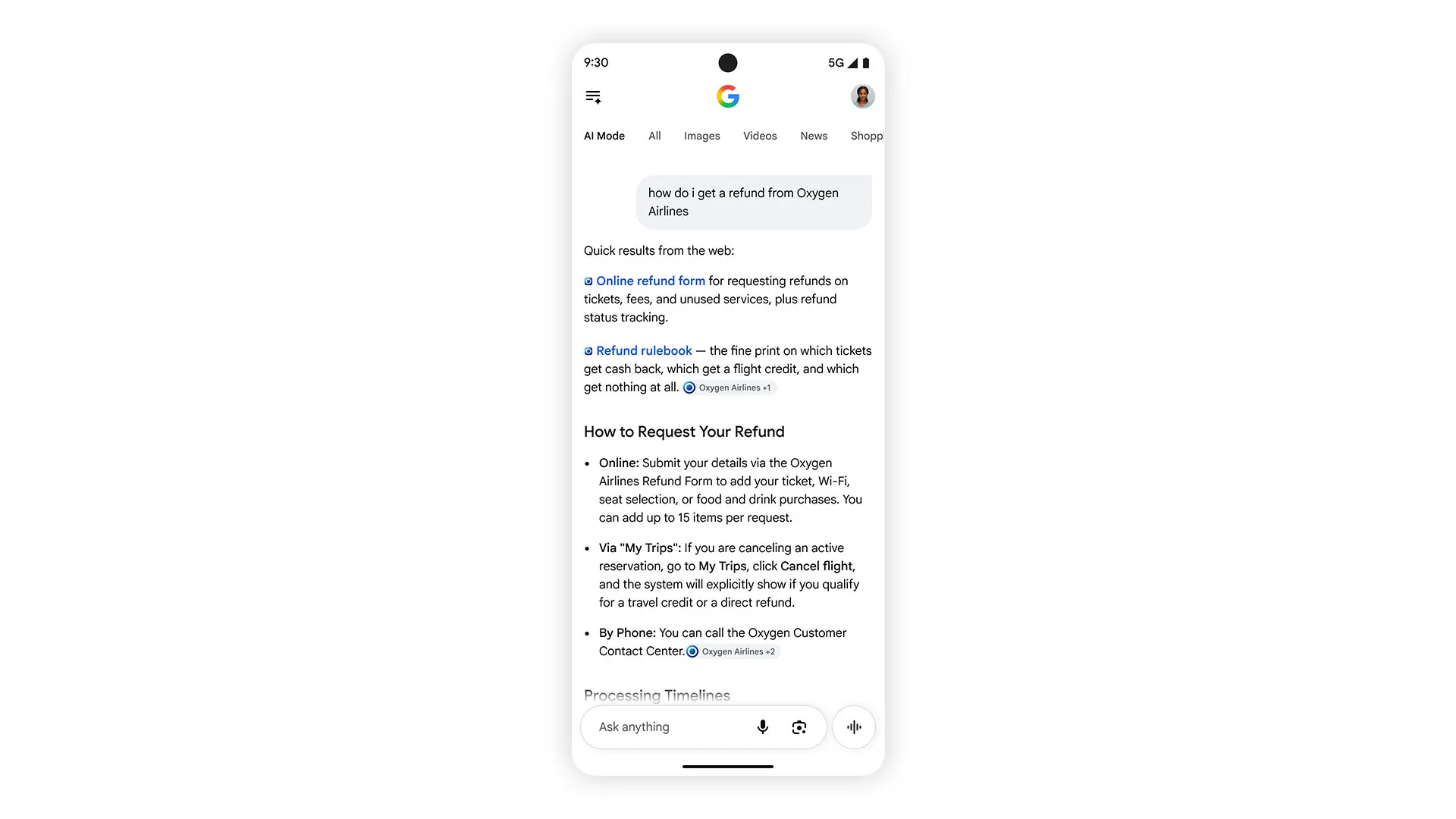
- More inline links, higher up: continued substantial increases in links embedded inside AI responses, shown more frequently near the top of the answer, so key sources are clickable at the moment you read them.
- A dedicated section for official websites: testing a new display that prominently surfaces official, task-critical links in a dedicated section at the top of a response — with context explaining why each link is useful. An implicit admission that some queries have exactly one right destination.
- News carousels going global: the prominent carousels of timely articles, previously limited to select placements, are rolling out to additional locations and languages worldwide, and they highlight your Preferred Sources.
- Bolder related-articles links: the links shown at the end of some AI answers are becoming more prominent, with image thumbnails and a more clickable design.
- Clickable creator names: the headline item for creators. During that same week, Google started testing clickable creator and publisher names on video results that link directly to their Search profiles in AI Mode, giving viewers instant context about the person behind the work.
One more number frames the shift: usage of the Preferred Sources feature — which lets people pin the sites they trust — has grown more than 7x since the start of the year. The audience itself is demanding sources, and Google is responding.
Why Google is retreating from the closed answer
To grasp the size of the turn, recall the past two years: AI Overviews delivered a complete answer inside the results page, publishers watched click-through rates sag, and licensing fights and lawsuits followed. The critique condensed into a phrase — "answer and no clicks" — and it shaped how every serious publisher planned (or postponed) investments.
The October 2026 updates mark a declared pivot in that fight. Instead of defending the closed box, Google is re-engineering the AI experience around "explore the web from the answer": links higher up, an official-sources section at the top, and creator names one tap away. Even the announcement's framing language — helping you "explore the best of the web" — is a different vocabulary from "here is the final answer."
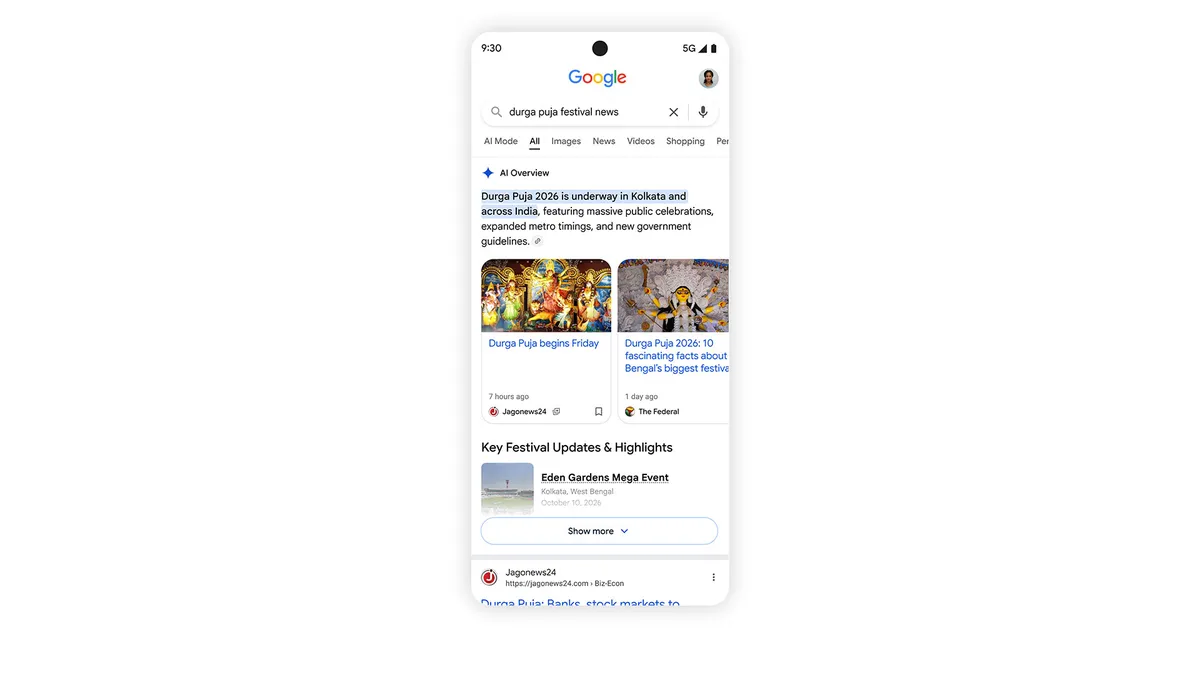
That does not erase the concern: the summary still exists and still shortens journeys. But the operational difference for publishers is that the path from the answer to your site is now shorter, clearer, and repeated more often — and a "trust click" from inside an AI answer is now a realistic outcome rather than a rare accident.
What this means for you as a creator or publisher
If you write articles or run a site
More inline links plus an official-sites section means one thing: queries with clear intent (an official service, a specific product, a reference fact) will award the most deserving site a link at the very top. That is a genuine opening for focused, specialist sites — including publishers outside the English-speaking West. Audit your highest-traffic pages and ask a hard question: does this page answer a specific question better than any competitor page? If not, that is the first thing to fix.
If you make videos
Creator profiles are the most consequential item in this announcement for you. Your name on a video result becomes the entrance to your full profile, which means your identity on Google is no longer cosmetic detail: a complete, current profile builds viewer trust before the first click, while a neglected one leaks your audience to the next creator. Claim your Search profile now, and make sure your channel, your site, and your written work present one consistent identity.
If you publish news or time-sensitive content
The global expansion of timely-article carousels is straightforward good news: timely coverage now has a more prominent slot inside AI search, and Preferred Sources are highlighted within the carousel itself. Publishers who build a steady, fast publishing rhythm in their niche will harvest this expansion before their slower competitors notice it.
For everyone: Preferred Source is the new asset
Seven-fold growth means a meaningful slice of your audience now "pins" the sites they trust inside their search experience. You cannot buy that status; it compounds only through repeated quality that makes a reader choose you twice. Our guide published days before this update — how to get cited by Google Gemini and AI Mode — walks through the exact steps to make your content quotable in generative answers, and it pairs perfectly with this piece.
Quick comparison: Google versus the other AI answer engines
| Engine | Links inside the answer | Publisher/creator profiles | Click trajectory |
|---|---|---|---|
| Google AI Mode + AI Overviews | More inline links, higher up; dedicated official-sites section; expanding news carousels | Testing clickable creator names leading to profiles in AI Mode | Gradual correction toward the web |
| ChatGPT with search | Numbered citations mostly below the answer, not in-text | No publisher profiles | Referrals with less prominence |
| Bing / Copilot | Side reference links | No equivalent profile system | Moderate |
| Perplexity | Dense numbered links with a sources panel | Limited commercial publisher programs | Traditionally the most transparent |
The essential observation: Google is the first engine to connect creator names on video results to full profiles inside an AI search experience. That alone reveals where the competition is heading — from answer engines toward "source galleries" where publishers compete for trust, not just for retrieval.
Honest limits and weaknesses
- These are tests, not finished launches: both the official-sites section and creator profiles are officially described as testing. Initial availability is limited and the format may change before general rollout — do not build an entire quarterly plan on a feature that may be reshaped.
- Appearing in inline links is not guaranteed: more links does not mean your link. Competition for "most deserving source" actually intensifies, because every visible link excludes others.
- Top-of-funnel clicks are still below classic search: better link placement improves click odds, but it does not fully restore the pre-summary economics. Measuring the real effect on your site requires weeks of post-rollout data.
- Language rollout is staged: "additional languages and locations" may not include yours in the first wave. Verify what actually renders in your local search before reporting it as live for your audience.
What the experience looks like inside Search
Picture a user typing a simple query: "freelance visa requirements." Before the update, the AI answer presented thorough paragraphs with no in-text links, often ending the journey at the edge of the box. After the first three changes, the picture shifts. Inline links now sit embedded in the answer's own phrasing — "freelance visa" itself becomes clickable toward the official explainer. A dedicated section near the top collects the official portal and the procedural page, each with a line explaining why it is useful. And if the query is timely — "election results yesterday," for instance — a carousel of fresh articles with thumbnails replaces plain text.
This new arrangement means a page that meets two rare conditions — a precise answer in its first paragraphs and a structure models can quote cleanly — now qualifies to appear in three placements within a single result instead of one traditional listing. Each additional placement multiplies click probability, which is why professional publishers care about this announcement more than about any algorithm tweak in years.
For video makers the felt change is different: when your clip surfaces in video results, your channel or site name above it becomes a live link. The viewer who liked one clip taps the name and lands on your profile — who you are, what you make, where to find the rest. One tap converts a passing viewer into a visitor to your full body of work, an outcome the old interface simply did not offer.
The wider economics: what this means for publishing
Over two years, the contest between publishers and AI engines ran on three fronts: legal (copyright and compensation law in Europe and the US), commercial (content licensing deals between major newsrooms and AI companies), and experiential (the design of the product itself). The October 2026 update is the most significant shift on the third front since Overviews launched, because it implicitly concedes the publishers' core argument: search value is built on trustworthy source content, and hiding sources harms everyone long-term.
For publishers worldwide — and especially for those outside the dominant English markets — the economic message is sharp: value no longer accrues to "being quoted as text" alone, but to "being a trusted destination." A site its audience trusts — a Preferred Source, a known name, an owned brand — banks the benefits of the new arrangement from day one. A site living on drive-by search hits with no identity will struggle even with good content. Brand building just became a technical ranking factor inside AI search, not a marketing luxury.
Notably, the turn arrives through user experience rather than pressure alone: Google's own announcement notes that choice tools like Preferred Sources are growing by multiples — users themselves are voting for the open web. Build content that earns that vote, and both the product and the audience support you at once.
A practical five-step plan
- Claim your Search profile immediately if you publish video, and complete it the way you would complete a professional identity card.
- Upgrade your reference pages: the pages that explain a specific service, tool, or process are the candidates for the official-sites section — make them the single best page on their topic in your language.
- Publish timely coverage on a steady rhythm in your niche to benefit from the expanding article carousels.
- Restructure headings and openings so your first sections answer the question directly — that is what gets you quoted and what earns the reader's click. The "answer first, then expand" principle is detailed in our AI citation guide.
- Connect your written and video presence: strong supporting pages make your AI Mode profile more convincing. If producing the long-form written layer is your bottleneck, draft it with ARWriter's article writer and then rewrite it in your own voice.
Frequently asked questions
What is the difference between AI Mode and AI Overviews?
AI Overviews are generated answers shown at the top of regular search results, while AI Mode is a full conversational search experience built on Gemini models. The October 2026 updates apply to both: more links, an official-sites section, and expanding carousels.
Are clickable creator names available to every publisher?
No. Testing began in the week of October 15, 2026, initially on video results. Google provides an official "Search profiles" page explaining eligibility and how eligible creators and publishers can get started.
Will my clicks return to pre-AI-summary levels?
Not necessarily. The changes raise click odds and bring sources closer to the user, but the comprehensive answer still shortens many research journeys. The sound strategy is content that outperforms the answer itself on specific points, monitored weekly against your own data.
How do I qualify for the new official-sites section?
There is no application button. The section automatically highlights the most authoritative destinations for specific tasks. Practically: be the actual official destination for your topic, surface the task-critical information clearly, and maintain solid structured data that defines your entity.
Is the rollout available in my language?
Additional inline links appear wherever Overviews already operate in your language; the carousel and creator-profile expansions are staged by language and region. Check your everyday searches and watch for the features rendering in your local version.
The bottom line: from the answers race to the trust race
The five updates converge on a single meaning: Google has learned that users do not want an answer that ends the journey — they want an answer that opens the road. For publishers and creators, that is a clear strategic signal: value is migrating from producing more content to being the source that both the reader and the engine choose. Start this week: claim your profile, upgrade your reference pages, and turn your best expertise into pages that answer honestly and deeply. The front-row seats in the new interface are limited, and the gap between appearing and disappearing will be decided in the coming few months.
And since all of it starts with well-crafted written content, try drafting your next article with ARWriter's writing platform — then keep human judgment as the final step, always.