Google DeepMind has unveiled Genie 4, the fourth generation of its world-simulation model family and the first in the series to generate audio natively while an interactive world runs in real time. Announced on October 27, 2026, on the DeepMind blog, the model points at a future where video is not a finished file but a living environment you steer with your keyboard and your words while it plays.

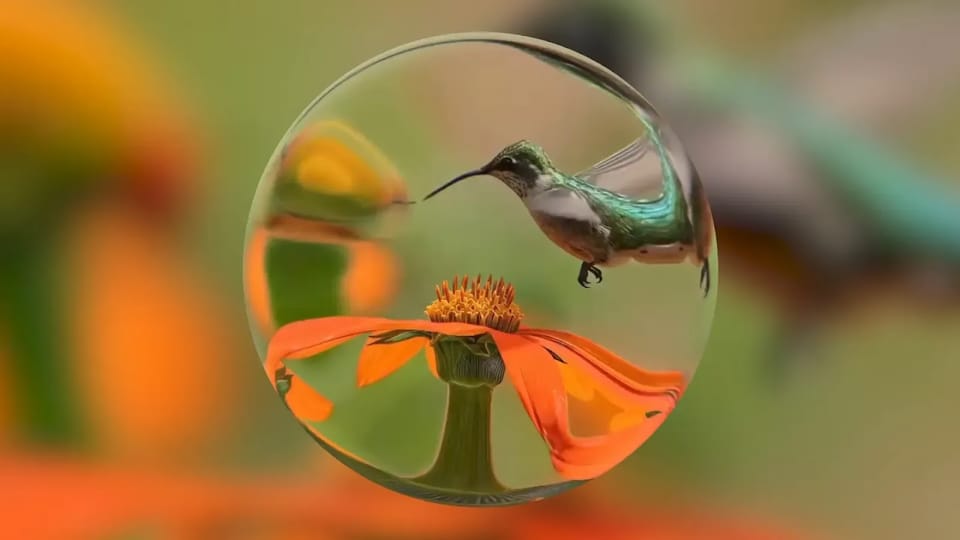
Official image from Google DeepMind's Genie 4 announcement, October 27, 2026.
The research team frames the work within Google's larger ambitions, stating in the announcement that "understanding and simulating the world is a crucial aspect of building AGI." For creators, though, the relevant question is narrower and more practical: what can this actually do, who gets to touch it, and what should you prepare for?
The official announcement post from the Google DeepMind account on X, October 27, 2026.
What Genie 4 actually does
The model simulates moving environments that keep evolving in front of you. You control them two ways: navigate with keyboard controls as if inside a game, or steer scenes with live text prompts. Behind the scenes, Gemini 3.8 Flash acts as a guiding agent — it watches the frames, breaks your goal into steps, checks progress, and adapts the plan mid-simulation. According to the company's official post, the visual realism is built on Gemini Omni, and the team also tested the system with Gemini 4 Argon.
The headline capabilities from the announcement:
- Native audio for the first time: ambient sound, music-like audio, and adaptive real-time dialogue where characters respond to what you do and say.
- Real-time editing: change the weather, the camera, or add people and objects through natural-language prompts while the world keeps running.
- Serious physics: the model simulates aerodynamics, collisions, and other real-world forces, with characters that move naturally.
- Interactive steering: humans in the scene can be directed in real time, and Gemini contextualizes each prompt and "monitors and steers the scene" between your inputs.
Availability: read this part before you get excited
Genie 4 is not a public product today. The current phase is a research preview with a deliberately narrow door:
- Trusted testers from specific sectors: creative industries, journalism, education, gaming, and engineering.
- Google AI Ultra subscribers will get it later through Project Genie.
- Early-access partners via the Gemini API and Google AI Studio.
- Everyone else can apply through the official waitlist form.
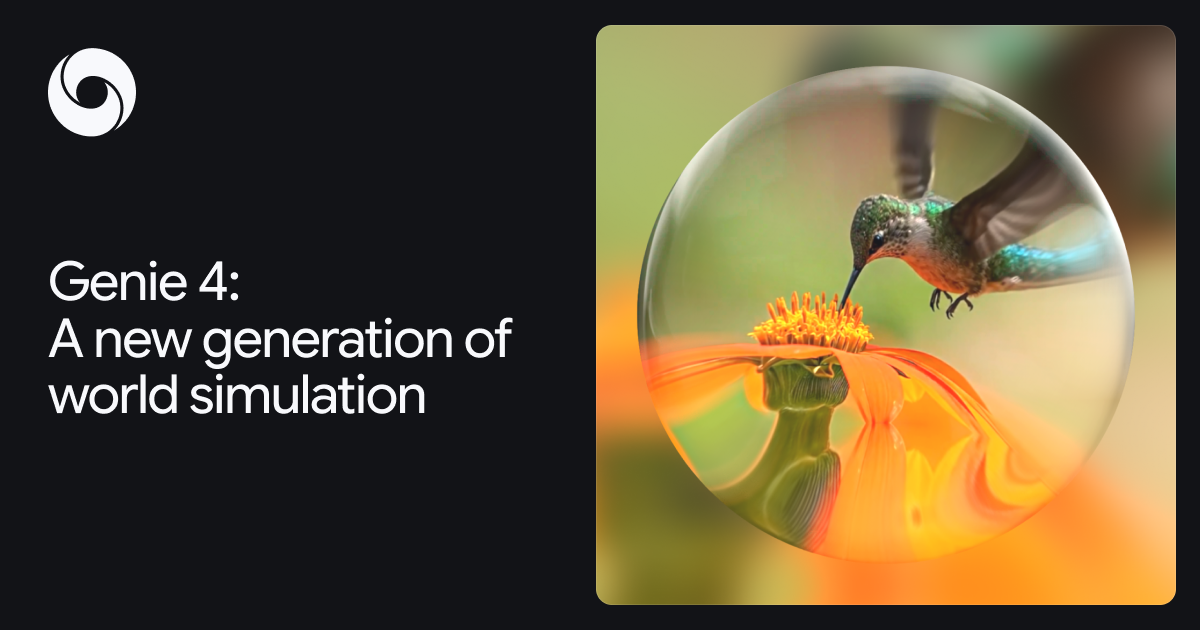
Official artwork from the DeepMind blog announcement.
Why creators should care anyway
If your work involves a camera, a screen, or a classroom, this lands in your territory:
Video producers and YouTubers: imagine atmospheric, living backdrops that react to your narration instead of static stock footage — or an entirely new content genre where the audience steers what happens next. We covered a related milestone when xAI released its fully AI-generated Odyssey film — see our coverage of Grok Imagine's Odyssey — but Odyssey is a fixed film, while Genie 4 is a world that runs with its viewer.
Educators and course creators: physics simulations, historical scenes, or walkthrough environments that students explore while you narrate — essentially a micro game studio operated from a prompt box.
Journalists and documentary teams: fast reconstructions of events and conceptual environments, at a fraction of traditional 3D production budgets.
For writers and editorial planners, the immediate impact is smaller. If your daily engine is researching, drafting, and publishing, platforms like ARWriter already handle that production line today; Genie 4 is the layer that will eventually power the visual half of it.
The honest limitations
DeepMind deserves credit for publishing its own weak spots, because they matter for production planning:
- Coherence holds only over short sessions. The announcement admits visual details and object permanence "can still shift or drift over time," and drifting gets worse with longer runs, multiple complex edits, or heavy navigation.
- Legible text inside scenes remains an open research problem, alongside spatial accuracy and long-term consistency.
- Every output carries a SynthID watermark. Content you generate is identifiable as generated — which closes the door on passing simulations off as reality, and opens every door for clearly-labeled creative work.
- No Arabic-language support has been announced, and there is no public pricing or general-availability date. Anyone promising otherwise right now is guessing.
How it compares with the video tools you already use
Today's mainstream AI video tools — from Veo to Grok Imagine and the rest — produce finished clips: prompt in, clip out, done. Genie 4 runs the opposite model: a persistent environment you enter and then direct while it runs. The first serves editing and publishing; the second serves interaction, streaming, and live experiences. In practice they are two layers of one production stack rather than substitutes, and the smartest early experiments will likely combine them — generated worlds captured into clips for channels that need fixed video.
And if Google's broader creative stack interests you, our coverage of creative control updates in Gemini Notebook for slides and video covers a tool you can actually use today.
What to watch next
Three signals will tell you how fast this reaches a production workflow near you:
- The first access wave reports. When trusted testers in creative industries publish what a Genie 4 session actually looks like — session lengths, editing behavior, audio quality on real projects — the gap between announcement and usable tool will become measurable.
- Gemini API documentation. The announcement names early-access partners on the Gemini API and Google AI Studio; when Genie 4 appears in the official Gemini API docs, third-party creative tools can start building on top of it, which is usually how research previews quietly become features inside products you already use.
- Project Genie for Ultra subscribers. That is the consumer door Google has committed to. A date for it is the single best predictor of when an ordinary video creator can touch this without a partnership agreement.
The practical bottom line
Genie 4 is a major technical moment that arrives before its consumer moment. The rational move now: join the waitlist if you produce visual content, and start practicing the skill this interface demands — describing a scene, changing one variable, watching what holds. Live direction is the muscle you will need. Meanwhile, the writing-and-scheduling half of content production does not need to wait for anyone's research preview: ARWriter's toolset already drafts, illustrates, and publishes Arabic and English content from one place.
Frequently asked questions
What is Genie 4?
Genie 4 is Google DeepMind's fourth-generation world model, announced on October 27, 2026. It generates real-time interactive video worlds that respond to keyboard input and text prompts, and it is the first in the series to generate native audio alongside the visuals.
Can I use Genie 4 today?
Not publicly. Access is currently a research preview for trusted testers in creative industries, journalism, education, gaming, and engineering, with Google AI Ultra subscribers scheduled to receive it via Project Genie and early-access partners via the Gemini API and Google AI Studio. An official waitlist form is open for applications.
Does Genie 4 support Arabic?
DeepMind has not announced which prompting languages the preview supports, so Arabic support can be neither confirmed nor ruled out until availability details are published.
Are Genie 4 outputs watermarked?
Yes. Google states that all Genie 4 output is watermarked with SynthID to identify it as AI-generated content.
How is Genie 4 different from normal AI video generators?
Standard AI video tools produce finished clips for editing and publishing, while Genie 4 produces a persistent environment that you enter, steer, and edit while it runs — the difference between watching a scene and being inside one.