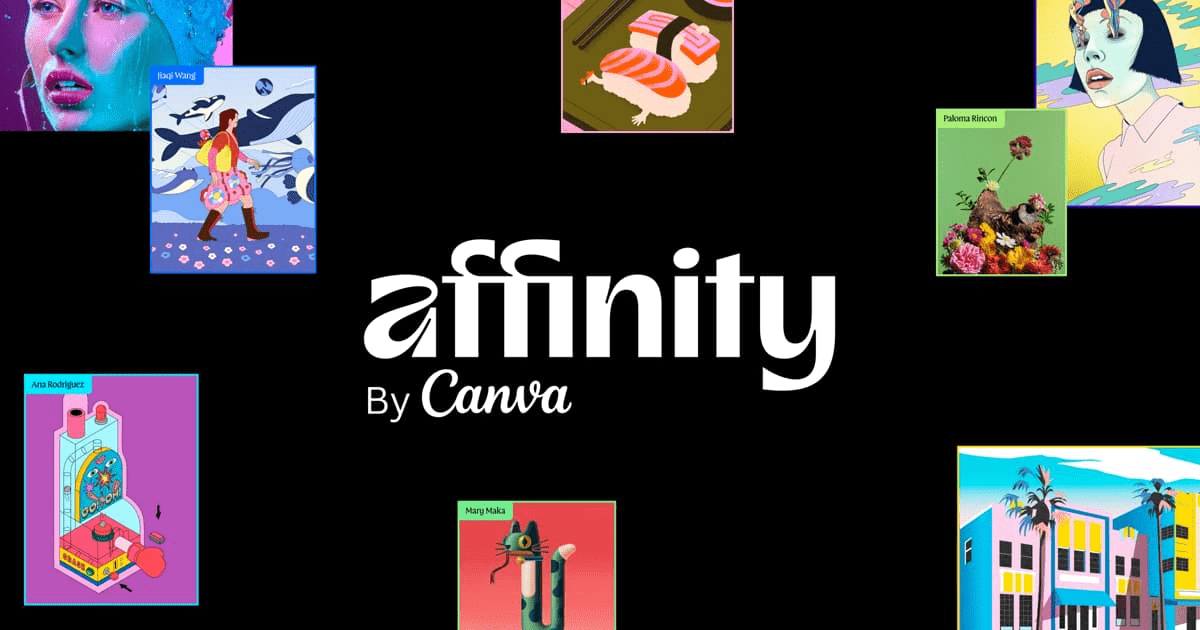
At 13:00 CET on September 15, 2026, Canva took its biggest swing yet at professional creative software. The company launched ProSuite, a connected family of tools that brings Affinity (design, photo editing, and layout), Cavalry (2D motion graphics), Flourish (data visualization), and Leonardo (AI image generation) into one ecosystem alongside the core Canva platform — shipping with more than 100 new features, most of them requested directly by the design community.
The headline for independent creators and small studios is simple: the core tools in Affinity and Cavalry remain completely free for individuals. Not a trial, not a stripped-down edition — the full professional applications, downloadable today for Windows and macOS.
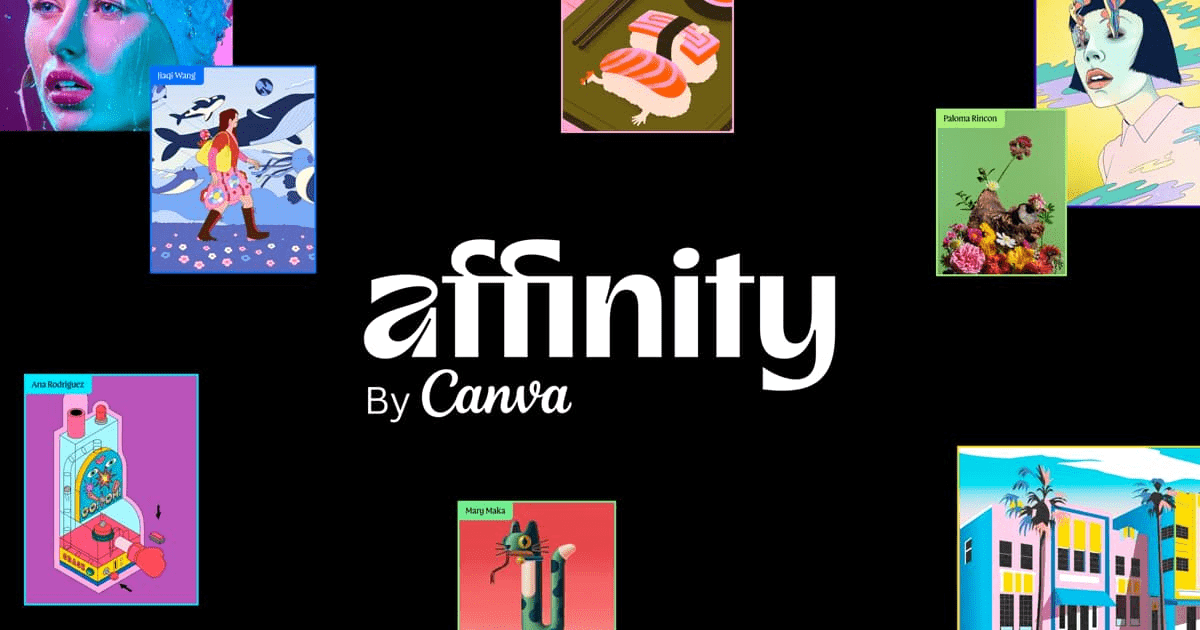
What ProSuite actually is
ProSuite is less a single product and more a division of labor. Professionals build templates and deep assets in the heavy tools — Affinity and Cavalry — while teams adapt, remix, and publish them inside Canva itself. A motion designer builds an animated brand scene in Cavalry; a marketer on the same team can then edit the text and colors from inside Canva while the underlying scene stays locked and unbreakable.
The bundle has four pillars:
- Affinity 3.3 — vector design, photo editing, and page layout in one app
- Cavalry — procedural 2D animation and motion design
- Flourish — interactive data storytelling and visualization
- Leonardo — the generative AI image platform Canva acquired last year
Affinity has been free for individuals since 2025 and has passed seven million downloads — a number Canva clearly intends to grow aggressively with this release.
Affinity 3.3: the deepest update in the app's history
The Blend Tool goes live
The most requested feature in the app's history is finally here. Blend creates smooth transitions between vector shapes and distributes elements along curves, with adjustable speed and bias weighting — and, in true Affinity fashion, everything stays editable after you apply it.
A photography overhaul
Version 3.3 ships what the company calls its biggest photography update yet. You can now import an entire batch of RAW photos at once (previously one at a time), apply styles across the batch, and lean on smart corrections for mixed lighting and camera shake. The standout trick is scene decomposition: AI that takes a flattened, already-exported image and splits it back into editable layers — a lifesaver for legacy files whose layers are long gone. There is even a dedicated astrophotography workspace.
Claude AI, free inside the app
Affinity now ships with a free Claude integration. You type everyday-language commands — "prepare these twenty files for print," "apply the same treatment to all photos" — and the app executes them. Combined with new in-app scripting that automates repetitive steps across the design, photo, and layout workspaces, this turns Affinity into a genuinely scriptable pro workstation rather than just a point-and-click editor.
Professional file compatibility
The app imports PSD, AI, IDML (InDesign), and DWG files with layers and structure preserved, moves from Capture One in one click, and lets DaVinci Resolve open .af files directly for a stills-to-video pipeline. Affinity documents can now link to Canva Sheets, and finished assets export straight into Canva for live team collaboration and campaign scaling.
Cavalry gets roughly 50 features of its own
Canva's motion tool gains AI background removal, generative vector graphics, and image-to-layers separation, alongside new shapes, lighting and distortion effects, a rebuilt curve editor, and improved table and vector integration. The structural news is the Canva connection: parts of an animation (text, colors) become editable within Canva while the scene itself stays locked — which is precisely how agencies can build reusable, brand-safe motion templates for clients and non-designer colleagues.
Pricing: what is free and what is not
Based on the launch coverage of European pricing, the structure works like this:
| Tier | Price | What you get |
|---|---|---|
| Canva Free | €0 | Core editor, 5 GB storage, and Affinity's non-AI feature set |
| Canva Pro | €12/month or €110/year | Premium templates and media, 100 GB, AI across Canva and Affinity (background removal, generative fill, and more) |
| Canva Business | €17/user/month or €170/year | Team administration, up to 100 brand kits, 500 GB, larger AI quotas, and Flourish access |
The practical takeaway: Affinity itself costs nothing for individuals — the official page says it plainly — while the AI layer inside it unlocks through a paid Canva plan. Regional prices outside the eurozone were not confirmed at launch, so check what your account shows locally before budgeting.
What this means for you as a creator
- The free alternative to Creative Cloud is now credible, not just cheap. Vector work, RAW photo processing, print layout, InDesign/Photoshop import, and a scripting layer — zero cost, running locally on your machine, backed by a company with real scale.
- One pipeline from idea to published asset. Design in Affinity, animate in Cavalry, assemble and schedule in Canva. A solo creator can now produce what used to require a small team.
- AI has moved inside the tool. Not a separate chat window — background removal, generative fill, layer decomposition, and natural-language commands live where the work happens.
This launch lands two weeks after Canva's previous wave of 100+ Visual Suite upgrades, and while Google pushes into the same space with Google Pics — the creator tool market is in an all-out race, and users are the winners.
For the writing and publishing half of a modern content workflow, tools like ARWriter cover drafting, scheduling, and multilingual publishing from a single workspace — pairing naturally with a free professional design stack.
Quick comparison: ProSuite vs. Adobe Creative Cloud
| Criterion | Canva ProSuite | Adobe Creative Cloud |
|---|---|---|
| Cost for individuals | Affinity and Cavalry cores free; paid AI from €110/year | Recurring subscription for essentially everything |
| Browser-first collaboration | Built into the platform's core | Bolted on via separate cloud services |
| 2D motion | Cavalry included at the free tier | Requires paid After Effects |
| Source files | Imports PSD, AI, IDML | The native industry standard |
| Offline desktop work | Affinity and Cavalry run locally | Full desktop apps |
Adobe still holds the depth advantage in high-end print production and video, and entrenched teams will not switch overnight. But for freelancers, content teams, and small businesses, the cost gap has become very hard to justify ignoring.
Honest limits to know before you download
- No iPad version yet. The official page lists it as "coming soon" with no date.
- AI is not free. Claude integration and generative tools inside Affinity require a paid Canva plan.
- Pricing confirmed in euros only. USD and other regional pricing was not verifiable from launch-day sources.
- Flourish sits behind the top tier (Business), not the free or Pro plans.
- English-only app UI. Canva supports many languages in its own interface, but Affinity and Cavalry interfaces are not localized in Arabic at launch.
Bottom line
ProSuite is the strongest shake-up in the design-tool market in years: a full professional suite going free, AI embedded in the tools professionals actually use, and the wall between "pro software" and "everyone software" steadily dissolving. If you pay for any design tool subscription right now, the rational move is to download Affinity 3.3 today and test it against your real workload before your next renewal. And if your workflow also needs multilingual writing and scheduling in one place, that is exactly the gap ARWriter is built to fill.
Frequently asked questions
Is Affinity really free after the ProSuite launch?
Yes. The core Affinity application is free for individuals on Windows and macOS, as stated on the official Affinity page owned by Canva. Paid Canva plans unlock the AI layer (background removal, generative fill, Claude commands) and premium templates.
Does Affinity require an internet connection?
No. The app runs locally and stores .af files on your machine. Connectivity is only needed for Canva sync and cloud AI features.
Can Affinity open Photoshop and InDesign files?
Yes. It imports PSD, AI, IDML, and DWG files, preserving layers and structure as much as the formats allow, according to the official documentation.
What is the difference between ProSuite and regular Canva?
Regular Canva is the cloud-based design platform for everyone. ProSuite is the professional layer around it: Affinity for deep design work, Cavalry for motion, Flourish for data visualization, and Leonardo for AI image generation — connected to, but distinct from, the main Canva editor.
When will the iPad version ship?
There is no official date as of September 15, 2026. The Affinity site only says the iPad version is in development.
Sources: official Affinity page (affinity.studio, a Canva product) — heise online for European tier pricing — Creative Boom launch coverage, September 15, 2026.