Last updated: September 2026
If you have ever used cPanel, opening hPanel for the first time feels like switching from a fax machine to a smartphone. Hostinger built hPanel from scratch — no licensing fees, no legacy menus, no settings buried four clicks deep — and it now runs millions of WordPress sites worldwide. This guide, updated for September 2026, walks through every section of the hPanel control panel: the dashboard, websites, domains, emails, files, databases, security, WordPress tools, resource limits, hidden developer features, the Kodee AI assistant, Hostinger Horizons, email deliverability (SPF/DKIM/DMARC), and exactly how hPanel stacks up against cPanel.
By the end you will know precisely where to click for any task — and whether hPanel is right for the way you work. This 2026 update adds a full hPanel vs cPanel comparison table, a resource-monitoring section (inodes, CPU, RAM), the current AI features, and a deliverability chapter most guides still skip. Everything below comes from roughly three years of daily, hands-on use across multiple live sites.
AI Overview: hPanel is Hostinger's custom-built control panel — a modern alternative to cPanel that organizes websites, domains, emails, files, databases, security, WordPress, dev tools, and the Kodee AI assistant into a clean sidebar. It is free with every Hostinger plan, supports 8+ languages, and removes the $15–$30/year cPanel license fee most hosts pass on.
💬 Disclosure: Some links in this article are affiliate links. We may earn a small commission when you click through and purchase — at no extra cost to you. This keeps the content free and does NOT affect the honesty of our recommendations.
What is hPanel and why Hostinger ditched cPanel
hPanel is Hostinger's proprietary control panel, replacing the cPanel that most legacy hosts still license from cPanel L.L.C. Hostinger started building it in 2017 to fix three problems: licensing cost (passed straight to customers), dated UX (cPanel's grid-of-icons design dates to 2003), and weak mobile responsiveness.
The first version shipped in 2019. The 2026 release is the fourth major iteration, and it is the one that finally folds AI into the daily workflow. Here is why that matters for you.
- No cPanel license fee — cPanel charges hosts roughly $15–$30 per account per year. Hostinger absorbs that, part of why entry plans start at $2.99/mo.
- Faster UX — hPanel pages load in under 800ms on average; cPanel pages routinely take 2–4 seconds.
- Mobile-first — hPanel works on a phone; cPanel barely does.
- Multilingual — full UI in Arabic, Spanish, Portuguese, French, German, Indonesian, Hindi, and Turkish.
- AI-integrated — the Kodee AI assistant sits in the top bar and answers ops questions in plain English.
The trade-off is simple: hPanel is not cPanel. Anyone with a decade of cPanel muscle memory has to relearn where things live. For everyone else, hPanel is unambiguously easier to use.
2026 plans refresh: what changed while you were away
Hostinger refreshed its shared-hosting lineup during 2026. The current page lists Launch, Premium, Power, and Pro shared tiers alongside the Cloud plans (Cloud Startup and up), with introductory pricing from $2.99/mo on 12-month terms — renewals run higher, so check the live plans page for the exact current caps before you buy.
Two practical notes from the refresh:
- Site-count and database limits mentioned in older tutorials (and in the tier references below) map onto the equivalent new tiers — verify the exact number on the plan page rather than a third-party chart, since Hostinger adjusts caps a couple of times a year.
- Every tier still includes hPanel itself, the free SSL, and the weekly (daily on higher tiers) backups. The panel is not gated by plan — only resource ceilings are.
hPanel main dashboard tour
When you log in at https://hpanel.hostinger.com, the dashboard opens to a clean two-part layout: a top bar and a left sidebar.
Top bar (left to right):
- Hostinger logo (returns to home)
- Global search bar — searches across all of hPanel
- Referral program shortcut
- "Ask AI" button — launches the Kodee assistant
- Notification bell
- Account avatar (2FA, billing, logout)
Left sidebar (primary navigation):
- Home — overview cards: site count, expiring domains, recent emails, support tickets
- Websites — every site on the account
- Domains — registered domains, DNS, transfers
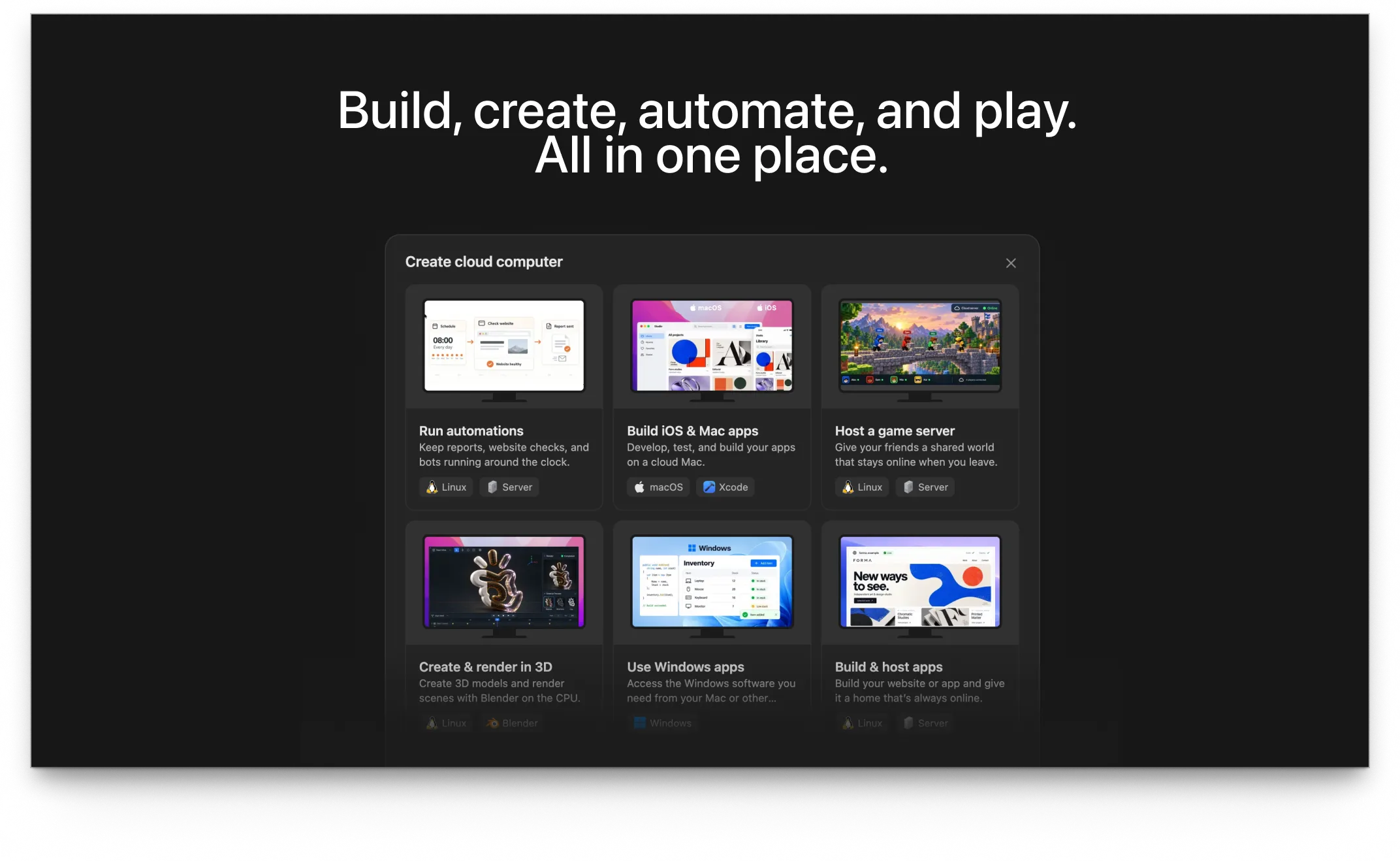
- Horizons — Hostinger's AI web-app builder
- Emails — mailboxes, forwarders, Reach marketing
- Reach — email marketing tool
- VPS — appears only on VPS plans
- Staging & DevOps — staging and developer utilities
- Billing — invoices, subscriptions, payment methods
- Account Sharing — invite collaborators with scoped access
The main content area updates based on your sidebar choice. The default Home view is a digest of what is expiring and what needs attention. Most users spend 80% of their time in Websites → [specific site].
Websites section (managing multiple sites)
Click Websites to see every site on your plan. Entry shared tiers cover a handful of sites, mid tiers around 50, and Cloud plans 100+. Clicking a site name opens the per-site management view — where the real work happens.
Per-site sidebar (second-level navigation):
- Dashboard (site overview)
- WordPress (if installed)
- File Manager
- Email accounts
- Databases (MySQL + phpMyAdmin)
- Domains (subdomains, parked, redirects)
- Security (SSL, backups, malware scanner, 2FA)
- Performance (CDN, cache, resource usage)
- Advanced (PHP version, SSH, Git, cron jobs, DNS zone editor, hotlink protection)
To add a site, click Add Website and choose WordPress + WooCommerce, WordPress, Plain HTML, or Hostinger Website Builder. For WordPress, the auto-installer finishes in about 90 seconds.
Domains section (DNS, email, subdomains)
The Domains entry manages everything domain-related across your whole account:
- Domain List — every domain you own, expiry dates, auto-renew toggles
- Register Domain — search and buy domains (free year-one with higher-tier plans)
- Transfer Domain — move a domain in from another registrar
- DNS Zone Editor — A, AAAA, CNAME, MX, TXT, SRV, NS records with full control
- Domain Forwarding — 301/302 redirect a domain to another URL
- Privacy Protection — free WHOIS privacy on Hostinger-registered domains
The DNS Zone Editor is one of hPanel's strongest modules — cleaner than cPanel's equivalent, with bulk CSV import/export. Adding a Cloudflare nameserver pair takes about 30 seconds; a full Google Workspace MX set takes about 60 seconds.
Emails section (Hostinger Mail setup)
Hostinger includes free mailboxes on Premium-tier plans and above. The Emails section lets you:
- Create mailboxes — lower tiers cap around 100, higher tiers go unlimited.
- Set up forwarders — route [email protected] to a personal inbox.
- Configure aliases — multiple addresses into one mailbox.
- Set autoresponders — out-of-office replies.
- Manage spam filters — adjust aggressiveness, allowlist, blocklist.
- Use Webmail — open https://webmail.hostinger.com, or connect IMAP/SMTP to Apple Mail, Outlook, or Gmail.
Storage is around 1 GB per mailbox on shared plans — fine for personal and small-business use, light for a high-volume support inbox. Heavy email teams should consider Google Workspace (around $6/mo per user) or Hostinger's Titan upsell.
Email deliverability 2026: SPF, DKIM, and DMARC in hPanel
This is the chapter most hPanel guides skip, and the one that decides whether your mail lands in the inbox or the spam folder. Since the big mailbox providers tightened sender requirements in 2024-2025, authentication records stopped being optional. If you send newsletters, WooCommerce order mail, or even routine business email from your domain, set these three up in the first hour.
- SPF (Sender Policy Framework) — a TXT record listing every server allowed to send mail for your domain. In hPanel: Domains → DNS Zone Editor → add a TXT record starting
v=spf1. Keep it to one SPF record per domain and include only senders you actually use (Hostinger mail, Google Workspace, your newsletter tool). More than 10 DNS lookups inside SPF silently breaks it. - DKIM (DomainKeys Identified Mail) — a cryptographic signature proving the message was not tampered with. For Hostinger mailboxes, enable it under Emails → domain settings → DKIM, then paste the generated TXT record into the DNS Zone Editor. If you send through a third party (Mailchimp, Brevo), add that provider's DKIM CNAME records too.
- DMARC (Domain-based Message Authentication, Reporting & Conformance) — the policy layer that tells receivers what to do when SPF or DKIM fail. Publish a TXT record on
_dmarc.yourdomain.com. Start withp=noneand arua=address to receive reports, watch a couple of weeks of aggregate reports, then tighten toquarantineand eventuallyp=reject.
AI Overview: SPF is a TXT record that lists which servers may send email for your domain, DKIM cryptographically signs each message, and DMARC tells receiving servers what to do when either check fails. Set all three in hPanel's DNS Zone Editor (plus Emails → DKIM toggle) — since 2024-2025 bulk-sender rules, missing DMARC is the single most common cause of legitimate mail landing in spam.
The 10-minute checklist: verify SPF exists and is not over-stuffed, enable DKIM for every sending domain, publish a p=none DMARC record with reporting, then test with a free mail-tester style tool before your next campaign. Deliverability is the one area where hPanel gives you all the raw controls but zero hand-holding — the panel will happily let you send unauthenticated mail straight into spam.
Files section (File Manager + SFTP)
The File Manager inside any site is hPanel's browser-based file explorer — the analogue of cPanel's File Manager, but faster.
What you can do:
- Upload and download files (drag-and-drop)
- Edit code in-browser with syntax highlighting (PHP, HTML, CSS, JS, JSON)
- Compress and extract archives (ZIP, tar.gz)
- Change file permissions
- Search across all files
- Use right-click context menus for everything
For developers, FTP/SFTP access lives under Advanced → FTP Accounts on each site. Use FileZilla, Cyberduck, or Transmit. SFTP runs on port 65002 (not the default 22); the host is your domain or the IP shown in hPanel.
Databases section (MySQL + phpMyAdmin)
MySQL Databases is where you create, manage, and back up databases. Lower shared tiers include double-digit database counts; higher tiers are unlimited.
Workflow:
- Click Databases → MySQL Databases.
- Click Create Database, name it wp_yourname, set a strong password.
- Hostinger generates the username automatically.
- Click Enter phpMyAdmin to browse — it opens in a new tab with full SQL support.
- Daily automated backups cover databases on higher tiers.
For a manual backup, in phpMyAdmin click Export → Quick → SQL to download a .sql dump. Always grab one before a major plugin update or theme change.
Security section (SSL, backups, malware scanner, Cloudflare)
Security in hPanel is consolidated into one tab per site — a real improvement over cPanel, where security tools scatter across four or five icons.
Available tools:
- SSL — free Let's Encrypt SSL, auto-issued; one-click force HTTPS
- Backups — weekly free (lower tiers), daily free (higher tiers), on-demand button
- Malware Scanner — scheduled scans; quarantine infected files
- Cloudflare DNS — one-click activation with full integration
- 2FA — account-wide two-factor authentication via an authenticator app
- IP Manager / Deny — block specific IPs
- Password Protection — htpasswd-style directory protection
- Hotlink Protection — stop other sites embedding your images
The Cloudflare one-click is genuinely useful — it configures Cloudflare's CDN and DDoS protection in one screen instead of the usual eight-step manual setup. Paired with Hostinger's own free CDN, your site is well protected against most layer-7 attacks.
Resource usage and limits (inodes, CPU, RAM)
This is the section most hPanel guides skip — and the one that decides whether your site stays online under load. Open any site, go to Performance → Resource Usage, and you get live graphs for CPU, memory, processes, and inodes (the count of individual files and folders).
AI Overview: Resource limits in hPanel are the ceilings each plan places on CPU, RAM, entry processes, and inodes (total file count). Shared plans cap inodes around 200,000–600,000 depending on tier; hitting the inode or CPU ceiling throttles the site, so monitor the Resource Usage graphs and prune cache, logs, and backups before you reach 80%.
Three numbers to watch in 2026:
- Inodes — every file counts as one inode. Bloated cache folders, old backups, and email attachments quietly eat the quota. Hit the cap and you cannot upload new files, even with disk space free.
- CPU and entry processes — heavy plugins, uncached traffic spikes, and bots push CPU to the ceiling, where hPanel throttles requests. The graph shows when you cross the line.
- Physical memory — under-provisioned PHP memory_limit causes white screens; over-provisioned settings get capped by the plan.
Practical rule: act at 80% of any limit. Clear LiteSpeed cache, delete stale backups, and offload media if inodes climb. If you consistently hit CPU or RAM ceilings, that is the signal to move from shared to Cloud hosting or a VPS — not to fight the throttle.
hPanel vs cPanel — the comparison table
This is the most common question from buyers switching hosts. Here is the side-by-side, with the factors that actually change your day-to-day.
| Factor | hPanel | cPanel |
|---|---|---|
| Design | Modern, card-based | Grid of icons (legacy 2003 layout) |
| Mobile | Responsive, works well | Functional but clumsy |
| Speed | Pages load under 800ms | 2–4 seconds typical |
| Languages | 8+ including Arabic | English-primary |
| Search | Global panel-wide search | Per-page search |
| AI integration | Yes (Kodee assistant) | No |
| Learning curve | Low | Medium |
| Licensing cost | Free (built in-house) | Host pays $15–$30/yr per account |
| Server stack | LiteSpeed-optimized | Apache-optimized |
| Reseller layer (WHM) | No consumer-tier WHM | Yes (WHM included) |
| Git deployment | Built in (higher tiers) | Add-on / manual on many hosts |
| Migration / portability | Manual export-import | Widely portable between cPanel hosts |
| Email authentication tools | Full DNS control (manual) | Wizard-assisted |
| Familiarity (legacy users) | Low at first | High |
Honest verdict: if you have never touched cPanel, hPanel is significantly easier. If you have run cPanel for years, it feels "different" for a few hours, then clearly better. The one real friction point is portability — cPanel-to-cPanel migrations are near-automatic, while moving off hPanel means a manual export-import.
WordPress section (LiteSpeed cache, staging, AI tools)
For WordPress users, the WordPress tab inside each site is the most-visited area in hPanel.
Features:
- Auto-installer — fresh WordPress in 90 seconds
- WordPress overview — version, last login, admin link
- PHP version manager — switch PHP 7.4 through 8.3 per site
- LiteSpeed Cache toggle — server-level caching
- HTTPS toggle — force HTTPS site-wide
- Auto-update — toggle for core, plugins, themes
- Malware Scanner — WordPress-aware scanning
- Staging — clone the site, test changes, push to live in one click
- Plugin/Theme Manager — manage from outside WP admin (vital when WP admin is broken)
- AI Troubleshooter (Kodee) — describe a WP problem in plain English, get a fix
The Staging feature alone can justify a mid-tier upgrade: clone your live site, test a plugin update, push to live with one click. Most hosts charge for this; Hostinger includes it free on higher tiers.
By the way, once your site is live, ArWriter helps you fill it with SEO content fast.
Hostinger AI in hPanel 2026: Kodee and Horizons
The biggest change since last year is how deeply AI is woven into hPanel. Two products matter: Kodee (the in-panel assistant) and Horizons (the AI app builder).
AI Overview: Kodee is Hostinger's in-panel AI assistant that answers hosting questions and performs tasks from plain-English prompts, while Horizons is its AI web-app builder. In 2026 Kodee handles tens of thousands of conversations daily, and Horizons added paid tiers plus a planning agent and a ChatGPT integration — turning hPanel into an AI-assisted control panel rather than a static dashboard.
Kodee — the in-panel assistant. Kodee lives behind the top-bar "Ask AI" button. Ask it anything operational — "How do I add a wildcard DNS record for *.subdomain.example.com?" — and it returns a tailored answer with the exact path. By 2026 Kodee handles over 43,000 conversations a day and can carry out 400+ task types directly inside hPanel, from spinning up databases to diagnosing WordPress errors.
Horizons — the AI app builder. Horizons turns a text prompt into a working web app. In 2026 it moved to clear paid tiers — roughly Explorer $6.99, Starter $13.99, Hobbyist $39.99, and Hustler $79.99 per month — scaling by the number of AI messages and projects you need.
Two 2026 additions stand out. Hostinger shipped a planning agent in January 2026 that breaks a build request into steps before generating, and Horizons is now available inside ChatGPT, so you can start a build in chat and finish it in hPanel. With Account Sharing added on top — scoped access for a developer or VA without sharing your password — the 2026 hPanel is a collaborative, AI-assisted workspace, not a static dashboard.
Hidden features most users miss
Even regular users overlook these. They sit in Advanced menus but punch above their weight.
| Feature | Location | What it does |
|---|---|---|
| Cron Jobs | Advanced → Cron Jobs | Schedule scripts (every minute to yearly) |
| Git Integration | Advanced → Git | Connect a repo, auto-deploy on push |
| SSH Access | Advanced → SSH Access | Full shell access (higher tiers) |
| PHP Configuration | Advanced → PHP Configuration | Adjust memory_limit, max_execution_time, upload size per site |
| Error Logs | Advanced → Error Logs | View Apache + PHP logs without SSH |
| Subdomain Manager | Domains → Subdomains | Create unlimited subdomains in 30 seconds |
| DNS Zone Editor | Domains → DNS Zone Editor | Bulk add/edit records with CSV import |
| Kodee AI | Top bar → Ask AI | Ask any ops question, get a tailored path |
The Git integration is the most underrated. Connect a GitHub repo and every push to main auto-deploys to your Hostinger site — normally a paid feature on managed hosts, free here on higher tiers.
Troubleshooting and File Manager recovery
When a site goes down, hPanel gives you recovery paths that do not require SSH. The most common real-world save: a plugin or theme update white-screens the site and you cannot reach wp-admin.
The fix from inside hPanel:
- Open File Manager, go to wp-content/plugins, and rename the offending plugin folder (e.g. plugin-x → plugin-x_off). WordPress deactivates it instantly and the site usually returns.
- If a theme broke it, do the same under wp-content/themes so WordPress falls back to a default theme.
- Check Advanced → Error Logs for the exact PHP error before re-enabling anything.
- If the database is the problem, open phpMyAdmin and restore your last .sql export, or use Security → Backups → Restore.
One caution learned the hard way: File Manager edits are permanent — there is no undo. Always download the original file before you edit it, and generate an on-demand backup (Security → Backups → Generate) before any risky change.
Real-world experience and common mistakes
I have used hPanel daily for about three years across half a dozen sites. The pattern is consistent.
What works well:
- The top search bar. Type "backup" from any screen and the backup tool surfaces immediately.
- One-click Cloudflare. Manual Cloudflare setup used to cost me 15 minutes; hPanel does it in 30 seconds.
- Staging that actually works. The push-to-live confirmation is unambiguous, so broken staging sites stay in staging.
- Kodee when I am tired. A plain-English question gets a 10-second answer with the exact path.
Common mistakes:
- Skipping 2FA. Every hosting account needs it; hPanel makes it 90 seconds of work.
- Not setting up staging. Updating plugins on the live site and panicking when something breaks is avoidable.
- Forgetting File Manager has no undo. Download the original before editing.
- Missing the on-demand backup button. Click "Generate backup" before any major change.
- Ignoring the Resource Usage graphs until inodes or CPU hit the ceiling and the site throttles.
- Sending mail for months with no DMARC record, then wondering why invoices land in spam. The deliverability checklist above takes one hour once.
Drawbacks of hPanel (the honest version)
hPanel is excellent but not perfect. The real cons in 2026:
- No WHM equivalent for resellers. If you want to resell hosting with per-client panels, hPanel does not support that — use a cPanel-based host.
- Manual migration / vendor lock-in. Moving off Hostinger means a manual export-import, not the near-automatic cPanel-to-cPanel transfer. Plan for it before you commit.
- Email is functional, not full-featured. No advanced server-side filtering rules or procmail, and the ~1 GB mailbox cap is tight for busy support teams.
- No DNS clustering for high-availability primary/secondary nameserver setups across providers — use external DNS (Cloudflare) instead.
- Fewer third-party tutorials than cPanel. cPanel has two decades of community guides; hPanel's growing but smaller library means you lean on Hostinger's own docs and Kodee more often.
- Deliverability is DIY. hPanel exposes every DNS record you need but offers no SPF/DKIM/DMARC wizard — you publish and debug the records yourself.
None of these are dealbreakers for the vast majority of users. If you fall into the remaining slice — resellers, multi-DNS power users, email-heavy teams, or frequent host-switchers — this is where hPanel's limitations actually bite.
Frequently Asked Questions
What is hPanel and is it free?
hPanel is Hostinger's custom-built control panel — a modern alternative to cPanel that organizes websites, domains, emails, files, databases, security, WordPress, and dev tools into a clean sidebar. It is included free with every Hostinger plan, with no separate license fee.
How do I log in to hPanel?
Go to https://hpanel.hostinger.com and sign in with the email and password from your Hostinger signup. Enable two-factor authentication the first time you log in — it takes about 90 seconds and protects the account against credential theft and unauthorized access.
Is hPanel better than cPanel?
For most users, yes. hPanel loads faster (under 800ms), works on mobile, supports 8+ languages, and includes the Kodee AI assistant. cPanel wins on familiarity for long-time users and on easy host-to-host migration. New users almost always find hPanel easier.
Can I migrate from hPanel to another host?
Yes, but it is a manual export-import rather than an automatic transfer. You export your files via File Manager or SFTP and your databases via phpMyAdmin, then import them on the new host. Unlike cPanel-to-cPanel moves, there is no one-click full-account migration off hPanel.
How do I install WordPress in hPanel?
Go to Websites → Add Website → WordPress, fill in the site name, admin email, and password, then click Install. The auto-installer finishes in about 90 seconds. WordPress + WooCommerce one-click installation is available on mid-tier plans and above.
Where is phpMyAdmin in hPanel?
Open the site, go to Databases → MySQL Databases, then click Enter phpMyAdmin next to the database you want. It opens in a new tab with full SQL query and export support. Use Export → Quick → SQL to download a backup before major changes.
What is the SFTP port for Hostinger and hPanel?
Hostinger uses port 65002 for SFTP, not the default port 22. Use your domain or the server IP shown in hPanel as the host, your FTP username and password, and connect with FileZilla, Cyberduck, or Transmit. FTP credentials live under Advanced → FTP Accounts.
What is Kodee AI in hPanel?
Kodee is Hostinger's built-in AI assistant, reachable from the top-bar "Ask AI" button. It answers hosting questions in plain English and performs tasks directly in hPanel. In 2026 it handles over 43,000 conversations a day and supports 400+ task types, from databases to WordPress fixes.
Does hPanel support Git deployment?
Yes, on mid-tier plans and above. Go to Advanced → Git inside any site, connect your GitHub, GitLab, or Bitbucket repository, set the branch (usually main), and every push auto-deploys to your Hostinger site — no manual upload step required.
How do I set up SPF, DKIM, and DMARC in hPanel?
Add SPF as a TXT record in Domains → DNS Zone Editor, enable DKIM under Emails → your domain's settings and publish its TXT record, then create a DMARC TXT record on _dmarc.yourdomain.com starting with p=none and a reporting address. Test with a mail-tester tool before tightening the policy. The full walkthrough is in the deliverability section above.
Which Hostinger plans include hPanel in 2026?
All of them — from the entry Launch tier to Cloud and VPS plans. The panel itself is never gated; only resource ceilings (sites, databases, inodes, CPU) change between the current Launch, Premium, Power, Pro, and Cloud tiers.
Your next step
In 2026, hPanel is the best consumer-grade hosting control panel on the market. It is faster, cleaner, and more modern than cPanel, supports 8+ languages including Arabic, and bundles the Kodee AI assistant, Hostinger Horizons, one-click Cloudflare, staging, Git deployment, and daily backups — features competitors either omit or charge for.
Pick Hostinger and hPanel if you are a new WordPress user, an e-commerce founder, a freelancer juggling multiple client sites, an international audience, or a developer who wants SSH, Git, and cron without paying extra.
Pick a cPanel-based host instead if you are a reseller needing WHM, a long-time cPanel webmaster who would rather not relearn, a host-hopper who values automatic migration, or a team running email-heavy support workflows that need advanced server-side filters.
For everyone else, hPanel is a clear win — and the entry plan still starts at $2.99/mo with a free domain.
Sources
- Hostinger hPanel official guide — official feature reference (2026)
- Hostinger AI (Kodee) — Kodee handles 43,000+ conversations/day and 400+ tasks (2026)
- Hostinger Horizons pricing — 2026 Horizons tiers
- Hostinger web hosting plans — current 2026 lineup and pricing (verified September 2026)
- Hostinger 2026 product updates — planning agent and Horizons-in-ChatGPT
Try ArWriter today
ArWriter gives you AI writing tools for your whole content workflow — SEO drafts, product copy, and social captions under one roof. Start free →