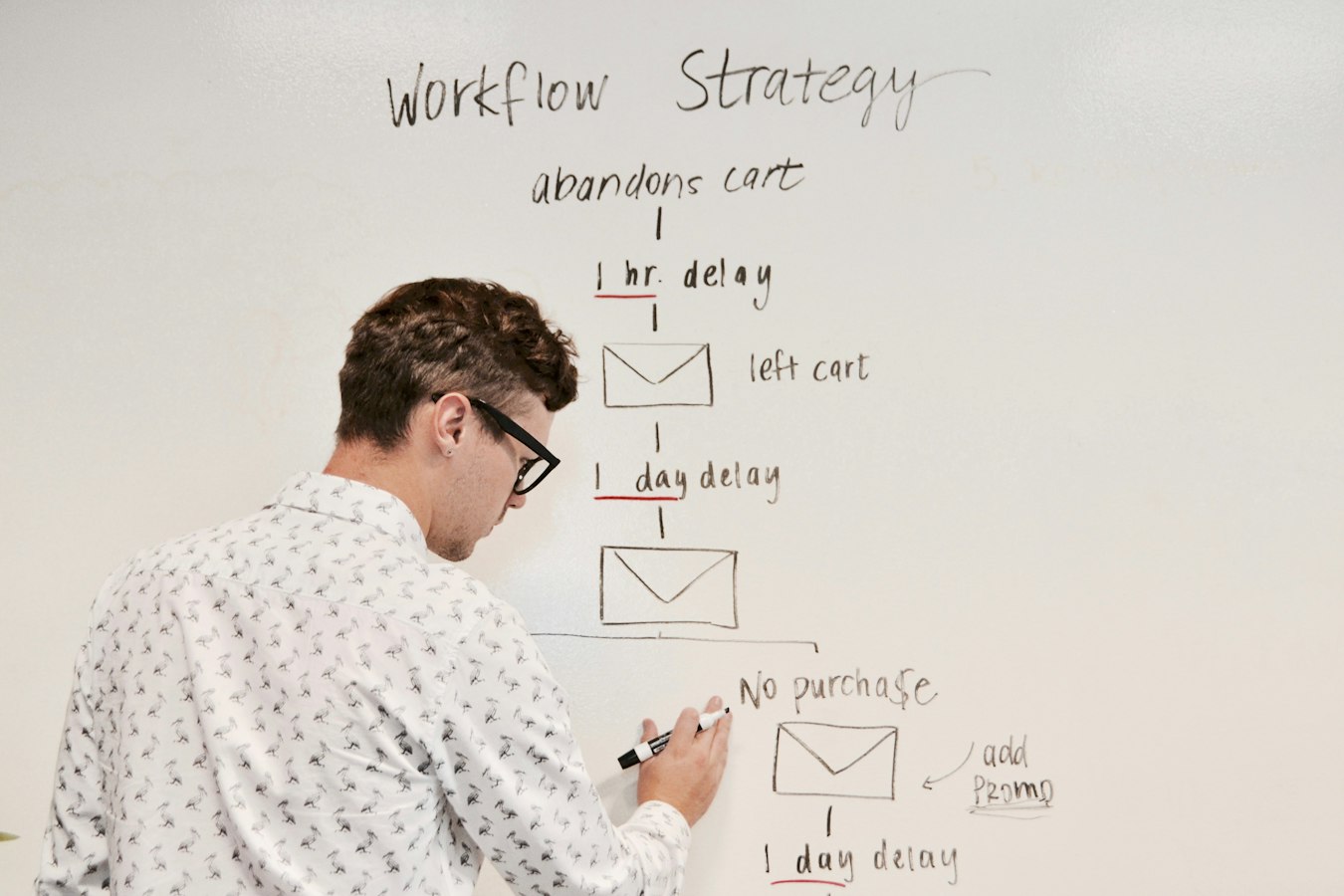
When a review request email lands in your inbox, what makes you actually open it, tap the stars, and write two sentences — and what makes you delete it without reading? You already know both feelings. You have been the customer whose evening was respected with one short, well-timed note, and the one chased across three weeks by a store that would not let go. This guide is about running the first kind of operation: a review request system that collects substantially more product reviews in 2026 without training your customers to ignore you.
The stakes are higher than most store owners assume. Reviews are not a vanity metric bolted onto your product pages; they are infrastructure. They feed conversion, ad performance, and even whether your paid listings display star ratings at all. And the raw material for every one of them is a single, well-crafted request email.
What Is a Review Request Email, Exactly?
A review request email is an automated message sent after delivery, asking the customer to rate and describe the specific product they bought. It sounds trivial, which is why it gets written badly so often. The craft lives in four decisions: when you ask (timed to the product category), how you ask (short, personal, one tap to complete), how many times you ask (once, plus one polite reminder), and what you do with each answer (including the unhappy ones).
The format matters because the payoff is measurable. BrightLocal's Local Consumer Review Survey, cited by Podium, found that 77 percent of people read reviews when searching for local businesses, and the habit carries straight into product search. Podium's own State of Reviews research, cited by Klaviyo, adds two numbers that should reframe how you see your review count: 83 percent of consumers agree reviews must be relevant and recent, and 68 percent will not trust a high average rating unless there are plenty of reviews behind it. A 4.9-star average over nine reviews persuades almost no one. Volume and freshness are the product.
Reviews also gate your advertising. Google requires an average rating of at least 3.5 stars before seller ratings show on text ads — no rating, no stars, and no stars means a measurably weaker ad. For marketplace sellers, the connection is even more direct; our guide to writing Amazon product listings with AI and its companion on Amazon keyword research with AI treat review coverage as a ranking asset, because on a marketplace it is precisely that.
The Trust Math Behind Every Star Rating
Younger buyers tighten the screws further. Statista and PowerReviews data cited by Klaviyo found that 76 percent of Gen Z beauty shoppers say they always read reviews, against 66 percent of millennials. Your next cohort of customers is more review-dependent than the one you have now.
Add the texture of what reviews contain and the case completes itself. Emplifi consumer research cited by Shopify found that 65 percent of consumers are more influenced by other customers' content than by celebrity content. A page of honest, specific, recently dated customer sentences outperforms almost any polished marketing paragraph you could pay a copywriter to produce. Which is odd, because most stores invest heavily in the copywriter and leave review collection to chance.
Flip it around: every review you fail to collect is trust you manufactured but never banked. The customer was satisfied, the moment was right, and no email arrived — or the one that arrived asked about a blender they had owned for four hours. Collecting that review is not an imposition. Done correctly, it is the natural last step of a purchase that already went well. That is also why the request belongs inside a complete post-purchase flow rather than floating alone; our guide to post-purchase emails with AI covers the full sequence from confirmation to replenishment, and the review ask is simply its most valuable stop.
Timing by Product Category: Ask When the Product Has Proven Itself
The single most common mistake is asking too early. A customer cannot review a product they have not used, so premature asks harvest either silence or worthless "seems nice, just arrived" three-star placeholders that drag your average down. Yotpo's category benchmarks, drawn from its review platform data, give sensible windows:
| Product category | When to ask (after delivery) | Why the window exists | Reminder timing |
|---|---|---|---|
| Digital products | 1–2 days | Value is apparent almost immediately | 5–7 days later |
| Fashion and apparel | 5–7 days | Worn once, washed maybe | 5–7 days later |
| Electronics | 7–10 days | Setup and daily use revealed | 5–7 days later |
| Home and kitchen | 10–14 days | Integrated into routines | 5–7 days later |
| Beauty and skincare | 14–21 days | Skin needs a cycle to respond | 5–7 days later |
| Supplements | 21–30 days | Results take weeks | 5–7 days later |
One request, one reminder. That is the entire cadence, and the reminder should reference the original ask rather than pretending it never happened. After that, stop. If your review count is still too thin, the fix is not a third email — it is improving the first one, which is the section after next.
Black Friday and Cyber Monday deserve a special note: volume spikes mean December is when most of your year's reviews are either collected or lost. Build the timing table above into your automation before the season, not during it.
Getting the calendar right is half the system; the other half is what the message itself looks like.

Frequency Rules: How to Ask Without Becoming a Pest
Everything that makes review requests profitable can be undone by over-sending. The rules are boringly simple, and stores break every one of them daily.
| Rule | What it means in practice | Why it holds up |
|---|---|---|
| One ask, one reminder | A single well-timed follow-up, then silence | The second reminder converts stragglers; the third converts readers into unsubscribers |
| Respect the outcome | Never re-ask a customer who already reviewed | Asking again signals you do not track your own store |
| Mind the total load | Cap all automated emails, not just this one | Your request competes with confirmations, cross-sells, and campaigns |
| Send at human hours | Mid-morning or early evening in the buyer's timezone | A 3 a.m. request feels automated because it is |
| Make leaving easy | One tap for stars, short optional text box | Every extra click sheds respondents |
There is also a policy line you must not cross. Offering payment or discounts in exchange for positive reviews violates the rules of most review platforms and, in the United States, invites FTC attention. Incentivizing the act of reviewing — a thank-you credit for any review, five stars or one — is generally workable when disclosed, but incentives for positivity are not. If you are unsure where your platform draws the line, check its merchant policies before the campaign, not after the warning email.
Anatomy of a Review Request That Gets Answered
The high-performing request is shorter than you think. Subject line: the customer's first name plus the exact product, phrased as a genuine question — "Sam, how is the Fino grinder treating you?" Preview text that sets the time expectation: "Takes thirty seconds." A body of three to five sentences: what they bought, when it arrived, one specific prompt ("Did the grind stay consistent?"), and a single button. Underneath the button, the low-pressure exit: "Had a problem instead? Tell us directly" — which routes unhappy customers somewhere more useful than your public star rating.
The single highest-impact feature is the in-mail review form: a star widget embedded in the email body itself. The customer taps four stars in their inbox and only then lands on your site to add text. Removing one step from the process is the cheapest conversion lift available, and on mobile — where most email is opened — it is often the difference between collected and lost.
Where the collected reviews live matters too. Feeding them onto product pages, landing pages, and ad creative multiplies the return on every request; our AI product landing page copywriting guide covers weaving social proof into copy that converts, which is where these reviews end up working their hardest. And if you are evaluating platforms for the automation itself, the comparison in our rundown of top email platforms for 2026 looks at review-app integrations and trigger options side by side.
Sam's Kitchenware Shop: 38 Reviews to 290 in Six Months
Sam runs a kitchenware store in Manchester, England — specialty coffee gear, chopping boards, the occasional wildly popular garlic press. About 380 orders a month, average order value around £54. His problem was painfully ordinary: 214 products, and just 38 reviews across the entire catalog. His best-selling grinder, responsible for a fifth of revenue, had four.
He rebuilt his request around the timing table above: grinders and kettles asked at day 10, boards at day 12, everything reminder-ed once at day 6 after the first ask. He added the in-mail star widget and rewrote the body from a paragraph of apology ("sorry to bother you") into three sentences with one specific product question. Total rebuild time: an evening, most of it spent generating and editing category-specific copy.
Over six months and roughly 2,300 delivered orders, the numbers compounded quietly: an 11 percent response rate overall, 253 new reviews, and the catalog climbing from 38 to just over 290. The grinder's page went from four reviews to fifty-one. His conversion rate on that page rose by roughly a fifth — the direct effect, he assumes, of shoppers no longer wondering whether four reviews meant four customers. The pattern echoes a documented case at scale: when the Dutch retailer Verpakgigant automated its post-purchase review requests through Omnisend, Google review submissions jumped 1,500 percent. Same mechanism, bigger warehouse.
An AI Workflow for Writing and Personalizing Review Requests
Sam's evening of work points at where AI fits. Review requests are highly structured writing: the same skeleton per category, differentiated by product, voice, and one specific question. That is exactly the shape of task language models handle well, and exactly the task humans burn out on after the third category.
A workflow that works: build a one-page brief describing your tone, your sign-off, and your "tell us directly" link; list each product category with its ask-window and one genuine product question per category; then generate the full set — subject lines, preview text, body, reminder, and the low-star branch — and edit the output against the brief. ARWriter.ai is built for precisely this loop: paste the product details and your voice notes, get the request and its reminder in category-appropriate tone, then keep the variants that sound most like your store. Try it on one category first, watch the response rate for two weeks, and expand only what beats your current email.
Two cautions from the field. Never let a model invent product claims inside a review request ("loved by over 40,000 customers" had better be true), and never let it imply incentives you do not actually offer. The reminder email should also be written as a reminder — "in case this slipped past" — not as a fresh first ask wearing a different subject line.
When the Answer Is One Star: Handling Negative Responses
Every store collecting reviews at volume collects bad ones, and the flow you build should expect them. The core move is triage: route low star taps — one to three — away from the public review form and into a private feedback channel first. You are not hiding criticism; you are giving an unhappy customer the fastest route to a fix, which is what they actually wanted. Many will never post publicly once the problem is handled, and the ones who do will often update their rating after a good resolution.
When a public negative review lands anyway, respond within a day, apologize for the specific issue, and take it offline to resolve. Future buyers read your reply as a preview of how they will be treated when something goes wrong — a calm, concrete answer sells more than the complaint unsells. Then feed the root cause back into the product or packaging decision that created it, which is the only way the same one-star stops arriving monthly.
Where most stores go next is the gap this article cannot cover alone: the customers who never respond to anything. Their silence eventually becomes a churn problem, and that is a different sequence with different economics — our article on re-activating lapsed buyers with AI picks up exactly where review requests stop. If you take one thing from these sections, let it be this: the review request is the highest-leverage, lowest-cost email your store is currently under-writing. Write it properly, time it properly, and let a tool like ARWriter.ai handle the per-category drafting so the system actually gets built — your future catalog, ads, and star ratings are all downstream of this one message.
In practice, almost every one of those reviews begins with a single tap on stars inside the inbox.

FAQ: Review Request Questions, Answered
What is the best subject line for a review request email?
Short, specific, and personalized beats clever every time. Include the product name and the customer's first name — "Sam, how is the Fino grinder treating you?" outperforms vague lines like "We'd love your feedback!" Clarity about the task, plus a hint that it takes thirty seconds, lifts response rates consistently.
What is the absolute best time to send a review request?
After the product has proven itself but while the unboxing glow lasts — which depends on category: one to two days for digital goods, five to seven for fashion, ten to fourteen for home goods, up to thirty for supplements. Asking before real use produces thin, unhelpful five-star one-liners.
Should I offer an incentive for a review?
You can, but never make the reward conditional on a positive rating — that violates review platform policies and, in the United States, risks FTC scrutiny. Structure any incentive around the act of reviewing, disclose it clearly, and remember that authenticity is exactly what makes reviews persuasive in the first place.
How do I get more photo and video reviews?
Ask on mobile, where the camera already is, and make the upload the second step after the star rating rather than an afterthought. Show examples of customer photos on the request page, and consider seasonal photo contests that reward any submission equally, which keeps the incentive policy-compliant and the content authentic.
What is an in-mail review form?
It is a star-rating widget embedded directly in the email body, so customers can tap four stars inside their inbox and only then land on your site to write the accompanying text. Cutting one step from the process measurably increases completion, especially on phones where redirects and slow pages routinely lose respondents.
What should I do about a bad review?
Respond within a day, apologize for the specific problem, and move the conversation to email or phone to resolve it. A calm, helpful public reply reassures future buyers more than the complaint deters them. Then feed the root cause back into product or packaging decisions so the same complaint stops repeating.
What is the difference between a site review and a product review?
A site review covers the whole shopping experience — shipping speed, packaging, support — while a product review evaluates the item itself. Ask for product reviews when the item is the hero of the moment, and site reviews after a resolved support ticket or a repeat order. Keep the two collections clearly separated.
Why does personalization matter so much in review requests?
Because generic blasts train people to delete on sight. Referencing the exact product, the order date, and even the variant bought signals a real system rather than a mass mailing — and the request feels like a natural extension of the purchase conversation instead of an interruption of it.
Last updated: October 2026