Google cut the price of its most popular image model in half — and improved it almost everywhere that matters to creators. Here's what changed, and when you should care.
On Tuesday, October 6, 2026, Google announced Nano Banana 2.1, the newest generation of the image generation and editing model family that has become a daily tool for marketers, store owners, and social teams worldwide. The official rollout statement came from Google's own X account, followed by the full model card published on the DeepMind site the same day.
Source: official announcement post from Google's X account, October 6, 2026.
Per that post, the model is rolling out gradually across the Gemini app, AI Mode in Google Search, AI Studio, Flow, Stitch, Google Ads, and the Gemini Enterprise Platform. In other words: you'll run into it soon in more than one tool you already use — even if you've never typed its name.
What's actually new in 2.1
Nano Banana 2.1 is built on Gemini 3.6 Flash — the fast lane of Google's model family, designed for high-volume everyday use rather than the heavier, pricier Pro tier. It accepts text and image input, works with a context of up to 1 million tokens, and outputs images at 1K, 2K, or 4K resolution. It also ships with two operating modes: Thinking for higher quality and No Thinking for speed.
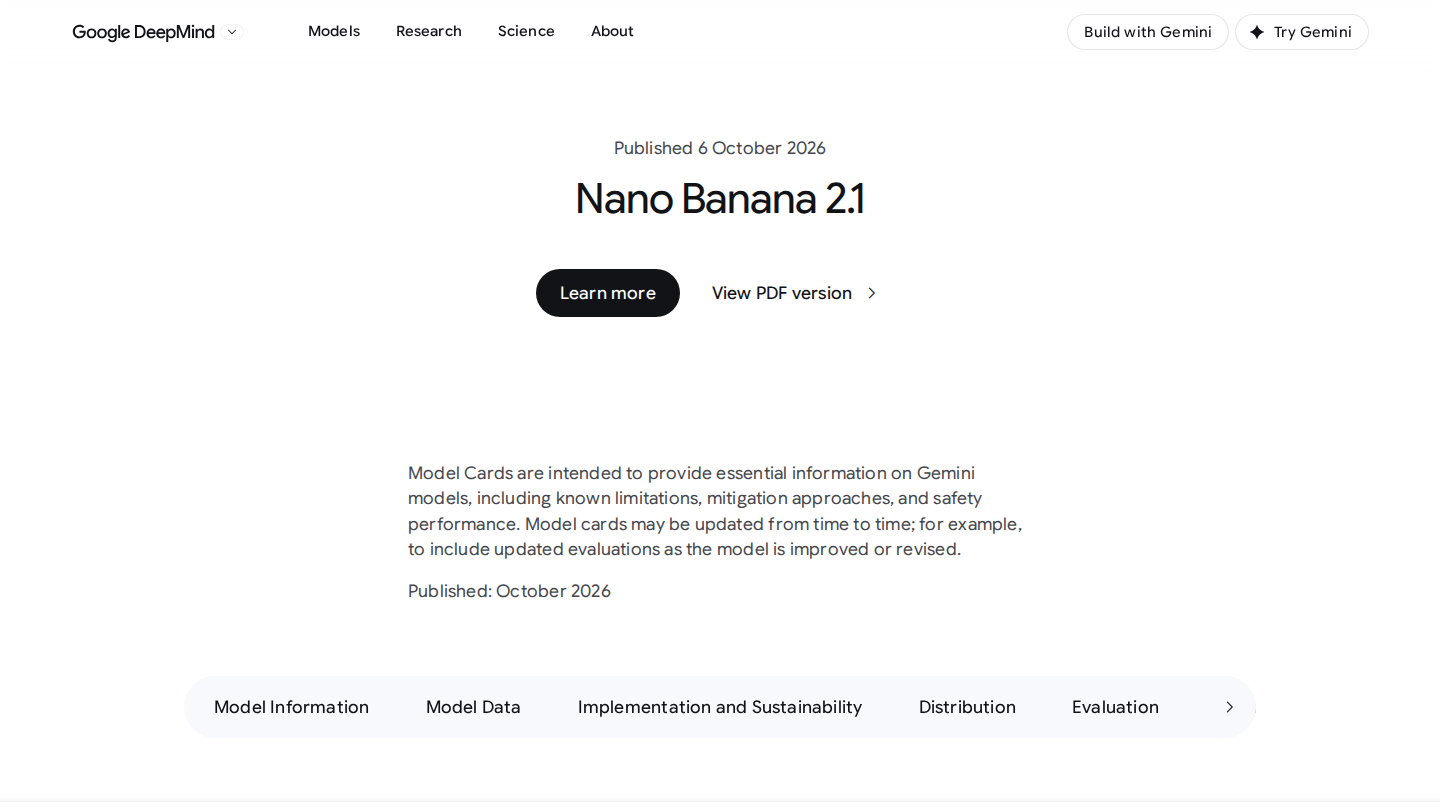
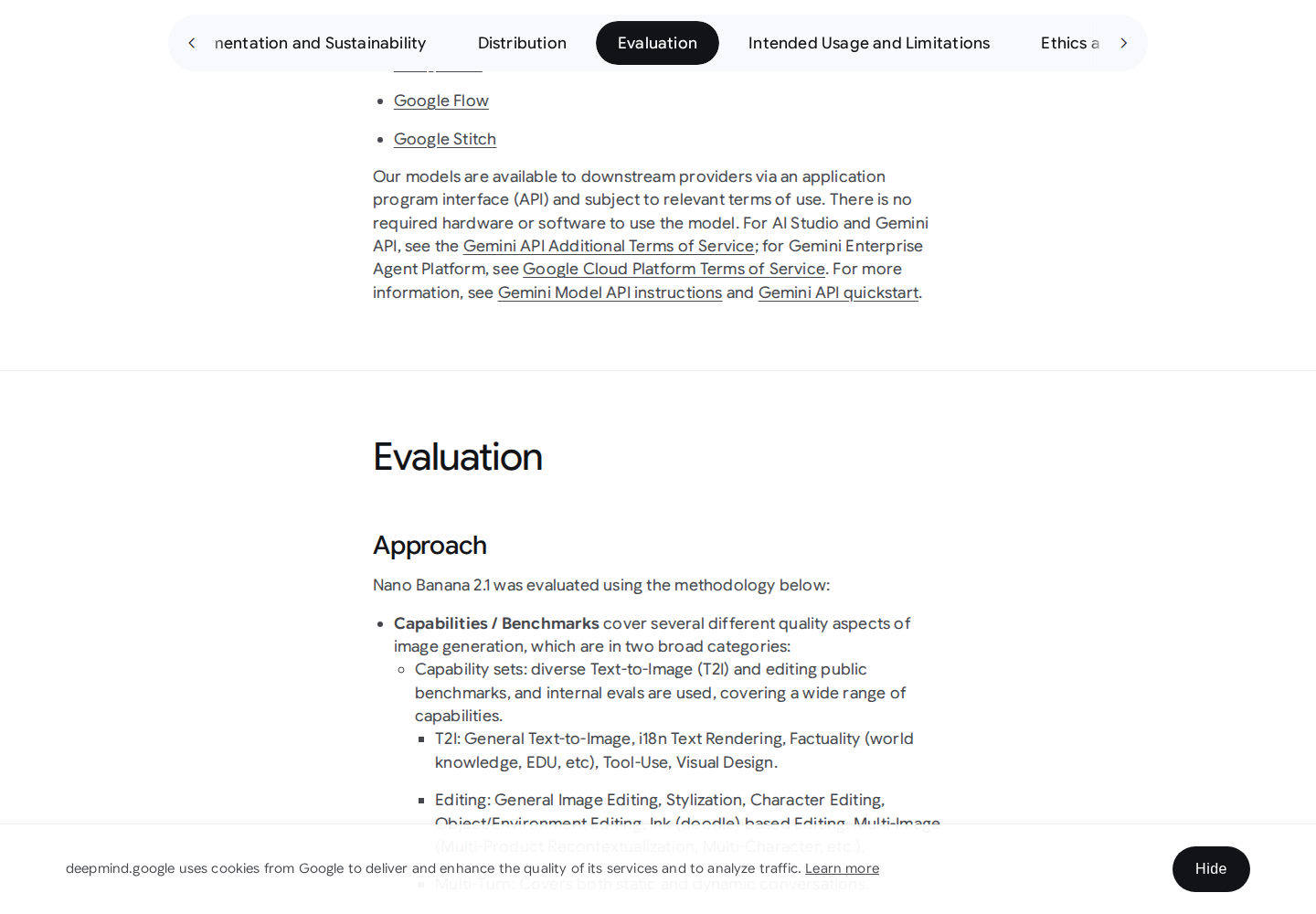
We read the full official model card. For people who make visual content for a living, four improvements stand out:
- Character consistency got the biggest jump. In Google's side-by-side preference evaluations, the new model scored 1106 Elo on multi-character consistency versus 978 for the previous generation. In practice: the illustrated mascot or virtual host you designed keeps its face from one image to the next — historically the hardest part of visual series work.
- Text rendering inside images improved clearly. The card highlights "clear text for posters and intricate diagrams" with localized, multilingual rendering. Small text and page-length text remain acknowledged weak spots.
- Infographics got a factuality score for the first time: 0.521 versus 0.179 for the previous generation — nearly triple the accuracy in keeping the numbers and facts you asked for inside the design.
- Up to 14 reference images per request, maintaining up to 4 characters and 10 objects, plus optional Google Search grounding for designs that need fresh, accurate information.
The price cut, in numbers
This is the part that changes budgets. Per-image pricing through the Gemini API now stands at:
| Resolution | Nano Banana 2.1 (new) | Nano Banana 2 (old) | Change |
|---|---|---|---|
| 1K | 3.36¢ ($0.0336) | 6.70¢ | -50% |
| 2K | 5.04¢ ($0.0504) | 10.10¢ | -50% |
| 4K | 7.56¢ ($0.0756) | 15.10¢ | -50% |
For comparison, Nano Banana Pro still costs 13.4¢ per 1K image and 24¢ at 4K. The new model delivers most of the advanced editing toolkit at roughly a fifth of Pro's price. Note that these rates apply to API usage — if you generate images inside the Gemini app, your plan's limits apply instead.
One deadline worth flagging: Google's deprecations page lists the previous gemini-3.1-flash-image model for shutdown on October 29, 2026. If your tools or scripts call it, plan the migration now.
What this means for your content workflow
- Product visuals at scale get cheaper. A 500-image batch at 1K drops from about $34 to under $17. For a small e-commerce brand running seasonal campaigns, that's a real line-item change.
- Branded character series become practical. Consistency across scenes was the single most-requested capability in image tools; the official evals now lead with it.
- Posters with real headlines. Multilingual text rendering improvements mean fewer retries to get a short, correct headline inside a design.
- Infographics that respect your data. The factuality jump matters most for publishers and educators — the number you type is the number that renders.
- A reusable visual style system. Fourteen reference images are enough to encode a brand's look once and apply it to everything that follows.
If you pair this with a solid prompt workflow, the economics compound: the same reference set you build once keeps paying off on every new image, the approach we walk through in our step-by-step Nano Banana guide.
Quick comparison: which model should you pick today?
| Nano Banana 2.1 | Nano Banana Pro | ChatGPT images | |
|---|---|---|---|
| Best for | Daily editing, series, infographics | Complex photorealistic scenes | Quick images inside a chat |
| Price per 1K image (API) | $0.0336 | $0.134 | Within ChatGPT plans |
| Character consistency | Current Google family leader | Good | Moderate |
| Text in image | Clearly improved | Good | Improved |
For the full Google-versus-OpenAI picture — where each model wins on writing-heavy versus design-heavy work — our detailed comparison article still holds up; just read today's pricing news into it.
Honest limits, before you get excited
To its credit, Google's own model card lists the weaknesses plainly:
- Small text is often blurry, and page-length text is a stated weak point.
- Character consistency is "not always perfect" between input images and outputs — the card says so explicitly.
- Early hands-on reviews (The Decoder's test, for example) found the model can struggle with scale — their horse came out pony-sized — and Pro still wins some complex photorealistic scenes.
- Knowledge cutoff is March 2026, so designs tied to later events need Search grounding or your own references.
How to try it today
Three entry points, in increasing order of control: the Gemini app on your phone (rolling out gradually — try updating), AI Studio for full option control, or the API if you're building a product. And if you produce content in Arabic as well as English, note that ARWriter ships a ready-made image prompt library tuned for the Nano Banana family — worth a look if bilingual visuals are part of your week.
Frequently asked questions
Is Nano Banana 2.1 free to use?
Inside the Gemini app it's rolling out within normal free-tier limits. Through the API it's paid: 3.36¢ per 1K image.
How much does one image cost?
3.36¢ at 1K, 5.04¢ at 2K, and 7.56¢ at 4K — roughly half the previous generation's price at every resolution.
What's the difference between Nano Banana 2.1 and Nano Banana Pro?
2.1 runs on Gemini 3.6 Flash: faster, far cheaper, and currently the family's best at character consistency and infographics. Pro runs on Gemini 3 Pro and remains stronger for complex photorealistic work, at roughly four times the price.
Does it render non-English text inside images?
Google's card highlights localized, multilingual text rendering as a strength. Short headlines generally work well; long, small, or page-filling text remains a weak spot.
When does the old model shut down?
Google has set October 29, 2026 as the shutdown date for the previous gemini-3.1-flash-image model on the API.
The bottom line
Nano Banana 2.1 is the first time Google's "everyday" image tier inherits the family's flagship strengths — character consistency, multilingual text, factual infographics — at a price that undercuts much weaker tools. For creators working on a budget, October 6 was a good day. And if your workflow mixes writing, images, and scheduling in Arabic and English, you can run all of it from one place with ARWriter.