How to Use NordVPN on Android and iPhone: Complete Guide 2026
Your phone goes everywhere you go. It connects to coffee shop Wi-Fi, airport networks, hotel internet, and cellular towers across borders. Every one of those connections is a potential privacy risk — and that is exactly why setting up a VPN on your mobile device matters more than on any other platform.
NordVPN is one of the most widely used VPN services globally, with over 15 million users and 9,300+ servers across 130+ countries. But having the subscription is only half the battle. Knowing how to configure the app properly — which features to enable, which servers to choose, and how to troubleshoot when things go wrong — makes the difference between real protection and a false sense of security.
This guide walks you through everything: installation on both Android and iPhone, the features that matter most on mobile, platform-specific differences you should know about, and practical troubleshooting for common issues.
Disclosure: Some links in this article are referral links. We may earn a small commission when you make a purchase through them, at no extra cost to you. This helps us keep providing free content, and does not affect our recommendations.
Prerequisites: What You Need Before Installing
Before downloading the NordVPN app, you need two things:
-
An active NordVPN subscription. NordVPN does not offer a free tier. The most cost-effective plan is the 2-year Basic at $3.09/month (billed as $83.43 upfront). You can get started through this link: Get NordVPN.
-
Your account credentials. After subscribing, you will receive a confirmation email with your login details. You will use these to sign into the mobile app.
NordVPN allows up to 10 simultaneous device connections per subscription, so you can install it on your phone, tablet, computer, and other devices without paying extra.
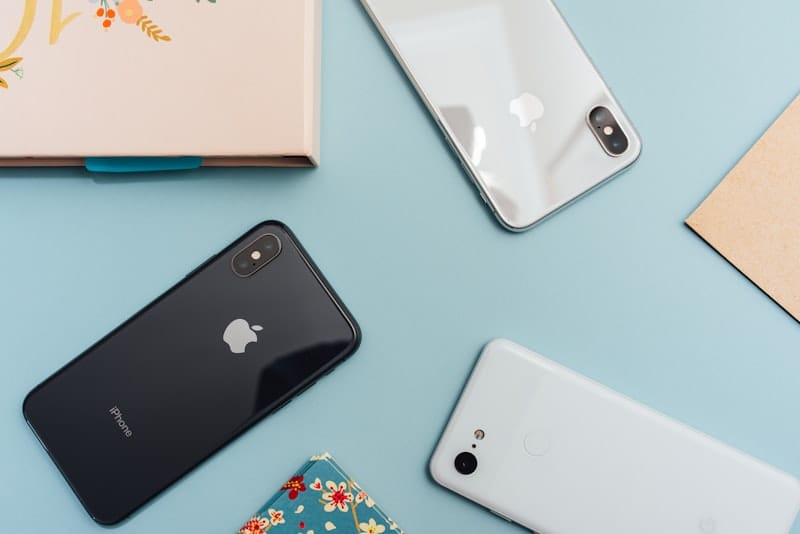
Setting Up NordVPN on Android (Step-by-Step)
The Android app is available on the Google Play Store in all countries. Here is the complete setup process:
Step 1: Download and Install
Open the Google Play Store, search for "NordVPN," and look for the app developed by "Nord Security" with over 50 million downloads. Tap Install and wait for the download to complete.
Alternatively, you can download the APK directly from NordVPN's website if the Play Store is unavailable in your region.
Step 2: Sign In or Create an Account
Launch the app. If you already have a subscription, tap Log In and enter your email and password. If you subscribed through Google Play, you can use the Sign in with Google option.
New users can tap Sign Up to be redirected to NordVPN's website to choose a plan.
Step 3: Grant VPN Permissions
When you first connect to a server, Android will display a system warning: "NordVPN wants to set up a VPN connection that allows it to monitor network traffic. Only accept if you trust the source."
This is a standard Android prompt for all VPN apps. Tap OK to allow the VPN configuration.
Step 4: Connect Using Quick Connect
The large blue button at the center of the screen is Quick Connect. Tap it, and NordVPN automatically selects the fastest server based on your location and current server load.
For most users, Quick Connect is the best starting point. NordVPN's algorithm considers ping, server proximity, and load to pick the optimal server.
Step 5: Manual Server Selection
If you want to connect to a specific country or city, tap the map pin icon or the country list below the Quick Connect button. You can browse by:
- Countries: 130+ options, alphabetically sorted
- Cities: Available in major countries (US has 15+ cities, UK has 5, Germany has 3)
- Specialty servers: P2P, Double VPN, Onion Over VPN, Dedicated IP
Star your frequently used servers by tapping the bookmark icon next to them. They will appear in your Favorites tab for quick access.
Setting Up NordVPN on iPhone and iPad (Step-by-Step)
The iOS app is available on the App Store globally, though some users in certain regional stores report difficulty finding it. If you cannot locate it, search for "NordVPN - Fast & Secure VPN" by Nord Security.
Step 1: Download and Install
Open the App Store, search for NordVPN, and tap Get to download. The app requires iOS 15.0 or later.
Step 2: Sign In
Launch the app and sign in with your NordVPN credentials. If you subscribed through the App Store, use Sign in with Apple.
Step 3: Allow VPN Configuration
When you first connect, iOS will prompt: "NordVPN" Would Like to Add VPN Configurations. Tap Allow and authenticate with Face ID, Touch ID, or your passcode.
This step is mandatory — without it, the VPN cannot route your traffic.
Step 4: Connect
Just like Android, the main screen features a prominent Quick Connect button. Tap it to connect to the fastest available server, or browse the country list to pick a specific location.
Once connected, you will see a green indicator in the app and a VPN icon in your iPhone's status bar at the top of the screen.
Step 5: Enable Widgets (iOS Exclusive)
iOS offers home screen widgets that let you connect or disconnect without opening the app. To add one:
- Long-press your home screen
- Tap the + icon in the top-left corner
- Search for "NordVPN"
- Choose between a small (quick connect) or medium (server selection) widget
- Tap Add Widget
This is a genuinely useful feature that Android does not offer — having a one-tap connect button right on your home screen saves several steps.
Key Settings Every Mobile User Should Configure
Installing the app is not enough. These are the settings that separate users who are actually protected from those who just think they are.
Kill Switch — Essential for Security
The Kill Switch cuts your internet connection the moment the VPN disconnects. Without it, a dropped VPN connection silently exposes your real IP address — particularly dangerous on public Wi-Fi.
On Android: Settings > Kill Switch > Enable. You can choose between: - System-wide Kill Switch: Blocks all internet traffic - App-specific Kill Switch: Only blocks selected apps (useful if you want Chrome protected but not your messaging app)
On iPhone: Settings > Kill Switch > Enable. iOS only supports a system-wide Kill Switch due to platform limitations.
Enable this immediately after installation. There is no scenario where you should leave it disabled on mobile.
Threat Protection Lite — Ad and Malware Blocking
Threat Protection Lite blocks ads, trackers, and known phishing domains at the network level. It is the mobile version of NordVPN's desktop Threat Protection feature.
Enable it: Settings > Threat Protection > Enable
On Android, it also blocks malicious downloads. On iOS, it focuses primarily on DNS-level ad and tracker blocking.
For a deeper look at what this feature can do, check out our guide on NordVPN Threat Protection explained.
NordLynx Protocol — Keep It Default
NordLynx is NordVPN's implementation of WireGuard, and it is the fastest protocol available. In NordVPN's internal testing across 256,886 speed tests, NordLynx delivered significantly higher throughput than both OpenVPN and IKEv2.
Verify it is active: Settings > VPN Protocol > NordLynx
It should be the default, but always confirm after a fresh install. Switch to OpenVPN (UDP) only if you encounter compatibility issues on restrictive networks.
Auto-Connect — Hands-Free Protection
Auto-Connect lets NordVPN automatically establish a VPN connection whenever you join an untrusted Wi-Fi network.
Configure it: Settings > Auto-Connect > Enable
You can set it to trigger on: - Untrusted Wi-Fi networks only - All Wi-Fi networks - All networks (including cellular)
For most users, "Untrusted Wi-Fi networks" is the right balance. It protects you on public networks without constantly running the VPN on cellular data.
Android vs iPhone: Feature Differences You Should Know
NordVPN's mobile apps are not identical. Here are the key differences:
| Feature | Android | iPhone |
|---|---|---|
| Split Tunneling | Yes (app-level) | No |
| Specialty Servers (P2P, Double VPN, Onion) | Yes | Yes |
| Threat Protection Lite | Yes | Yes |
| Kill Switch | System-wide + App-level | System-wide only |
| Home Screen Widgets | No | Yes |
| Server Switching from Notification | Yes | No |
| Meshnet | Yes | Yes |
| Dedicated IP | Yes | Yes |
| Obfuscated Servers | Yes | Yes |
Split tunneling is the biggest differentiator. On Android, the Bypasser feature lets you route specific apps through the VPN while others use your direct connection. For example, you can route your banking app through the VPN while keeping WhatsApp on your regular connection to avoid speed issues with voice calls.
On iPhone, Apple's sandbox restrictions prevent third-party VPN apps from offering per-app routing. If split tunneling is critical for your workflow, Android is the better platform choice.
Using Meshnet on Mobile: Connect Your Phone to Your PC
Meshnet is one of NordVPN's most underused features. It creates an encrypted private network between your devices — up to 60 of them — allowing secure remote access without traditional VPN server routing.
What Meshnet Does on Mobile
Meshnet lets you: - Route traffic through another device: Browse the internet from your phone using your home PC's IP address - Access files remotely: Connect to shared folders on your desktop from anywhere - Remote desktop access: Use your phone to control your computer - Share Meshnet access with friends: Invite up to 60 external devices
Setting Up Meshnet
- Open the NordVPN app on your phone
- Tap the Meshnet tab at the bottom of the screen
- Toggle Enable Meshnet
- Open NordVPN on your PC or Mac and enable Meshnet there too
- Your devices will appear in each other's Meshnet device lists
To route your phone's traffic through your PC, select the PC in your Meshnet device list and tap Route traffic through this device.
This is particularly useful for accessing region-locked content on your phone by routing through a PC located in a different country, or for securely accessing your work computer while traveling.
Meshnet is included free with all NordVPN plans. If you do not yet have a subscription, you can get one here: Start using NordVPN and Meshnet.
Troubleshooting Common Mobile Issues
Even the best VPN apps encounter problems. Here are the most common NordVPN mobile issues and how to fix them.
NordVPN Will Not Connect
Likely causes and fixes:
-
Network blocking VPN traffic. Some corporate and hotel Wi-Fi networks block VPN protocols. Switch your protocol to OpenVPN TCP or try NordWhisper (if available), which disguises VPN traffic as regular HTTPS traffic.
-
Server overload. If a specific server will not connect, try Quick Connect to let the algorithm pick a different one, or manually select an alternative server in the same country.
-
Outdated app version. Check the Play Store or App Store for updates. NordVPN releases patches regularly to address connectivity issues.
-
Corrupted VPN profile (iPhone). Go to Settings > General > VPN & Device Management. Delete any NordVPN profiles, then reopen the app and reconnect to create a fresh profile.
Connection Drops Frequently
- Enable Kill Switch to protect against drops (see above).
- Switch from NordLynx to IKEv2 — IKEv2 handles network transitions (Wi-Fi to cellular) better than WireGuard.
- Disable battery optimization for NordVPN (Android): Settings > Apps > NordVPN > Battery > Unrestricted. Android's aggressive battery management can kill VPN background processes.
Slow Speeds on Mobile
- Choose a closer server. Distance is the biggest factor in VPN speed. If you are in Singapore, connecting to a Tokyo server will always be faster than a New York server.
- Use NordLynx. It consistently outperforms OpenVPN and IKEv2 in speed tests.
- Avoid Double VPN for daily use. Double VPN chains traffic through two servers, which adds significant latency. Reserve it for situations requiring maximum anonymity.
- Try different servers in the same city. Server load varies. NordVPN does not display real-time load on mobile, but if one server is slow, another in the same city may be faster.
App Crashes or Freezes
- Clear the app cache (Android): Settings > Apps > NordVPN > Storage > Clear Cache
- Reinstall the app. If crashes persist, uninstall and reinstall from the official store.
- Check for iOS updates. iOS compatibility issues are usually patched quickly.
Battery Impact and Optimization Tips
Running a VPN continuously on your phone does consume more battery. The encryption and decryption process requires CPU cycles, and maintaining a persistent connection prevents the phone from entering low-power sleep states during network activity.
How Much Battery Does NordVPN Use?
In real-world testing, NordVPN running continuously adds approximately 5-12% additional battery drain over a full day of use, depending on: - Protocol: NordLynx is more efficient than OpenVPN - Connection stability: Frequent reconnects (switching between Wi-Fi and cellular) drain more battery - Threat Protection: Adds a small amount of DNS processing overhead - Server distance: Distant servers require more retransmissions, using more battery
Tips to Reduce Battery Impact
- Use Auto-Connect on untrusted Wi-Fi only instead of all networks. This prevents the VPN from running when you are on your trusted home network.
- Keep NordLynx as your protocol. Its lean codebase uses fewer CPU cycles than OpenVPN.
- Disable Threat Protection Lite on cellular if you are concerned about battery. Enable it only on Wi-Fi.
- Use Split Tunneling (Android) to exclude apps that do not need VPN protection from consuming encrypted bandwidth.
- Avoid P2P servers on mobile. File sharing generates sustained traffic that heats the phone and drains battery quickly.
Server Selection Strategy for International Users
Choosing the right server matters for speed, latency, and content access. Here is a practical framework:
For Speed and Low Latency
Pick the geographically closest server to your actual location. If you are in Germany, connect to Frankfurt. If you are in Japan, connect to Tokyo. Physics cannot be beaten — every 1,000 km adds roughly 5-15ms of latency.
For Streaming
Connect to a server in the country whose content library you want to access. NordVPN unblocks 14 of 17 tested Netflix regions. For US Netflix, the New York server worked 10 out of 10 times in testing.
For a comparison of how NordVPN stacks up against competitors for streaming and overall performance, see our NordVPN vs ExpressVPN comparison.
For Privacy
If your threat model includes government surveillance, use Double VPN (routes through two servers in different jurisdictions) or Onion Over VPN (routes through Tor after the VPN).
For Countries with VPN Restrictions
If you are traveling to countries that block VPN traffic (China, Iran, Turkey), enable Obfuscated Servers in Settings. These hide VPN traffic as normal HTTPS traffic, making it harder to detect and block.
NordVPN Mobile vs Built-In Alternatives
Both Android and iOS now offer built-in privacy features that some users mistake for full VPN replacements:
Android Built-In VPN
Android has a system-level Always-on VPN setting (Settings > Network & Internet > VPN), but this is just a toggle that keeps a third-party VPN always running. It is not a VPN itself.
Apple iCloud Private Relay
Apple's iCloud Private Relay (iOS 15+) encrypts Safari traffic and routes it through two servers. However, it only protects Safari traffic — not other apps, streaming, or gaming. It also does not hide your IP from the destination website (it uses a dual-hop system where the second server knows your IP).
Neither built-in option replaces a full VPN. If you need app-wide encryption, IP masking, and server location switching, NordVPN (or any dedicated VPN) is still necessary.
Is NordVPN Right for Your Phone?
NordVPN's mobile apps are solid. The Android app scores 8.5/10 and the iOS app scores 9/10 in independent testing. With features like Quick Connect, Kill Switch, Threat Protection, and Meshnet, the mobile experience covers the vast majority of use cases.
The main drawback is the 10-device limit. If you have more than 10 devices across your household, consider Surfshark, which offers unlimited devices at a lower price point. But for most users, 10 simultaneous connections is more than enough.
If you want to get started, you can sign up through this link: Get NordVPN with current discount. The 30-day money-back guarantee means you can test it on your devices risk-free.
For content creators and tech bloggers writing VPN guides like this one, ArWriter.ai offers AI-powered writing tools that help you produce SEO-optimized articles in both English and Arabic. From tutorial posts to product comparisons, you can turn your technical knowledge into polished content efficiently. Try ArWriter.ai.
Frequently Asked Questions
How do I set up NordVPN on my Android phone?
Download the NordVPN app from the Google Play Store, sign in with your account credentials, tap Quick Connect to automatically connect to the fastest server, and tap OK when Android prompts you to allow VPN configuration. The entire process takes under two minutes.
How do I use NordVPN on my iPhone or iPad?
Download the app from the App Store, sign in, tap Quick Connect, and tap Allow when iOS asks to add VPN configurations. You will see a VPN icon in your status bar confirming the connection. You can also add a home screen widget for one-tap access.
Does NordVPN work on both Wi-Fi and cellular data?
Yes. NordVPN encrypts all internet traffic on your phone regardless of the connection type — Wi-Fi, cellular (4G/5G/3G), or even USB tethering. You can configure Auto-Connect to activate the VPN automatically on untrusted networks only, or on all networks.
Can I use NordVPN on multiple phones with one subscription?
Yes. Each NordVPN subscription allows up to 10 simultaneous device connections. You can install the app on multiple phones, tablets, computers, and other devices, and they can all connect at the same time.
Why is NordVPN not connecting on my phone?
The most common causes are network-level VPN blocking (try switching to OpenVPN TCP or NordWhisper protocol), server overload (try Quick Connect for an alternative), outdated app version, or corrupted VPN profiles (delete and recreate the profile on iPhone). Enabling the Kill Switch ensures you are never exposed during connection attempts.
How much battery does NordVPN use on mobile?
NordVPN typically adds 5-12% additional battery drain over a full day of continuous use. You can reduce this by using NordLynx protocol, enabling Auto-Connect on untrusted Wi-Fi only, and using split tunneling (Android) to exclude apps that do not need VPN protection.
Does NordVPN have split tunneling on iPhone?
No. Split tunneling (the ability to route specific apps through the VPN while others use the direct connection) is only available on Android. Apple's iOS sandbox restrictions prevent third-party VPN apps from implementing per-app routing.
How do I choose the fastest server on NordVPN mobile?
Tap Quick Connect to let NordVPN automatically select the fastest server based on your location and server load. For manual selection, choose the geographically closest server to minimize latency. You can star frequently used servers for quick access.