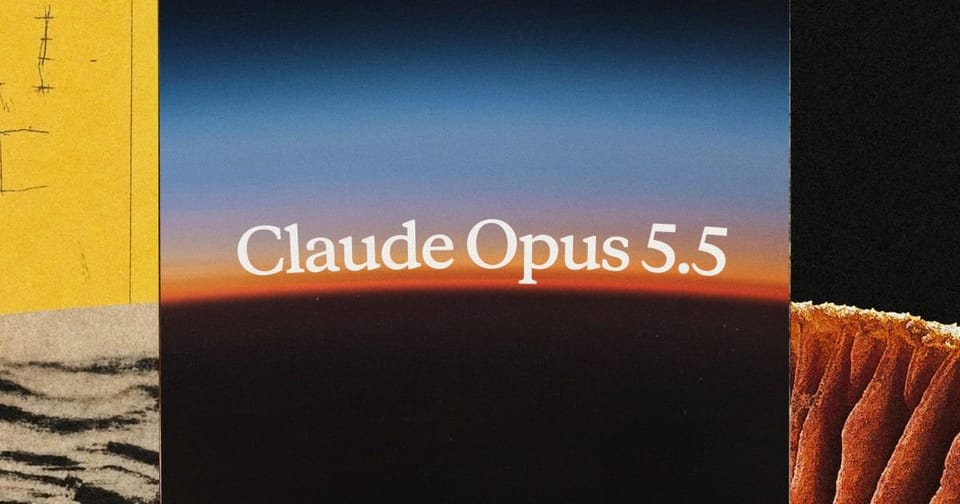
On September 22, 2026, Anthropic released Claude Opus 5.5, the first model of the Claude 5.5 generation — and it arrives with a proposition content professionals rarely get: near-flagship intelligence at a mid-tier bill. Anthropic positions it as delivering Fable 5.1-level performance on most work at roughly 40% lower cost than Opus 5, and the company has already confirmed that Sonnet 5.5 and Haiku 5.5 are "coming in the next few weeks."
The announcement lives on the official Anthropic page, with same-day coverage from TechCrunch. If you write, edit, research, or run a content operation that leans on AI, this launch changes your cost math more than your workflow — and that distinction matters.
The new pricing, line by line
Everything below is quoted directly from the announcement, per million tokens:
| Line item | Opus 5 | Opus 5.5 |
|---|---|---|
| Input | $5 | $4 |
| Output | $25 | $20 |
| Cache reads | $0.50 | $0.20 |
| Cache writes | $6.25 | $5 |
There is also a Fast mode available in Claude Code and on the Claude Platform — up to 2.5x faster generation — priced at $8 input / $40 output per million tokens. Anthropic sums it up as ~40% cheaper on typical workloads than Opus 5, with output generated more than 30% faster.
Where the performance claims stand
The headline number is GDPval-AA v2.1, an aggregate benchmark for professional knowledge work: Opus 5.5 scored 1846 Elo, ahead of both Fable 5.1 (1735) and Opus 5 (1708). On Terminal-Bench 4.0 it posted 66.4%, beating Fable 5.1 (55.8%), Opus 5 (52.3%), and — notably — OpenAI's GPT-6 Astra (57.9%). On CursorBench 4.0 it lands at 57.8%, which Anthropic says beats GPT-5.6 Sol by 11 points at about a third of the cost.
Translate the benchmark-speak into desk terms and it reads like this: the model that used to be your "splurge" tier is now priced like your everyday tier, and in several categories it doesn't even ask you to compromise.
Why writers and publishers should care
The most underrated part of this release isn't a benchmark at all — it's the collaboration style. Anthropic says Opus 5.5 communicates more naturally: it front-loads the key information, drops unnecessary jargon, and actually follows the writing rules you set (tone, length, audience). One corporate tester, Box, reported answers roughly 40% less verbose while consuming a third of the tokens Opus 5 used, with no accuracy loss.
For anyone producing content at volume, that combination — terser first drafts, fewer rewrite loops, cheaper cache-heavy sessions — is exactly where monthly costs actually move. If you're currently running workflows like the ones we mapped in our Opus 5 creator guide, this is a straight upgrade path: same pipelines, lighter invoices.
What this means for you as a working creator
- API builders: input and output both drop 20% on paper, but with cache reads at $0.20 the announced net saving reaches ~40% on typical workloads — the difference compounds across hundreds of pieces per month.
- claude.com subscribers: 5-hour usage limits went up across Pro, Max, Team, and seat-based Enterprise plans, and subscribers can now "bank" a rate-limit reset — longer writing sessions before the wall.
- Availability: the model is live on the Anthropic API as
claude-opus-5-5and on AWS, Google Cloud, and Microsoft Azure — no regional surprises versus the previous generation. - Language coverage: no language-specific upgrades were announced; international users inherit the general style improvements, so test on your own material before committing.
Three scenarios from a working content desk
To make the numbers concrete: Scenario one — archive refreshes. You have 200 older articles needing updates. On Opus 5, a typical pass (3,000 tokens of context in, a 2,500-word rewrite out) cost roughly 40 cents; on Opus 5.5 with caching, that lands near 24 cents — and the clearer first drafts mean fewer retry loops, which is where the real savings compound. Scenario two — weekly research briefs. A 5,000-word brief that reuses a shared instruction file across multiple clients benefits most, because the cache stores your common instructions and rereads them at $0.20 instead of re-billing full price every run. Scenario three — deadline mode. Fast mode at up to 2.5x speed roughly halves a drafting session when time, not money, is the binding constraint. It costs double per token, so treat it as a scalpel, not a default.
There is also wider context worth naming: this launch landed on the same day OpenAI cut GPT-6 Sol to $2/$10 per million tokens. Within hours, the market moved from "one sensible mid-tier option" to an outright price war between the two professional-grade lineages. Token buyers — that is, anyone producing content at volume — are the direct beneficiaries.
Quick comparison: what should you run today?
| Model | Input/Output per 1M tokens | Best fit |
|---|---|---|
| Claude Opus 5.5 | $4 / $20 | Long-form drafts, deep research, serious rewriting, client work |
| Claude Fable 5.1 | Premium tier (not re-priced in the announcement) | Genuinely hard problems where the last 5% justifies the spend — see our Fable 5.1 coverage |
| Claude Opus 5 | $5 / $25 | Hard to justify today: same role, higher bill |
| GPT-6 Sol (OpenAI) | $2 / $10 | High-volume everyday writing at half the price — full breakdown in our GPT-6 Sol and Luna piece |
Honest limits before you switch
- Thinking is now always on. You can no longer disable thinking mode — great for quality, but simple tasks will burn more tokens than a bare-bones setting would.
- It is not #1 everywhere. On Zapier's AutomationBench it scored 40.0%, behind GPT-6 Astra's 41.4%; on Terminal-Bench-Science it trails Astra 58.7% to 64.6%.
- Safeguard routing: cyber and life-science tasks get redirected through verification programs to other models, which Anthropic acknowledges depressed some benchmark scores — relevant if your content touches those fields.
- Unstated specs: the announcement does not list the context window or knowledge cutoff; check the official docs before architecting around them.
Frequently asked questions
How much does Claude Opus 5.5 cost?
Via the API: $4 per million input tokens and $20 per million output tokens, with cached reads at $0.20. That is 20% below Opus 5 on the sticker lines and roughly 40% cheaper on typical workloads once caching and speed improvements factor in.
Is Opus 5.5 better than Fable 5.1?
On most professional work it matches or trails closely at a much lower price, and it actually beats Fable 5.1 on GDPval-AA and Terminal-Bench 4.0. Fable remains the pick for maximally complex tasks where cost is secondary.
Can I use Claude Opus 5.5 inside ChatGPT?
No — Claude and ChatGPT are competing products from different companies. Opus 5.5 is available through claude.com subscriptions, the Anthropic API, and AWS, Google Cloud, and Azure.
Is it available worldwide?
The rollout matches previous Anthropic releases: the API and cloud partners are global, and subscription tiers (Pro, Max, Team, Enterprise) get higher 5-hour limits. No new regional restrictions were announced.
Should a solo creator upgrade?
If you already pay for Claude: yes — higher limits alone justify it. If you build on the API, Opus 5.5 just replaced Opus 5 as the sensible default for long-form and research-heavy content work. And if your usage is light (a few dozen calls a month), consider waiting the two weeks until Sonnet 5.5 lands — deciding with the full family on the table is cheaper than deciding twice.
How does this compare to GPT-6 Sol, announced the same day?
OpenAI's GPT-6 Sol undercuts Opus 5.5 at $2/$10 per million tokens. The trade-off is character: Anthropic sells output quality per token and finer stylistic control, while OpenAI sells raw price efficiency. Teams with style-sensitive copy that gets a light human edit will lean Claude; high-volume, simpler text skews OpenAI. Plenty of desks will end up running both — Sol for first drafts, Opus 5.5 for final polish.
The bottom line
Opus 5.5 quietly redraws the value line of the Claude family: flagship-adjacent output for everyday money. Pair it with a workflow that keeps humans in the loop — research, drafting, scheduling, and publishing can run through a single hub like ARWriter's auto-writer — and the model change becomes a margin change, not just a news item. That is the part of the story benchmarks will never show you.