App Release Notes with AI (2026): "What's New" Copy That Re-Engages Users
Last updated: October 2026
It is Friday, 4 p.m., and version 4.2 ships in an hour. The build is signed, the screenshots are uploaded, and the What's New field still says "bug fixes and improvements," typed six releases ago. That field is the only text every existing user can be shown at the exact moment they decide whether your app still deserves a place on their phone. Modern app release notes best practices treat it as a retention channel with its own copy process, and AI has made that process fast enough to run every sprint.
App release notes best practices in 2026 come down to three moves: write benefit-led copy ordered by importance, respect the two formats separately (up to 4,000 characters at Apple, 500 at Google Play), and repurpose one changelog into What's New text, push copy, in-app modal text, and review replies. AI generates all of it from a single input in under an hour.
The update text nobody plans and every user sees
Apple places your What's New text on the product page and on the Updates tab, and asks you to list changes "in order of importance." Google Play shows recent changes directly in the listing. Between the two stores, an update is not paperwork; it is a message delivered to your entire installed base at once.
The scale is easy to underestimate. Apple's 2025 Transparency Report figures show more than 46.6 billion automatic app updates happening every single week. Google Play saw over 100 billion downloads in 2025. An update event pushes your app name, icon, and notes in front of more people than most email lists you will ever build, and unlike email, it arrives with the app already installed.
One honesty note before the tactics: there is no credible public study measuring what share of users read release notes, and any percentage you have seen quoted was invented. What is verifiable is placement and consequence. The notes appear where update decisions happen, they are indexed by neither store for ranking, and AppTweak's Play checklist notes that featuring may favor apps updated within the last 30 days. The copy's job is re-engagement, and its audience is everyone who already said yes once.
Two stores, two fields: 4,000 characters at Apple, 500 at Play
The same update needs two different artifacts. Writing one line and pasting it into both consoles wastes one of the two formats every time.
| Field | Store | Limit | Where users see it | When you can edit it |
|---|---|---|---|---|
| What's New | App Store | 4,000 characters | Product page and Updates tab | With a new version only |
| Promotional text | App Store | 170 characters | Above the description on the product page | Anytime, no release needed |
| Recent changes | Google Play | 500 characters | What's new section of the listing | Ships with the release |
| Full description | Google Play | 4,000 characters | Below the fold of the listing | Editable in console |
| Short description | Google Play | 80 characters | Above the fold of the listing | Editable in console |
| In-app update modal | Yours | No store limit | Inside your app after update | You control it fully |
The Apple limit of 4,000 characters is documented by Apple, which also notes the field is required for every version after the first and can be localized. The Play 500-character cap for recent changes shows as a live counter in Play Console and is community-documented rather than restated on the current help pages, so trust the console counter when you write. For the surrounding listing fields, our store description guide covers limits and indexing in depth.
Why "bug fixes and improvements" wastes the slot
The lazy line fails on three counts. It hides genuinely valuable work from the people it serves. It gives lapsed users no reason to reopen the app. And it reads as if nobody at the company cared enough to write a sentence, which is itself a brand statement.
Compare three honest rewrites of the same lazy line, matched to what actually shipped.
You cut the crash rate by 40%: "We found and fixed the bugs that were crashing the app for some of you. If you still hit one, shake your phone to report it straight from the app." The rewrite turns invisible engineering work into a visible promise of stability.
You rebuilt search to be twice as fast: "Search is now twice as fast. Results load as you type, and your recent searches are one tap away." Two sentences, zero jargon, and the user understands exactly what got better.
You genuinely shipped only minor fixes: "This version tidies up a few rough edges and keeps things running smoothly. Big things are coming next update." Honest, warm, and it plants a hook for the next release instead of pretending gravel is gold.
Notice what all three share: outcomes instead of tickets, plain words instead of changelog shorthand, and a forward-looking close. That is the register AI reproduces reliably when you show it examples, which is exactly what the next section operationalizes.
How to turn a changelog into release notes with AI, step by step
Run this chain on every release. It takes 30 to 45 minutes once it is part of your routine.
- Paste the raw changelog with context. Give the model your tickets, but also two sentences of context: who uses the app and what changed for them. Prompt: "You are an app marketing copywriter. Here is the raw changelog for APP NAME, a one-line description of the app, and its audience. Turn the changelog into an App Store What's New text of at most 600 characters. Lead with the single most user-visible change as one benefit sentence. Follow with three to five bullets written as outcomes, not tickets. Group minor fixes into one closing line. No jargon, no emoji abuse, no fake excitement."
- Write the Play version as a separate compression task. Prompt: "Compress this changelog into Google Play recent changes copy with a hard limit of 500 characters. Structure: one hook line saying what is new and why it matters, up to three outcome bullets, and one trust line about stability or privacy. Output the character count." The two stores get different lengths and different structures on purpose.
- Generate the anytime channel. Ask for a 170-character promotional text variant that works year-round, because that field is the only Apple listing text you can change without a release. You will use it between versions to keep the page current.
- Run an honesty pass. Prompt: "Review this update copy. Flag any claim that overstates what shipped, any benefit a user could not verify after updating, and any sentence that sounds like marketing but carries no information. Rewrite the flags." This step is what keeps AI-assisted notes from drifting into the overclaiming that fuels bad reviews.
- Human-edit the first line. The opening sentence carries the truncation on both stores, so read it on its own. If it does not name a benefit a user cares about, rewrite it by hand. AI gives you ten candidates; judgment picks the one.
- Schedule the review sweep. One week after release, pull the reviews mentioning the update and feed them back with: "Draft two replies to these reviews that acknowledge the update, answer the specific complaint, and stay under 60 words each." Review replies are public copy that future installers read, and they are generated from the same changelog context for near-zero cost.
One changelog, five outputs: the repurposing chain
The step-by-step above produces two store fields. The same input should also produce your announcement layer, because consistency across channels is what makes an update feel like an event rather than a version number.
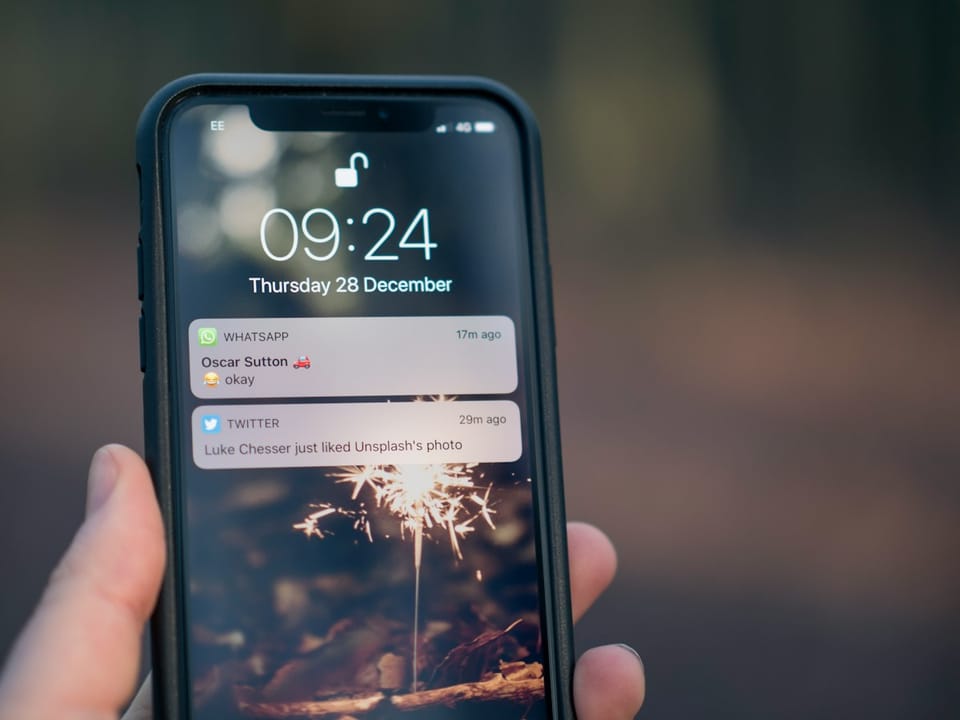
Feed the model your finished What's New text and ask for four more artifacts: a push notification title and body under 100 characters total, an in-app update modal with a headline and two lines, a two-paragraph announcement for your changelog page or blog, and the review replies from step six. The push copy should surface the strongest single benefit; our push notification copy guide covers the timing and frequency discipline around sending it. The modal copy belongs to your interface, so the microcopy rules from our UX microcopy guide apply: short lines, verbs first, no exclamation marks doing the work of substance.
Teams that run this chain report the same surprise: the push notification and the What's New text improve each other. Writing the 100-character version forces you to name the update's real value, and that clarity flows back into the 500-character and 4,000-character versions. If update announcements feed a longer re-engagement sequence, our onboarding email sequence guide extends the same chain past the notification.
Generating all five outputs is a single workspace job. ArWriter runs the full chain from changelog to store text, push copy, and replies, with bilingual output for multi-market listings, from $4.99 per month: https://app.arwriterai.com/
The 170-character escape hatch: promotional text
Apple's promotional text field is 170 characters, sits above your description, and, per Apple's documentation, can be updated "at any time without having to submit a new version." Everything else on the Apple product page is frozen between releases. This makes promotional text your standing news slot: announce the feature that shipped last month, reference the season, or speak to the objection your latest reviews keep raising.
The pairing to run is simple. What's New tells the story of the current version and waits for the next binary. Promotional text carries whatever is true today. Between releases, refresh it monthly; it is the only Apple page copy you can iterate on in response to data, and Apple states plainly that it does not affect search ranking, so its single KPI is conversion on the page.
Worked example: shipping version 3.4 of a field-service app
Take Routehand, a fictitious field-service app for plumbing and HVAC companies. The 3.4 changelog: offline job check-in, photo compression, invoice PDF fix, Android 16 edge-to-edge support, and a settings redesign.
The old notes both stores received: "Bug fixes and improvements."
The Apple What's New the chain produces, about 480 characters: "Check in to jobs even without signal. Job details, notes, and photos now queue offline and sync the moment you're back online. Invoices export as clean PDFs again, photos upload in half the size with the same quality, and the app now supports Android 16 displays edge to edge. Plus a calmer, clearer Settings screen. Thanks to the crews who reported the invoice issue. Keep it coming."
The Play recent changes version, under 500 characters, trims to the hook, three bullets, and a trust line: "New: offline job check-in. Clock in, add notes and photos with no signal; everything syncs when you're back online. Photos now upload in half the size. Invoice PDFs fixed. Android 16 display support and a cleaner Settings screen. Stability first, as always."
Same release, two formats, five outputs downstream, roughly 40 minutes of work.
How a Lisbon team made updates a retention channel
Marta Coelho heads growth at a five-person startup in Lisbon whose language-practice app had settled into a quiet decline: solid ratings, flattening opens, and a release cadence of once every two months with the lazy note as standard. Her hypothesis was that the update moment was the cheapest attention the team still owned, and it was being spent on filler text.
The team moved to a two-week release train and ran the full chain above every sprint. What's New text was rewritten as outcomes, promotional text refreshed monthly, a push notification shipped for each meaningful release, and review replies went out within a week of each update. Over the following quarter, their internal dashboards showed day-28 retention rising about three points, update-day opens climbing from their usual bump by roughly a fifth, and their average rating moving from 4.2 to 4.5 as reply-after-update became routine.
The compounding effect surprised them most: reviewers began quoting the release notes back in five-star reviews, naming features by the exact phrases the notes used. The update text had become the app's most-read copy, and it was finally written like it.
Localization: every language ships its own notes
On Google Play, recent changes are maintained per language listing, so an English-only note in a German listing reads as neglect to exactly the users you paid to acquire. Play's metadata policy also states that text-field rules and the keyword spam ban apply to all translations of your listing, so a stuffed keyword paragraph in any one language can jeopardize the whole listing.
Your AI pass for localization should adapt, not translate: keep version numbers and feature names consistent across languages, keep numerals formatted per locale, and let sentence rhythm follow the target language. A native speaker reviews the first iteration of each language; after that, the pattern is established and the AI follows it.
How often should you write new release notes?
The first rule of app release notes best practices: every release, without exception, even when the changes are small. The honest minor-fix template above exists precisely so small releases keep the channel warm. Beyond that, two rhythms matter. First, release cadence itself: AppTweak's checklist notes Play featuring may favor apps updated within the last 30 days, so a steady train of meaningful updates doubles as visibility maintenance. Second, the promotional text refresh on Apple at least monthly between releases, because it is the one field that never waits for a binary.
For most SaaS and indie teams, a two-week sprint cadence with one user-visible improvement per release is the sustainable sweet spot: enough substance to write real notes, frequent enough to keep the app feeling alive. The habit matters more than any single release, because notes compound into a public changelog that new visitors scroll to judge whether the team is still showing up.
Frequently asked questions
What is the character limit for What's New on the App Store?
Apple allows up to 4,000 characters, though the field is rarely shown in full, so front-load everything. It is not available for an app's first version, is required for all subsequent versions, and can be localized per language listing. Plan for roughly 400 to 700 visible characters.
How many characters can Google Play recent changes be?
The limit is 500 characters, enforced by a live counter in Play Console. The figure is community-documented rather than restated on current help pages, so treat the console counter as the source of truth while writing. Front-load the strongest benefit in the first line.
Do release notes affect ASO or search ranking?
Neither store indexes release notes for search ranking. The indirect effects are real: AppTweak notes Play featuring may favor apps updated within the last 30 days, updates reset your visibility on the Updates tab, and note quality shapes the ratings that do drive ranking.
Should I write "bug fixes and performance improvements" or detailed notes?
Detailed notes, always. The lazy line hides value from existing users, gives lapsed users no reason to return, and signals a team that stopped caring. If a release is genuinely minor, say so warmly and tease what is coming next instead of pretending.
Can I change What's New without releasing a new version?
On Apple, no; the field updates only with a new binary. The workaround is promotional text, 170 characters updatable anytime without a release. On Google Play, recent changes ship with the release, but other listing text can be edited in console.
Where do users actually see release notes?
On Apple, in the product page description area and on the Updates tab in the App Store app. On Google Play, in the What's new section of the listing. Both placements put your copy next to the open-or-ignore decision, which is the entire opportunity.
What should the first line of release notes say?
One benefit in plain words, sized for truncation. Name the most user-visible change and why it matters, because on both stores only the opening lines are visible before a tap. Save the context and the thank-yous for the end. Never open with an apology or filler.
What to do next
App release notes best practices start with your next release, not a blank page. Pull the changelog you already have, run the six-step chain, and write both formats deliberately: the 4,000-character Apple story and the 500-character Play compression. Draft the 170-character promotional text in the same sitting so the anytime channel is loaded before you need it. Then, one week after shipping, sweep the reviews and reply using the same context. Repeat per sprint until it is muscle memory, and the update text becomes what it should have been all along: a retention channel you control. From there the funnel continues into our paywall copy guide, the screen where the users you re-engaged finally decide to pay.
Run the whole chain, changelog to five outputs in both languages, in one workspace. ArWriter starts at $4.99 per month: https://app.arwriterai.com/
Sources
- Apple version information document and What's New limits — https://developer.apple.com/help/app-store-connect/reference/app-information/platform-version-information
- App Store numbers from the 2025 transparency report — https://sqmagazine.co.uk/app-store-statistics/
- App Store optimization checklist for Google Play — https://www.apptweak.com/en/aso-blog/app-store-optimization-aso-checklist-for-google-play
- Community documentation of the recent-changes field limit — https://stackoverflow.com/questions/20276478/updating-my-google-play-whats-new-section