What Spotify Just Announced
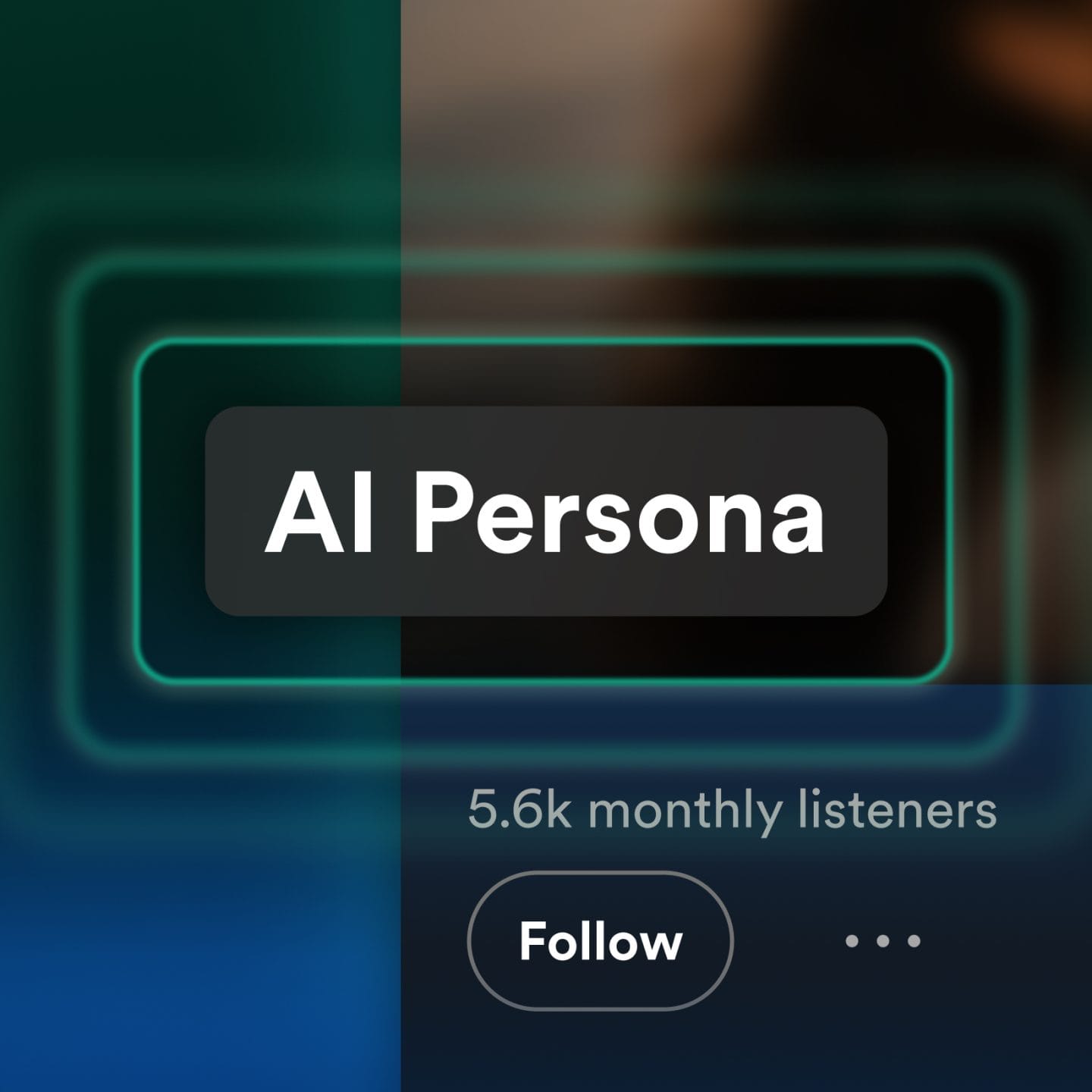
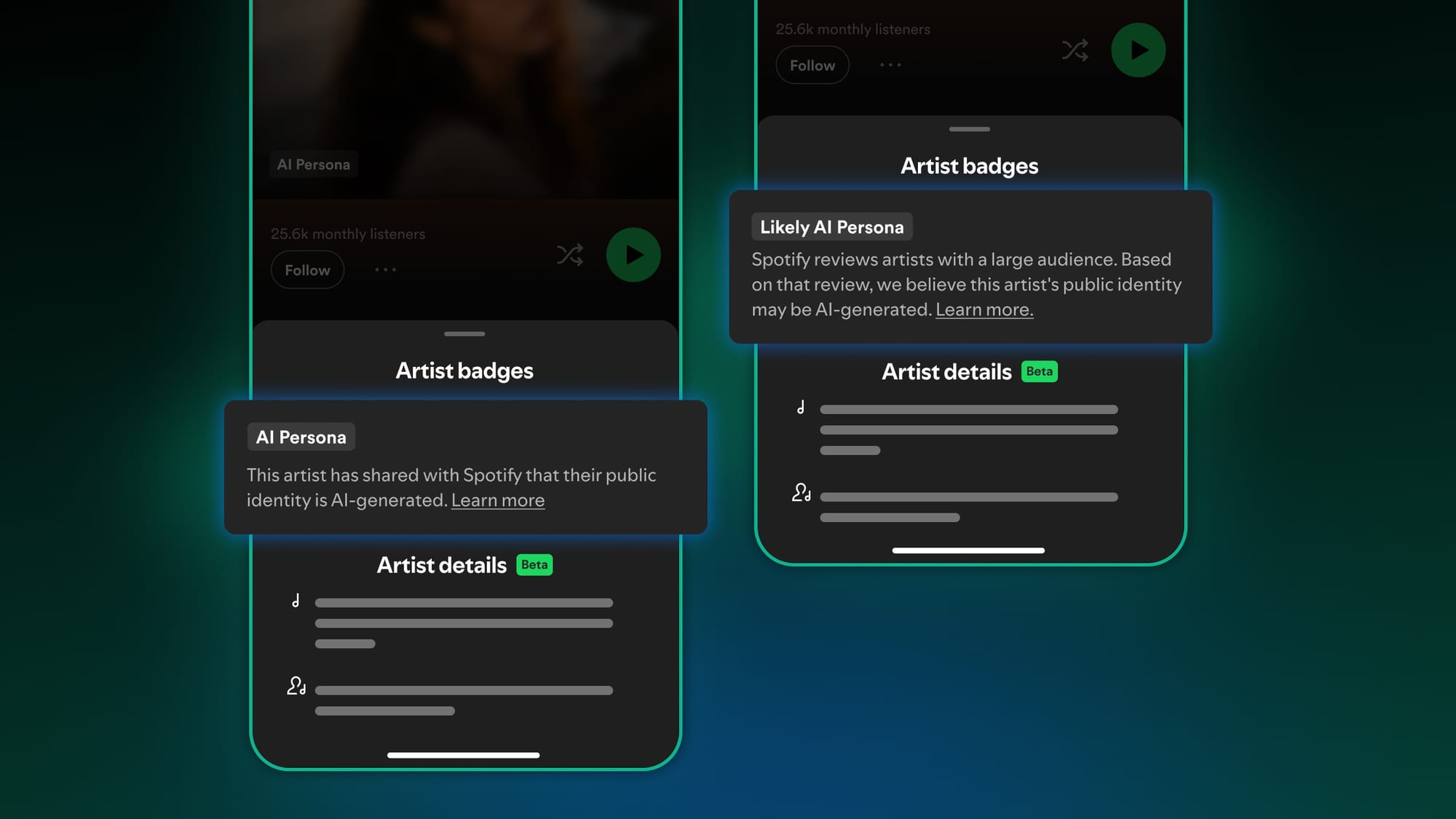
On August 11, 2026, Spotify announced a new feature that changes how listeners and creators interact with AI-generated content on the platform: AI Persona badges — visual labels that appear when an artist's identity is AI-generated rather than representing a real person.
The policy is clear and direct: Spotify will not include AI Personas in any editorial or algorithmic recommendations. Their music won't appear in personalized recommendations unless a listener actively chooses to follow them.
How AI Persona Badges Work
The visual badge appears in several places across the platform:
- Artist profile: in the banner and About section
- Search results: next to the artist's name when they appear in searches
- Playlists: on track rows across various playlists
When listeners tap the badge, they can see whether the artist voluntarily disclosed their AI Persona status, or whether Spotify's review team made that determination independently.
The Primary Source
The primary source for this story is the official announcement from Spotify's newsroom, titled "Introducing a New Label for AI-Generated Artist Identities on Spotify," published on August 11, 2026.
How Spotify Determines Who Is an AI Persona
The platform uses two methods:
1. Self-Disclosure
Artists can share through Spotify for Artists that their profile represents an AI Persona. This option has been available since August 11, 2026.
2. Spotify Review
Spotify's team identifies profiles whose public identity appears to represent photorealistic AI-generated identities. They begin with artists meeting defined audience thresholds, ensuring the labels cover the vast majority of artist profiles that users visit.
Artists flagged by Spotify's review team are notified and can self-disclose or appeal. A future listener-reporting feature is also planned.
What This Means for Content Creators
If you're a real musician
This is great news. Spotify is taking a clear stance in favor of real artists building careers in music. Your platform is now better protected from AI-generated competition using fake identities to attract listeners.
If you create content with AI assistance
Pay attention: the badge concerns the artist's identity, not how the music was made. You can use AI in music production without getting an AI Persona badge, as long as your identity represents a real person. Spotify has a completely separate feature called AI Credits for disclosing AI usage in the creative process.
If you create AI content for other platforms
This trend will spread. After YouTube banned inauthentic content, Snapchat removed fully AI-generated videos from Spotlight, and now Spotify is taking a similar stance. Major platforms are moving toward labeling and sorting AI-generated content — creators who adapt now will be better positioned.
Companion Features: Spotify's Transparency Ecosystem
AI Persona badges are part of a broader ecosystem Spotify launched in 2026:
- Verified by Spotify: signals authentic human artists — hundreds of thousands of profiles already verified
- AI Credits: artists disclose AI usage in creation — tens of thousands of AI credits submitted daily
- SongDNA: deeper context on track contributors
- Artist Details: career milestones, release history, touring activity
- Artist Profile Protection: artists review and approve releases to prevent misattribution
Quick Comparison: AI Policies Across Major Platforms
| Platform | Policy | Impact on Creators |
|---|---|---|
| Spotify | AI Persona badge + exclusion from recommendations | Fake identity = no reach |
| YouTube | Inauthentic content ban (July 2026) | 3 categories not monetizable |
| Snapchat | Fully AI videos banned from Spotlight (July 2026) | AI-assisted OK, fully AI banned |
| EU AI Act | Mandatory AI content labeling (August 2026) | Fines up to 7% of revenue |
Timeline: When Does Everything Start?
- August 11, 2026: Self-disclosure opens via Spotify for Artists
- Mid-September 2026: Badges begin appearing visibly across the platform
- Future: Listener-reporting feature for suspicious artists
Honest Limitations You Should Know
- The detection system isn't perfect: Spotify acknowledges its detection system is imperfect. Some artists with synthetic identities may slip through initially.
- Audience thresholds: Review starts with artists meeting certain audience thresholds — only the prominent ones first.
- Not about how music is made: The badge is about artist identity, not production method. Using AI in production doesn't trigger the badge.
Frequently Asked Questions
Will Spotify ban AI-created music?
No. Spotify doesn't ban AI-created music. What it does is label artists with synthetic identities (who don't represent real people) and exclude them from recommendations by default. Music produced with AI assistance by real artists is completely allowed.
Can I appeal Spotify's decision to give me an AI Persona badge?
Yes. Artists identified by the review team are notified and can appeal. If you're a real artist who received the badge by mistake, you can submit an appeal.
What's the difference between AI Persona badges and AI Credits?
AI Persona badges concern the artist's identity — whether they represent a real person. AI Credits concern production method — whether AI was used in creating the music. Two completely separate features.
Does this affect the MENA region?
The policy is global and applies to all markets including the Middle East and North Africa. Music creators in the Arab region who use synthetic identities will be affected the same way.
What This Means for the MENA Music Market
The Arabic music market on Spotify is growing rapidly, with artists from Saudi Arabia, Egypt, Morocco, and the Gulf achieving millions of streams. The AI Persona badge decision carries significant implications for MENA music creators:
- Protection for real artists: You won't compete against hundreds of fake artists flooding the platform with AI-generated songs and fabricated identities. Spotify will confine them to a separate space, away from recommendations.
- The value of disclosure: If you use AI in music production (which is completely legitimate), use the AI Credits feature to disclose it. Voluntary disclosure builds trust with your audience and protects you from unexpected review.
- An opportunity to differentiate: In a market saturated with AI content, a genuine human identity becomes a marketing asset. Invest in your personal story, your social media presence, your live performances — these are things AI cannot fake.
How to Prepare: Practical Steps
Whether you're a musician, podcaster, or audio content creator, here's what we recommend:
- Audit your Spotify for Artists profile: Ensure your profile is complete and accurately represents you. Add real photos, an honest bio, and links to your social accounts.
- Check verification status: If eligible, apply for Verified by Spotify. Verification protects you from being incorrectly classified as an AI Persona.
- Use AI Credits when applicable: If you used AI assistance in producing a track, disclose it through AI Credits. Early transparency is always better than forced review later.
- Build your presence beyond the platform: Don't rely on Spotify's algorithm alone. Use tools like ARWriter's content tools to create written content about your music, schedule social media posts, and drive followers to your Spotify profile.
The Bigger Picture: The End of Anonymous Identities
Since late 2024, major platforms have been competing to impose AI transparency rules. What started as a theoretical European law has become practical, enforceable policy on the world's largest platforms:
- Meta (Facebook and Instagram): requires AI-generated content labels since 2024
- TikTok: requires AIGC disclosure for realistic altered content and limits its distribution
- Google: mandates AI labels on ads and develops SynthID watermarking technology
- YouTube: banned three categories of inauthentic content from monetization (July 2026)
- Spotify: AI Persona badges and recommendation exclusion (August 2026)
The direction is clear: transparency is no longer optional. Creators who understand this shift and adapt their strategy accordingly will continue to grow, while those who try to game the system find themselves in a shrinking corner.
The takeaway: Spotify's decision to label artists with synthetic identities and exclude them from recommendations sends a clear message: platforms prefer real creators. If you're making genuine content — even with AI assistance — your future is secure. But if you're relying on fake identities, the ground is shifting beneath you.
Looking for a single platform to produce high-quality content efficiently? Try ARWriter — write, edit, and schedule your content from one place, starting at $4.99/month.