Set a 60-minute timer. The goal is not to finish 30 unrelated pictures before it rings; it is to create social media images with AI through a repeatable batch that a team can review, identify, and schedule. The clock forces useful decisions: five content pillars, three post formats, two visual treatments, and one fixed brand system. That multiplication gives 30 planned slots without writing 30 disconnected prompts.
The hour is an operating target, not a guarantee. Generation latency, weak source assets, a slow connection, policy review, complex products, or many revisions can extend the session. A first sprint may take longer while the team builds its brand lock and reference set. The payoff is the reusable system: future batches begin with approved colors, lighting, framing, prohibited motifs, and file rules instead of another blank canvas.
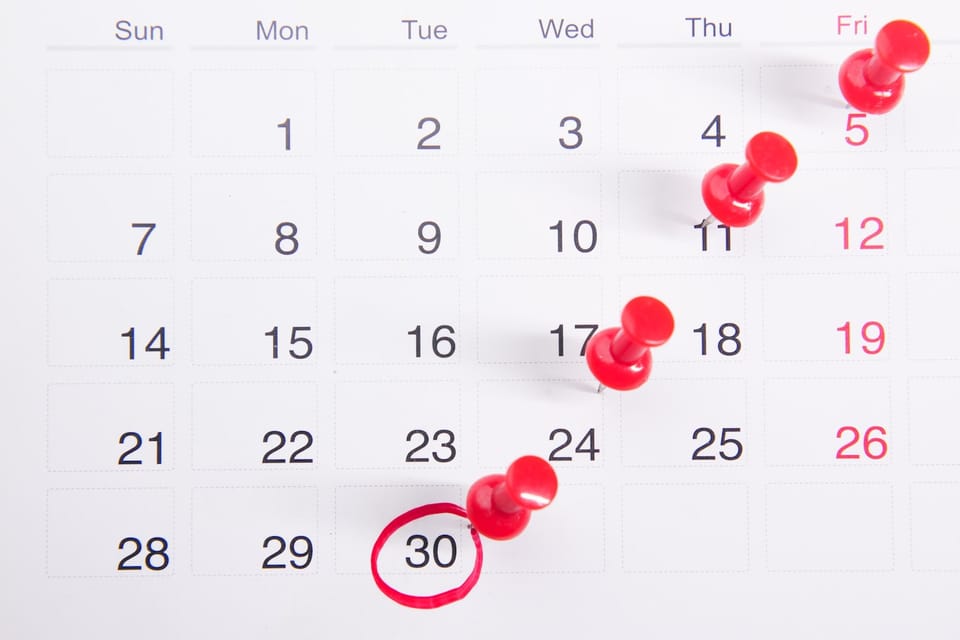
Success at minute 60 means approved assets are attached to real calendar entries, not merely saved in a downloads folder.
Direct answer: Spend 10 minutes on the brand brief, 10 on a 30-slot matrix, 25 generating from six reusable prompt families, 10 reviewing and cropping, and five preparing the scheduling handoff. Preserve brand constants, vary subject and composition, and move only approved, named assets into the publishing queue.
Last updated: June 2026
Why batching works better than generating on demand
Generating a new image whenever a post is due creates small, expensive interruptions. The operator has to remember the palette, find a logo, reconstruct the prompt, choose a ratio, and decide what the content is trying to do. The output may look acceptable in isolation but unrelated to everything published the week before.
A batch moves those decisions to the front. The team defines the month's content mix once, then runs similar production tasks together. Educational tips are generated as a family. Product scenes share a verified source pack. Data-background assets reserve the same text area. Reviewers compare related outputs side by side and catch drift quickly.
This production efficiency should not be confused with posting frequency. Sprout Social's 2025 Content Benchmarks examined more than 3 billion messages from over 1 million public profiles, but a large benchmark cannot prescribe one ideal schedule for every brand. Audience expectations, resources, channel, and content quality differ. Thirty slots may cover a month, a quarter, or a campaign library.
The correct objective is a useful asset inventory aligned with a real calendar. If the team needs the broader planning process, connect this sprint with the month-long social content scheduling guide.
Teams that create social media images with AI should also define an ownership rule: one person approves the batch, while channel owners can reject a crop or factual mismatch before scheduling. That keeps fast production from becoming diffuse responsibility.
The 30-slot content matrix
Use this formula:
5 content pillars x 3 formats x 2 visual treatments = 30 image slots
Here is a practical structure:
| Content pillar | Educational format | Engagement format | Commercial format | Treatment A | Treatment B |
|---|---|---|---|---|---|
| Product knowledge | One useful feature explained | “Which would you choose?” | Product in verified use | Clean studio | Real-context scene |
| Customer questions | Short answer background | Question card | Objection response | Editorial still life | Brand-shape system |
| Process | How-it-works step | Behind-the-scenes prompt | Service or workflow value | Documentary desk | Diagram-ready background |
| Industry insight | Verified fact background | Opinion prompt | Relevant solution context | Minimal data space | Conceptual object scene |
| Community and season | Helpful seasonal reminder | Community conversation | Timely offer context | Warm lifestyle | Graphic color-block |
Each pillar contributes six slots: three formats across two treatments. The matrix creates deliberate variation while making comparison possible. It also exposes imbalance. If 18 of 30 slots are commercial, revise the plan before generating anything.
Attach a caption ID and intended channel to each slot. An image without a content purpose is not finished work.
Create the brand lock before the sprint
A brand lock is the fixed block pasted into every prompt. It describes the properties that make assets feel related even when the subject changes.
Record these elements:
- Primary and secondary colors with exact values.
- Background neutrals and prohibited colors.
- Lighting direction, temperature, contrast, and shadow softness.
- Preferred materials, textures, and surfaces.
- Camera distance, lens character, and framing patterns.
- Recurring shapes or graphic motifs.
- Prohibited motifs, visual cliches, and sensitive objects.
- Logo rule: absent during generation, composited later, or supplied as a locked reference.
- Typography handoff: exact words added later in an editable layout.
- Approved reference images for products, people, locations, and style.
Then decide what may vary: subject, prop, setting, camera angle, color emphasis, and composition. Consistency comes from protecting the lock while rotating those variables. Repeating the same composition 30 times is not a brand system; it is visual fatigue.
For ecommerce accounts, build accurate source assets through the Gemini Nano Banana product-photo process before using them in social scenes. Do not ask a social-image prompt to reconstruct the product from a vague description.
The 60-minute production sprint
Prepare the blank matrix, brand assets, and access to required tools before starting the timer. If several people are involved, name one decision maker for the hour.
Minutes 0–10: confirm the brief and brand lock
Choose the campaign period, audience, channels, and one business objective. Paste in the approved brand lock. Gather source images, current offers, substantiated facts, and any seasonal dates. Remove unverified claims before they enter a prompt.
Decide which assets need exact product photography, which can be conceptual, and which require a human designer. This is the point to exclude risky jobs, not minute 48.
Minutes 10–20: fill the matrix
Write one-line concepts for all 30 slots. Give each an ID from S01 to S30, a pillar, format, treatment, ratio, caption ID, and planned channel. Alternate intense and calm compositions. Make sure consecutive posts are not near-duplicates.
Choose a small ratio set. A square master may serve several feeds, 4:5 can occupy more vertical feed space, and 9:16 supports vertical placements. Instagram's official help says it preserves uploaded photo resolution up to 1,080 pixels wide when the image falls within its documented aspect-ratio range. Specifications change, so verify before a major campaign.
Minutes 20–45: generate by prompt family
Run six prompt families in sequence rather than jumping among random ideas. Use the ArWriter image generator and keep the brand lock identical. Image generation requires Pro or above.
Generate one proof output for a family, inspect it quickly, then create the remaining planned variations. Save only viable candidates into a review folder. Record the prompt version when a family works. The image prompt library can accelerate setup, but every template still needs the team's real brand rules, facts, and references.
If generation latency or revisions consume the time box, stop at a smaller approved batch. Thirty unchecked images are less useful than 18 reliable ones with a clear remainder list.
Minutes 45–55: review, reject, and crop
Compare related images in a grid. Remove duplicates and visual near-duplicates. Inspect distorted hands or objects, fictional product details, accidental marks, poor crops, inaccessible contrast, and suspicious text. Check every factual implication against the caption and source.
Create derivatives only from accepted masters. Keep the subject within a crop-safe area, and preview on a small mobile screen. Write meaningful alt text based on what the final image actually communicates.
Minutes 55–60: prepare the publishing handoff
Rename each approved file with its slot, pillar, ratio, version, and date. Add caption ID, platform, campaign tag, publication date, alt text, and reviewer status to the calendar. Then move the approved assets into ArWriter Social for scheduling and publishing. Social publishing requires Pro or above.
This final five minutes is the point of the sprint. A named and reviewed asset attached to a scheduled post has operational value. An anonymous file does not.
Six copy-ready social image prompts
Create one master prompt per family, then replace the uppercase variables for each matrix slot. Keep exact post copy out of the generated image.
Educational tip background
Create a 4:5 social image for an educational post about TOPIC for AUDIENCE. Visual subject: OBJECT OR SCENE that makes the topic immediately recognizable without showing text. Apply this fixed brand lock: PRIMARY COLOR, SECONDARY COLOR, NEUTRAL, LIGHTING DIRECTION, SHADOW STYLE, TEXTURE, CAMERA CHARACTER, and APPROVED MOTIF. Leave the upper-left 40 percent low-detail for separately typeset tip copy. Vary COMPOSITION and SUBJECT while preserving the brand lock. No letters, numbers, charts, logo, watermark, visual cliche, unverified claim, distorted object, or unrelated decoration.
Product-benefit scene
Using the attached approved PRODUCT REFERENCES, create a 1:1 social image about VERIFIED BENEFIT for AUDIENCE in USE CONTEXT. Preserve exact product geometry, materials, color, packaging, logo placement, and included items. Brand lock: BRAND VALUES AND LIGHTING RULES. Show one believable moment that supports the benefit without dramatizing a result. Reserve clean space on the right for editable copy. No generated text, fake testimonial, extra accessory, altered package, false before-and-after, exaggerated scale, or unsupported outcome.
Customer-question visual
Create a 4:5 visual background for the customer question QUESTION THEME. Show one clear object-based metaphor or realistic scene that invites curiosity but does not imply an answer that the caption cannot support. Use BRAND PALETTE, LIGHTING, TEXTURE, FRAMING, and MOTIF exactly. Leave a high-contrast blank area for the question to be typeset later. Change SCENE VARIABLE for this slot. No generated words, question marks, people unless referenced, logos, clickbait expression, false urgency, or clutter.
Behind-the-scenes still life
Create a documentary-style 1:1 behind-the-scenes still life showing PROCESS STAGE through APPROVED TOOLS, MATERIALS, and WORKSPACE DETAILS. Follow the brand lock: COLORS, NATURAL OR STUDIO LIGHT, SURFACE, CAMERA HEIGHT, CONTRAST, and PROHIBITED MOTIFS. The scene should feel used but organized, with no confidential screen content or invented product components. Leave a modest lower band for an external caption overlay. No generated text, fake employee, unlicensed logo, unsafe setup, impossible tool, or excessive perfection.
Data or insight background
Create a 1.91:1 social background for a verified industry insight. Do not render the data itself. Use abstract objects, measured spacing, and BRAND GEOMETRY to suggest INSIGHT THEME while leaving the central 55 percent calm for a chart or statistic added later. Apply exact BRAND COLORS, TEXTURE, LIGHT DIRECTION, and BORDER OR MOTIF RULE. No numbers, letters, graphs, seals, source logos, currency, trend arrows, fabricated interface, or visual claim. Keep enough edge detail for a safe square crop.
Seasonal or community post
Create a 4:5 seasonal community image for OCCASION and REGION that is welcoming, product-light, and culturally appropriate. Use only APPROVED SYMBOLS and avoid religious, national, or cultural elements unless they are explicitly supplied and reviewed. Preserve BRAND PALETTE, LIGHTING, MATERIALS, FRAMING, and MOTIF. Feature SUBJECT with generous copy space. No generated greeting, logo, stereotype, costume, flag, person, food, or landmark unless approved; no text or unsupported promotional offer.
Keep 30 images on-brand without making them repetitive
Think in constants and variables:
| Keep constant | Vary deliberately | Reject when |
|---|---|---|
| Core palette | Dominant color within palette | Off-brand color changes the mood |
| Lighting character | Direction or intensity within a narrow range | Shadows conflict across a series |
| Texture family | Surface used for each pillar | Every frame uses the identical background |
| Framing rules | Close, medium, or overhead view | The subject is always centered at one scale |
| Motif system | Position, size, or presence | Motif becomes decoration without purpose |
| Product truth | Scene and use context | Product geometry, label, or contents change |
| Typography method | Headline length and hierarchy after generation | Model-generated copy contains errors |
Use a contact sheet to inspect the full batch. At thumbnail size, the brand family should be recognizable, but each post should still have a distinct focal point. If five adjacent assets share the same angle and blank area, replace at least two compositions.
Human QA before anything is scheduled
Run every asset through this release checklist:
- Purpose: Does the image serve its assigned pillar, format, and caption?
- Fact: Are depicted products, processes, places, data implications, and outcomes accurate?
- Brand: Do palette, lighting, texture, framing, and tone follow the lock?
- Rights: Are all references, people, logos, locations, and cultural elements approved?
- Craft: Are hands, edges, reflections, packaging, objects, and shadows credible?
- Text: Is exact copy added separately and proofread in the final layout?
- Crop: Does each planned channel preserve the focal point and copy area?
- Access: Is contrast sufficient, and does the alt text convey the post's function?
- Variation: Is the asset distinct from recent and adjacent posts?
- Status: Does it carry a reviewer, version, and approved filename?
Do not schedule a draft because the publishing queue has a gap. Replace it with an approved evergreen asset or leave the slot open.
A file and calendar handoff that prevents chaos
Use a filename such as:
S14_question_graphic-geometry_4x5_v02_2026-07-18-approved.jpg
The calendar row should include:
Asset ID | Caption ID | Pillar | Channel | Ratio | Campaign tag |
Publish date/time | Alt text | Reviewer | Rights note | Status | File URL
Keep the untouched accepted master separate from channel exports. If the caption or date changes, update the calendar rather than renaming files in an ad hoc way. When a post is reused, create a new calendar record so its publication history remains clear.
The strongest handoff is direct: upload approved files and their final captions to ArWriter Social, select the connected channels, verify preview and timing, and schedule. For a full calendar process beyond the one-hour visual batch, use the monthly scheduling workflow.
Measure whether the sprint is improving
Do not judge the system only by “30 files created.” Track production and content indicators separately.
Production indicators
- Approved assets per generation attempt.
- Minutes per approved asset.
- Revision rate and top defect categories.
- Percentage accepted without external retouching.
- Percentage scheduled with complete metadata.
- Duplicate or near-duplicate rejection rate.
Content indicators
- Performance by pillar and format, using channel-appropriate metrics.
- Saves or meaningful replies on educational content.
- Qualified clicks on commercial content.
- Completion of the intended action after the click.
- Negative feedback and accessibility issues.
Hootsuite's 2025 research describes sharply increased use of generative AI for social content and reports that 69% of marketers in its research see AI as technology that can create job opportunities. This is survey context, not evidence that a particular workflow saves an hour or improves account performance.
Use a simple batch comparison after three cycles. If the first sprint produces 18 approved assets in 80 minutes and a later sprint produces 26 in 65 minutes, report those internal figures as your process result. Do not turn them into a public promise. Also look for quality tradeoffs; faster output with more corrections after scheduling is not progress.
Gaps that generic batching advice misses
A month of visuals is not a month of strategy
Thirty images do not define the audience, proposition, editorial judgment, or response plan. Each matrix slot needs a purpose, caption, channel, and next action. Community posts also require people who can answer comments. Production capacity should support the brand's conversation, not flood it.
Brand consistency needs controlled variation
Many guides protect the palette but ignore composition. A monochrome grid can still feel mechanical if every asset has the same centered object and glow. Lock the properties that signal identity, then rotate subject, distance, angle, scene, and negative space. Review the contact sheet, not only individual files.
Scheduling metadata is part of the asset
An approved image without a caption ID, ratio, alt text, rights note, or publication date creates work for the next person. Finish the handoff inside the sprint. The scheduling record is what connects creative production to accountable publishing.
Paid promotion needs a separate test plan
An organic winner can inspire a paid hypothesis, but it is not proof of paid performance. When a social concept moves into media buying, rebuild it through the AI ad creative testing system with fixed variables, placement QA, campaign metrics, and a documented decision rule.
Common mistakes and quick corrections
Writing 30 prompts from scratch: build six families and change the slot variables.
Starting the clock before gathering references: prepare products, brand rules, facts, and matrix template first.
Putting long text inside generated images: reserve space and typeset exact copy after generation.
Keeping every output: reject aggressively. Near-duplicates make the calendar monotonous.
Using one ratio everywhere: create native derivatives from approved masters and preview channels.
Ignoring alt text until publishing: write it during review while the image's purpose is clear.
Treating the hour as a guarantee: latency and revisions vary. Preserve the process even when the batch is smaller.
Stopping at a download folder: complete the calendar and scheduling handoff.
Image generation and social publishing require Pro or above. Review current localized access on the ArWriter plans page; do not base a workflow calculation on an assumed fixed subscription price.
Frequently asked questions
How can I create a month of social media graphics with AI?
Define the audience, channels, objectives, and five content pillars first. Build a 30-slot matrix, apply one brand lock across six prompt families, then review and attach accepted assets to captions and dates. Thirty posts may cover a month, but choose frequency from audience and resource needs.
How do I keep AI images consistent with my brand?
Lock exact palette values, lighting character, texture family, framing rules, motifs, logo handling, and typography method. Preserve those constants in every prompt while varying subject, scene, camera distance, and composition. Review a contact sheet to find drift and repetition before files reach the calendar.
What social media image sizes should I create?
Build from the placements you actually use. Square 1:1, portrait 4:5, and vertical 9:16 cover many common needs, while landscape may suit links or professional channels. Verify current platform specifications before export, keep safe margins, and retain a high-resolution approved master for derivatives.
Can AI generate 30 images at once?
Some tools can queue or produce multiple outputs, but one bulk command often weakens control and traceability. Generate by prompt family, inspect an early proof, and save viable candidates with IDs. Latency and revisions may extend the session, so prioritize approved assets over hitting an arbitrary file count.
How do I batch social content in one hour?
Prepare the matrix template and references before timing. Allocate 10 minutes to the brief, 10 to concepts, 25 to generation, 10 to QA and crops, and five to the scheduling handoff. If review reveals defects, finish fewer assets and carry a named remainder list forward.
What should a brand image prompt include?
Include the content purpose, audience, subject, ratio, palette values, lighting, texture, camera framing, approved motifs, copy-space location, reference files, fixed details, and prohibited elements. Separate the reusable brand-lock block from the slot-specific scene so operators can change variables without causing identity drift.
How do I avoid repetitive AI-looking social images?
Vary subject, scene, camera distance, angle, composition, and negative-space position inside a fixed brand system. Mix still life, real-context, graphic, and editorial treatments where appropriate. Review thumbnails in calendar order, reject near-duplicates, and replace familiar model cliches with details grounded in the brand's real work.
How do I schedule AI-generated social posts?
Approve the final image and copy, add a clear filename, caption ID, channel, ratio, campaign tag, date, alt text, rights note, and reviewer status. Upload only approved assets to ArWriter Social, preview each destination, confirm timing, and retain the source master outside the channel-specific export folder.
Finish the hour with a real publishing queue
To create social media images with AI at useful scale, protect the system more than the stopwatch. The five-by-three-by-two matrix prevents random output. The brand lock creates recognition. Human QA protects truth and rights. File metadata and scheduling turn a visual into publishable work.
Run the next sprint with one campaign period and five pillars. Generate the approved batch, then move it directly into ArWriter Social with captions, alt text, dates, and channel previews. That handoff is what makes 30 images an operating asset instead of a production stunt.