Last updated: June 2026
The useful answer to Nano Banana vs ChatGPT images is not a single winner. It depends on which product surface, model, and production task you mean. Google currently offers Nano Banana 2 for price-sensitive, high-volume work and Nano Banana Pro for complex professional assets. OpenAI offers ChatGPT Images 2.0 in the consumer app and GPT Image 2 through its API.
For a marketing team, the right choice is the one that produces an accepted asset with the fewest retries while preserving copy, product details, and layout. Compare Gemini Apps with ChatGPT as subscription products, then compare gemini-3.1-flash-image or gemini-3-pro-image with gpt-image-2 as metered API models. Do not mix those two comparisons.
Prices and model details in this article were checked on June 28, 2026. Providers can change names, access, limits, and rates, so confirm the linked official pages before committing a campaign budget.
The decision in one table
This table is a practical shortlist, not the result of an unpublished benchmark. Each recommendation follows the vendors' documented capabilities and should be validated with the controlled protocol later in this article.
| Marketing job | First option to test | Reason to shortlist it | What to verify before production |
|---|---|---|---|
| Fast campaign variations | Nano Banana 2 | Google positions it for speed and high-volume generation | Accepted-asset rate, copy accuracy, latency |
| Complex professional key art | Nano Banana Pro | Google positions it for complex instructions and professional assets | Reference preservation, text fidelity, cost |
| Conversational drafting and edits | ChatGPT Images 2.0 | Generation and editing live inside a familiar conversational workflow | Composition drift and recurring subject consistency |
| API-based OpenAI production | GPT Image 2 | Current OpenAI image model with generation and edit endpoints | Input cost, quality setting, retry rate |
| Multilingual campaign with Arabic delivery | ArWriter with Google or OpenAI | One Arabic-first workflow layer, provider choice, and ready prompts | Current quota, provider fit, human review |
| Strict text-led ad layout | Test both | Both vendors document text capabilities, but exact layout can still fail | Exact characters, placement, spacing, and repetitions |
If your team serves Arabic markets, ArWriter Chat can run the same brief through OpenAI or Google from one Arabic-first interface. ArWriter is a workflow layer, not a proprietary image model. That distinction matters when you document which model produced an approved asset.
What the names mean in June 2026
The product names are easy to blur, which leads to unfair comparisons. Start by recording the exact name shown in the app or API response.
Google's image model family
Google's current documentation maps the original Nano Banana name to gemini-2.5-flash-image. The newer Nano Banana 2 is gemini-3.1-flash-image, while Nano Banana Pro is gemini-3-pro-image. For a new production evaluation, the latter two are the relevant models unless you deliberately need a legacy baseline.
Google recommends Nano Banana 2 when price and latency matter. It supports 0.5K, 1K, 2K, and 4K output tiers. Google recommends Nano Banana Pro for professional asset production, complex instructions, and higher-fidelity text work. Both Gemini 3 image models support 1K, 2K, and 4K output. Google also documents multi-reference workflows, with limits and supported combinations that depend on the model.
Gemini Apps is the consumer surface. Its plan access and compute-based limits are not the same as Gemini API billing. A marketer using Gemini in a browser is consuming a subscription entitlement subject to dynamic limits; a developer calling a model endpoint is paying for metered input and output.
OpenAI's image products
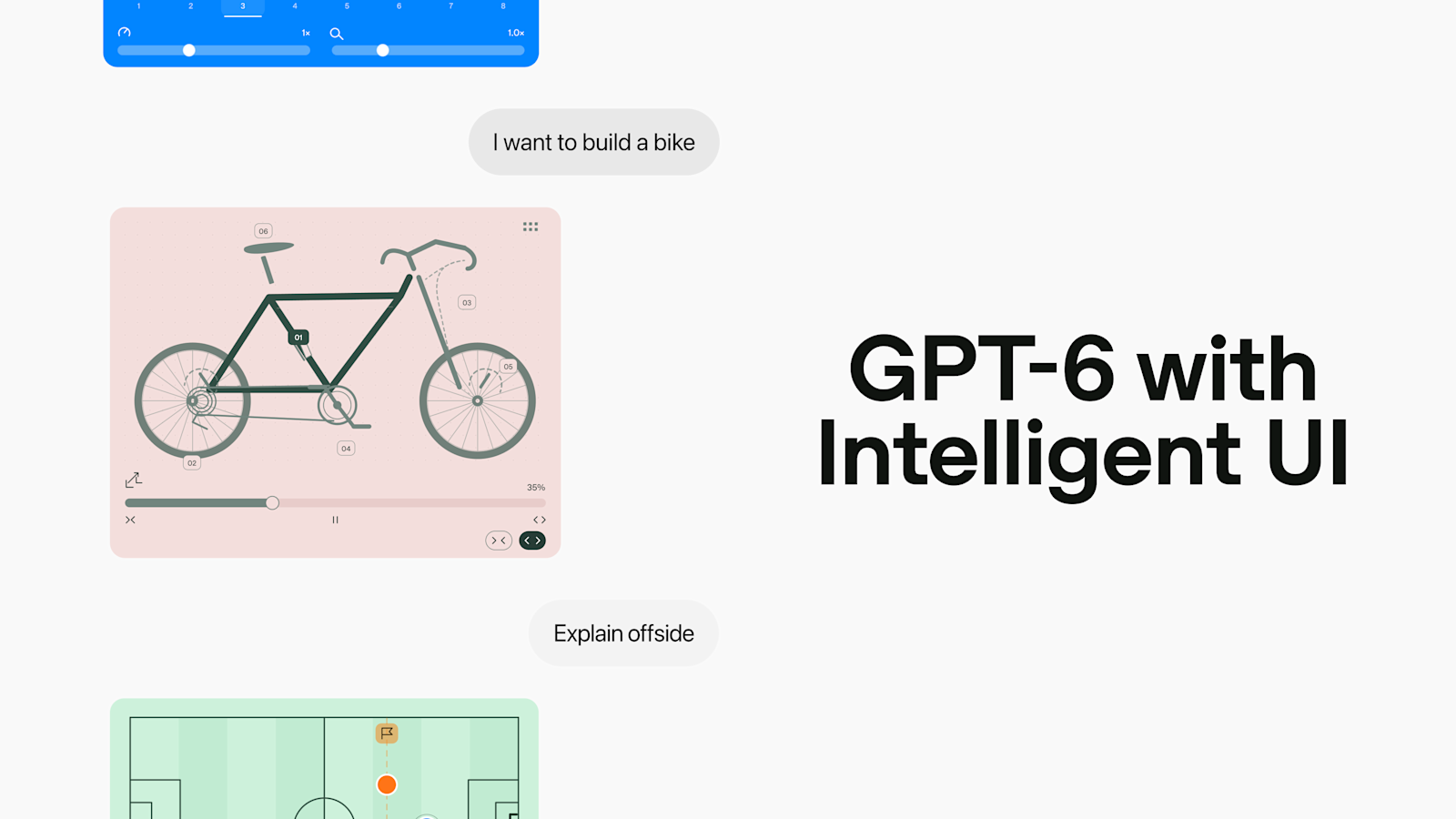
ChatGPT Images 2.0 is the consumer experience launched on April 21, 2026. OpenAI says it is available across ChatGPT tiers, while images with thinking depend on a paid plan. Access is governed by plan and usage limits rather than a stable public price for each image.
GPT Image 2, model ID gpt-image-2, is the current API model. The stable snapshot listed when this article was checked was gpt-image-2-2026-04-21. It accepts text and image inputs, returns image output, and supports both generation and edit endpoints. Its API billing is separate from a ChatGPT subscription.
OpenAI documents flexible valid resolutions within its constraints, including common 1K, 2K, and 4K use cases. Outputs above the documented 2560 by 1440 total-pixel threshold are described as experimental. OpenAI also warns that complex prompts can take up to two minutes and that exact text placement, recurring-character consistency, and precise composition may still fail.
Compare consumer workflows separately from API models
There are two fair comparisons, and they answer different procurement questions.
The first is Gemini Apps versus ChatGPT. Evaluate sign-in friction, editing flow, image history, plan access, team policy, and how often usage limits interrupt work. Do not estimate a consumer per-image cost by dividing a monthly subscription fee by an assumed image count. Limits are dynamic, and subscriptions bundle capabilities beyond image generation.
The second is Gemini API versus OpenAI API. Freeze an exact model ID, output tier, quality setting, size, prompt, and input images. Record the raw usage and billed total for each request. This is where a per-output calculation is useful, provided it is labeled as output-only or total-request cost.
For the detailed rate tables and transparent scenarios, see Gemini vs ChatGPT image generation pricing. If you also need specialized design tools, the AI image generator shortlist for marketers adds Midjourney, Ideogram, Firefly, and Recraft.
A reproducible editorial test for a fair decision
Do not choose a winner from one attractive output. Image generation varies between runs, and a result that looks good can still contain unusable copy or a changed product detail. Use the following protocol before moving a campaign into production.
- Freeze the environment. Record the date, product surface, plan, displayed model name, API model ID or snapshot, image size, quality setting, aspect ratio, and whether thinking or search is enabled.
- Prepare six tasks. Use a master marketing visual, an exact English headline, an exact Arabic headline, one localized product edit, three aspect-ratio adaptations, and a reference-consistency task.
- Run three independent generations. Use the same prompt and settings for every model. Keep all outputs, not just the best one, and record timestamps.
- Use a fixed scoring sheet. Score prompt adherence, English text accuracy, Arabic text accuracy, edit preservation, cross-run consistency, aspect-ratio compliance, and layout usability from zero to five.
- Measure text literally. Transcribe every generated line and compare characters. For Arabic, manually inspect right-to-left order and joined glyphs; optical character recognition alone is not enough.
- Log operational facts separately. Record median latency, retries, moderation failures, quota messages, and billed cost. Do not combine latency or cost into a visual-quality score.
- Apply an acceptance gate. Define publishable, minor edit, and reject before viewing results. Two reviewers should classify each output independently.
- Calculate cost per accepted asset. Divide total generation, input, edit, and retry cost by the number of publishable assets. This metric is more useful than the price of the first output.
This procedure does not guarantee that one model wins every campaign. It creates an auditable decision that another editor can repeat. A team should rerun a smaller version when a provider changes its default model or when a new snapshot becomes available.
The master prompt to run in every workflow
Use this exact prompt in Gemini, ChatGPT, and ArWriter. Keep punctuation, quotation marks, aspect ratio, and text unchanged. If a tool exposes a seed or deterministic option, record it, but do not use a feature that the other tested surfaces cannot approximate without noting the difference.
Create a professional 4:5 advertising image for a fictional specialty-coffee brand named “Nawa.” Place a matte-black coffee bag centered on a sand-colored stone pedestal, with naturally scattered coffee beans, warm studio light from the upper right, and a physically plausible shadow. Use a charcoal-black, restrained-gold, and sand-beige palette. Reserve a clean visual area in the upper third.

Render this headline exactly once in clear modern type:
“COFFEE WORTH WAKING FOR”

Below it, in smaller type, render exactly:
“20% OFF THIS WEEK”

At the bottom, add a simple visual button labeled exactly: “ORDER NOW”.

Keep every word exactly as written. Do not translate, paraphrase, or add characters. Do not add real logos, watermarks, or any other text. The final image should look like a realistic, production-ready Instagram ad for an ecommerce brand, with clean composition and safe spacing around the copy and product.
Run it in Gemini
Open the Gemini image workflow and record whether the interface identifies Nano Banana 2 or Nano Banana Pro. Choose the same 4:5 ratio and the closest equivalent resolution for every run. Paste the prompt without an introductory sentence. Save the three original files and capture any usage-limit message.
For API work, log gemini-3.1-flash-image or gemini-3-pro-image, the requested output tier, all input usage, and the output token count. A result from the Flash model must not be labeled simply as a Gemini result if the decision concerns Pro.
Run it in ChatGPT
Start a clean conversation for each independent run so earlier revisions do not influence the result. Use ChatGPT Images 2.0 and request the same ratio. Save original files and note whether a thinking-image option was used. Keep consumer plan access separate from any API test.
For the API, use gpt-image-2 and record the snapshot if the response exposes it, size, quality, image inputs, and usage. Do not compare a high-quality GPT Image 2 request against a lower-resolution Flash request and call it a model comparison.
Run it in ArWriter
Open ArWriter Chat, select Create image, choose OpenAI or Google, set the size, and paste the prompt unchanged. The configured OpenAI path uses GPT Image 2 at medium quality, while the configured Google option uses Nano Banana Pro. Record the provider with each exported asset.
ArWriter is useful when a bilingual team or an agency serving Arabic markets wants provider switching and prompt preparation in one Arabic-first workspace. It does not erase provider differences. Image generation currently starts at Pro, with monthly quotas of 20 images on Pro, 50 on Premium, and 150 on Agency. Review current plans and local pricing, because billing varies by market and those quotas are ArWriter limits rather than Google or OpenAI API limits.
Prompt adherence and composition
Prompt adherence is not the same as visual appeal. For this brief, verify the centered matte-black bag, stone pedestal, scattered beans, upper-right light, plausible shadow, palette, clean upper third, three exact text elements, no extra copy, and 4:5 format. A beautiful image that omits the offer or moves the product out of the safe area fails the brief.
Score each requirement independently before assigning the overall adherence score. This prevents a reviewer from overlooking a wrong headline because the lighting looks polished. If a model repeatedly adds labels to the coffee bag, record that as an extra-text failure even if the label appears plausible.
When revising, use the same correction for both systems, such as “Keep the product, lighting, and composition unchanged. Replace only the headline with the exact line.” Save before-and-after files. The edit test should measure whether untouched regions remain stable, not whether the revised image looks generally better.
Text rendering in English and Arabic
English typography can fail through missing letters, duplicated words, punctuation changes, or inaccurate placement. Arabic adds right-to-left order, connected glyphs, diacritics, punctuation, and mixed-script layout. Marketing teams should therefore treat text as data, not decoration.
Create a short acceptance checklist for every rendered line. Confirm exact text, correct order, one occurrence only, visual legibility at final export size, and sufficient safe space. For Arabic tests, include numerals, a percentage sign, and one Latin brand line. Inspect the full-resolution file rather than a compressed chat preview.
Neither official documentation is a promise that every line will be correct. Google highlights higher-fidelity text for Nano Banana Pro. OpenAI documents improved image generation while acknowledging that exact text placement and precise composition can still fail. The disciplined conclusion is to test the copy that matters to your campaign and keep editable text in a design tool when legal or promotional wording cannot change.
Product edits and reference consistency
For ecommerce work, upload the same neutral product photograph to each system and request one local change, such as replacing the background with a warm studio scene. Define protected regions before generation: logo geometry, package shape, cap, label colors, and all printed text.
After the edit, overlay the original and result if your review software allows it. Inspect protected regions at full size. Record each unwanted alteration, including small label changes that a casual reviewer might miss. Then ask for a second local change in the same conversation and evaluate whether drift compounds.
Google documents multi-reference support for its Gemini 3 image models under model-specific limits. GPT Image 2 supports high-fidelity image inputs and editing. Those capabilities make both candidates relevant, but only your own reference set can reveal whether they preserve the features that carry brand or regulatory risk.
Resolution, ratios, latency, and handoff
Output specifications shape the workload. Gemini 3 image models support 1K, 2K, and 4K tiers, with Nano Banana 2 also supporting 0.5K. GPT Image 2 supports common square and landscape or portrait sizes plus other valid resolutions within documented constraints. High pixel count does not guarantee a production-ready composition.
Test the sizes your channels actually need: 4:5 for a feed ad, 9:16 for a vertical story, and 1:1 for a marketplace or social tile. Start with one approved composition, then request adaptations. Score whether safe zones, product scale, text hierarchy, and offer placement survive each ratio.
Latency should be reported as the median of three runs at the same settings. OpenAI warns that complex prompts may take up to two minutes. Google positions Nano Banana 2 as a lower-latency choice, but that positioning is not a measurement of your region, account, prompt, or load. Log the observed timings without turning one session into a permanent speed claim.
Also measure handoff time. Count the minutes required to export, rename, store, review, correct, and place the asset in the final campaign template. A nominally fast output that needs substantial cleanup may be slower operationally.
Commercial use, provenance, and review
Model access does not remove a team's legal responsibilities. OpenAI's terms assign its rights in outputs to the user to the extent permitted by law, while noting that outputs may not be unique and that users remain responsible for their use. Google states that generated images include SynthID. These facts do not guarantee copyright protection, trademark clearance, likeness permission, or freedom from third-party claims. Microsoft’s own MAI-Image line has since entered this race — our MAI-Image 2.6 guide breaks down its published pricing and where it actually wins.
Use fictional brands during evaluation. For production, check trademarks, faces, private property, licensed reference material, regulated claims, and market-specific advertising rules. Keep the source prompt, provider, model, date, input rights, review decision, and final edits with each approved asset.
Which workflow fits your team?
Choose Nano Banana 2 as the first API test when volume and output-tier economics matter. Choose Nano Banana Pro as the first Google test for complex assets, multi-reference briefs, or demanding typography. Choose ChatGPT Images 2.0 when conversational iteration inside ChatGPT is central. Choose GPT Image 2 when an OpenAI API workflow and flexible generation or edit endpoints fit your stack.
For bilingual teams, the operational problem may be prompt consistency and provider switching rather than access to another model. Start from the ArWriter image prompt library, or use the English image prompt tool for a quick brief, then run it in ArWriter Chat and record whether OpenAI or Google generated the asset. If you are still evaluating AI subscriptions more broadly, the guide to free ChatGPT alternatives provides wider product context.
Frequently Asked Questions
Is Nano Banana better than ChatGPT for image generation?
There is no defensible universal winner without a controlled test. Nano Banana 2 is positioned by Google for price and latency, Nano Banana Pro for complex professional assets, and ChatGPT Images 2.0 for OpenAI's conversational workflow. Test the exact model, prompt, size, and acceptance criteria used by your team.
What is the difference between Nano Banana 2 and Nano Banana Pro?
Nano Banana 2 is model gemini-3.1-flash-image and supports output from 0.5K through 4K. Google positions it for fast, higher-volume work. Nano Banana Pro is gemini-3-pro-image; Google positions it for professional asset production, complex instructions, and higher-fidelity text. API rates also differ.
Which model powers ChatGPT Images in 2026?
The consumer product is called ChatGPT Images 2.0. The current OpenAI API image model is GPT Image 2, model ID gpt-image-2, with a stable snapshot listed as gpt-image-2-2026-04-21 when checked. Consumer access and API use are separate products with different billing structures.
Can Nano Banana and ChatGPT edit an uploaded image?
Yes, both current families support workflows involving image inputs and edits. The important production question is how well each preserves protected details outside the requested change. Test with the same source image, define protected regions, save every revision, and count unintended changes rather than judging only overall visual quality.
Which tool renders marketing text more reliably?
Official documentation describes text capabilities, but it does not guarantee error-free copy in every output. Use the exact campaign headline in three repeated runs, transcribe the result, and inspect placement. For Arabic, manually check right-to-left order and joined glyphs. Keep critical legal copy editable whenever possible.
Can I use generated images commercially?
Commercial use depends on the provider's current terms, your plan, source material, jurisdiction, and the content itself. Output rights do not guarantee copyright protection or trademark and likeness clearance. Review the applicable terms, document input rights, and have a qualified reviewer assess high-risk campaign assets before publication.
Is Gemini or ChatGPT cheaper for marketing images?
The answer changes with model, size, quality, batch mode, inputs, edits, and retries. Consumer subscriptions cannot be reduced to a stable per-image price. For APIs, compare total request cost and cost per accepted asset. The first output price alone can be misleading if one workflow needs more corrections.
How does ArWriter fit this comparison?
ArWriter is an Arabic-first workflow layer that lets users choose the configured OpenAI or Google provider, prepare prompts, and generate from one chat interface. It is not an image model. Image generation starts at Pro, with current monthly quotas of 20, 50, or 150 depending on plan.
Conclusion
The strongest Nano Banana vs ChatGPT images decision is task-based. Nano Banana 2 belongs on the shortlist for fast, higher-volume work; Nano Banana Pro for complex professional assets; ChatGPT Images 2.0 for conversational consumer use; and GPT Image 2 for an OpenAI API production path. Validate every recommendation with identical prompts, repeated runs, explicit acceptance criteria, and total cost per accepted asset.
A bilingual team can reduce workflow fragmentation through ArWriter Chat. Choose the provider, preserve the prompt and model record, and keep human review between generation and publication.
Sources
- Google Gemini image-generation documentation — current Nano Banana model names, resolutions, and documented capabilities.
- GPT Image 2 model page — current OpenAI API model, snapshot, inputs, and endpoints.
- OpenAI image-generation guide — sizes, editing, limitations, and pricing method.
- ChatGPT Images help — consumer access and editing workflow.
- OpenAI Terms of Use — output rights and user responsibilities.